

What if the most significant cost of your retirement isn’t the fee you pay a professional, but the quiet cost of missed opportunities you never knew existed? It’s a question that weighs on many Australians. You’ve likely felt a sense of hesitation when researching the cost of retirement planning advice Australia, wondering if complex fee structures might eat into your hard-earned nest egg. It’s perfectly normal to seek absolute clarity. You deserve to know where you stand.
We believe that a true partnership should be built on a foundation of total transparency. This guide will help you understand the fee structures as of August 2026, ensuring you can distinguish between a simple transaction and a valuable strategic mentorship. You’ll gain a clear perspective on how professional fees are structured. We’ll also explain how to evaluate the genuine return on investment that comes from expert stewardship. By walking through the differences between upfront costs and ongoing support, we’ll help you choose a path that offers both financial stability and genuine peace of mind.
Key Takeaways
- Understand the difference between restricted and holistic advice to ensure your financial roadmap is tailored to your unique life journey.
- Gain clarity on how the cost of retirement planning advice Australia is calculated, from fixed project fees to asset-based models that grow with you.
- Identify how complex structures like SMSFs or family trusts affect your fee, allowing you to plan your budget with confidence.
- Learn to measure the true return on investment by looking at quantifiable tax savings and the value of avoiding emotional decisions during market shifts.
- Discover the essential steps for verifying an advisor’s professional standing and requesting a transparent fee quote before any work begins.
Understanding the Financial Advisor Cost Landscape in Australia
The landscape for professional guidance has shifted deeply since the start of 2026. If you’ve been researching the cost of retirement planning advice Australia, you’ll notice that fees now reflect a much higher standard of professional qualification and rigorous compliance oversight. Holistic planning differs from restricted advice because it considers your entire life journey rather than just focusing on a specific financial product. A Statement of Advice (SoA) is the foundational legal document that documents your strategy and ensures every recommendation is in your best interests.
The Initial Advice Fee: What You Pay Upfront
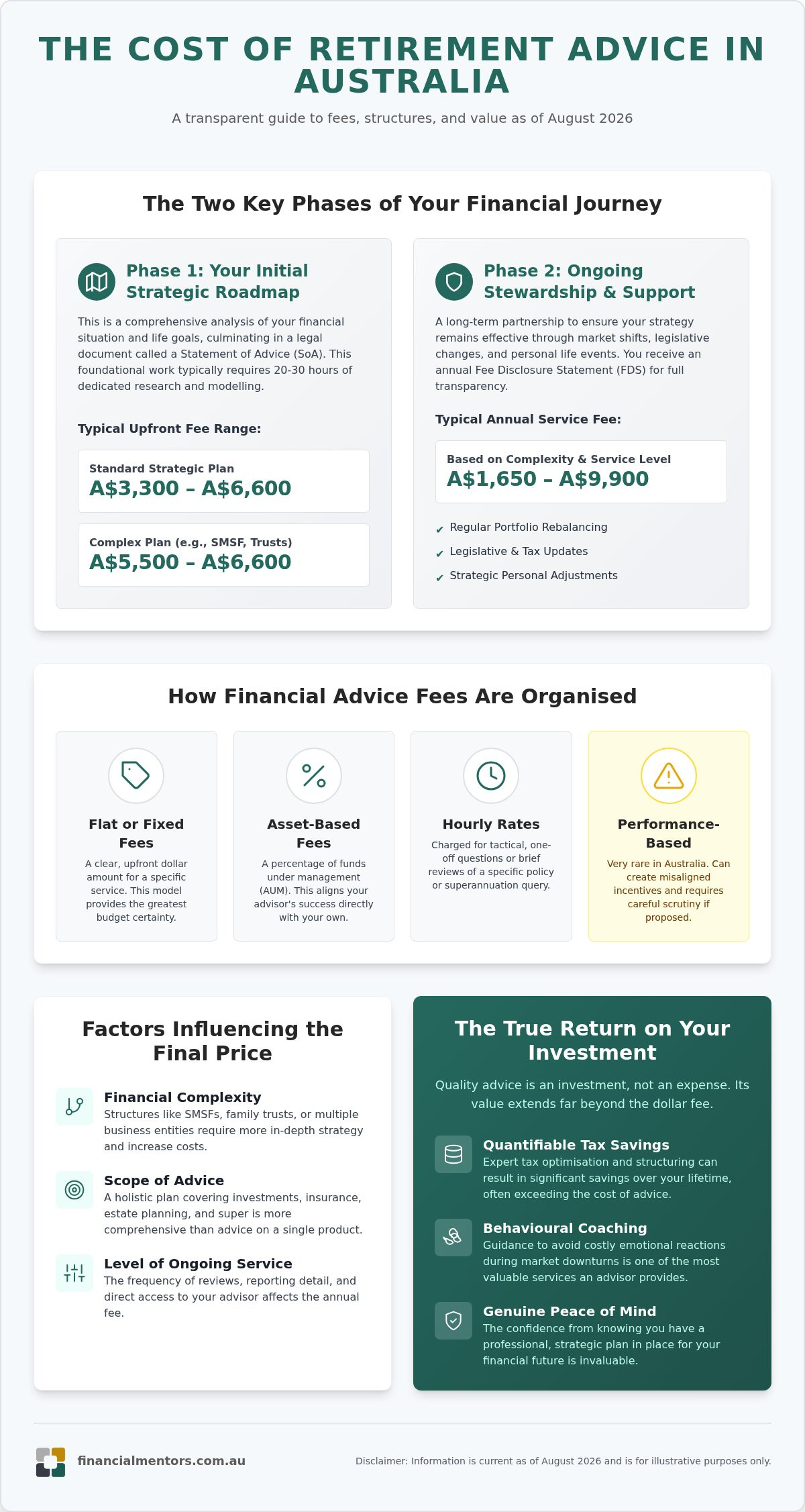
Creating a roadmap for the future isn’t a simple administrative task. It’s a deep dive into your personal goals and financial health. A comprehensive SoA typically requires between 20 and 30 hours of dedicated research, modelling, and strategy development. In 2026, most Australians find that a standard strategic plan ranges from A$3,300 to A$6,600. If your situation involves complex structures like a Self-Managed Superannuation Fund (SMSF) or intricate estate planning, these fees often sit between A$5,500 and A$6,600. Requesting a fixed quote before any work begins is a vital step to ensure you feel comfortable with the investment.
Ongoing Service Fees: Investing in a Long-Term Partnership
Once your strategy is in place, the focus shifts to steady stewardship. This ongoing relationship ensures your plan stays relevant as Superannuation in Australia laws and tax regulations inevitably evolve. Understanding the ongoing cost of retirement planning advice Australia is just as important as the initial setup. Annual costs for this service generally range from A$1,650 to A$9,900, depending on the level of support you need. Each year, you’ll receive a Fee Disclosure Statement (FDS). This is a transparent record of the fees you’ve paid and the services you’ve received, ensuring you always have a clear view of the value your mentor provides. Ongoing advice helps you stay on track through:
- Regular portfolio rebalancing to manage risk levels.
- Updates based on new legislative changes and tax thresholds.
- Strategic adjustments as your personal circumstances or health needs change.
By treating these fees as an investment in your future certainty, you can approach the planning process with a sense of quiet confidence.
Common Fee Structures: How Advisors Organise Their Charges
Choosing how to pay for your future is a step toward taking control. Most mentors in Australia use one of four primary models to ensure you understand the cost of retirement planning advice Australia before you sign any agreement. This transparency is the bedrock of a healthy partnership.
- Flat or Fixed Fees: These provide a clear dollar amount for a specific outcome. If you need a one-off strategy or a specific tax optimisation, this model offers the most certainty.
- Asset-Based Fees: Often called “percentage of funds under management,” this model aligns your mentor’s success with your own. As your wealth grows, the fee adjusts proportionally.
- Hourly Rates: This is usually reserved for tactical or one-off questions, such as a quick review of a single insurance policy or a brief superannuation query.
- Performance-Based Fees: These are quite rare in the Australian retail advice sector. They can create misaligned incentives, so they require careful scrutiny if they’re ever proposed.
Determining the right structure depends on how much involvement you want and the complexity of your assets. Some Australians prefer the simplicity of a single invoice, while others find comfort in a model where the advisor’s income is tied directly to the performance of their retirement fund. Each approach has distinct implications for your long-term wealth, so it’s vital to choose one that feels fair and sustainable for your lifestyle.
Flat Fees vs. Percentage-Based Models
If you have a significant nest egg, a flat fee might be more cost-effective for your situation. However, many people prefer a percentage-based model, often called Assets Under Management (AUM). This ensures your advisor is deeply invested in your growth. When researching typical fees for financial advice, you’ll find both models have their place. A flat fee provides budget certainty, while AUM makes advice accessible during your wealth-building years.
Hybrid Fee Models: Achieving Balance
Many professionals use a hybrid approach to provide a balanced service. This involves a fixed fee for the initial Statement of Advice (SoA), followed by a percentage-based fee for ongoing management. It’s the best time to ask about “internal” costs like platform fees, which range from 0.15% to 0.45% per year. Understanding the total cost of retirement planning advice Australia means looking at both advisor fees and underlying product costs. A professional financial planner can help clarify the most transparent path for your specific goals.
Factors That Influence the Final Price of Professional Advice
Your financial life is as unique as your fingerprint. If you’ve spent decades building a diverse portfolio, your needs will naturally differ from someone with a more straightforward setup. The cost of retirement planning advice Australia is rarely a one-size-fits-all figure because it mirrors the intricacy of your specific circumstances. If you manage a Self-Managed Superannuation Fund (SMSF), hold several investment properties, or operate through a family trust, your advisor must account for the additional compliance and strategic modelling required for these entities.
There’s a quiet efficiency in choosing a partner who looks at the whole picture. When you combine your long-term strategy with tax return preparation, you reduce the risk of information falling through the cracks. It’s not just about saving time; it’s about ensuring your wealth growth and tax obligations are perfectly aligned. The number of entities involved, such as private companies or testamentary trusts, will naturally increase the research hours, but the resulting clarity often outweighs the initial outlay.
Retirement and Estate Planning Complexity
Preparing for a planned retirement involves more than just hitting a savings target. It requires a delicate balance between superannuation limits, Centrelink eligibility, and the Age Pension. Professional estate planning advice is a specialised field that ensures your legacy is protected from unnecessary tax leakage or legal challenges. Structuring your asset distribution correctly requires technical expertise that goes beyond a basic will, which is why complex family dynamics or significant inheritances often influence the final fee.
Wealth Creation and Investment Management
The depth of research required for wealth creation strategies in Australia varies based on your appetite for diverse asset classes. If your portfolio includes international shares, alternative investments, or specific ethical overlays, your mentor spends more time monitoring these markets to ensure they remain suitable. While this increases the cost of retirement planning advice Australia, the goal is always to achieve superior risk-adjusted returns. It’s about finding the steady path that lets you sleep soundly at night, knowing your progress is being watched by a vigilant guide. By focusing on quality over the lowest price, you’re investing in a partnership that values your long-term stability above all else.
The ROI of Advice: Measuring Value Beyond the Dollar Fee
When you look at the cost of retirement planning advice Australia, it’s easy to focus solely on the outgoing payment. However, a wise mentor looks at this figure as an investment in your future self. Professional guidance often pays for itself by identifying efficiencies that are difficult to spot from the outside. By reducing internal investment product costs and optimising your tax position, a strategic partnership can significantly increase your net wealth over time.
A skilled advisor helps you bridge the income gap that often appears when you transition from a regular salary to living off your accumulated superannuation and investments. This transition is about more than just numbers; it’s about the security of knowing your lifestyle won’t be compromised. Beyond the balance sheet, the strategic value lies in having a steady hand to guide you through periods of market volatility, ensuring your long-term roadmap remains intact.
Tax Efficiency and Superannuation Optimisation
Strategic tax planning is one of the most direct ways to offset the literal price of advice. If you can maximise your superannuation contributions while remaining within legal caps, you’re essentially redirecting funds from the tax office back into your own pocket. This process involves selecting high-performance, lower-cost investment vehicles that allow your wealth to compound more effectively. Over a decade or more, the difference between a generic fund and a tailored strategy can amount to tens of thousands of dollars.
Behavioural Coaching: The Mentor Advantage
Emotional discipline is perhaps the most undervalued component of professional advice. When market fluctuations cause headlines to scream of a crisis, it’s natural to feel a sense of panic. An objective expert acts as a buffer against these impulsive reactions, preventing costly mistakes like selling assets at the bottom of a cycle. This coaching ensures you remain focused on your personal milestones rather than the daily noise of the financial world.
The “peace of mind” factor is an intangible benefit that many clients find most valuable of all. Knowing that your finances are organised and your future is secure reduces daily stress and allows you to focus on what truly matters: your family, your health, and your passions. If you’re ready to see how a tailored strategy can secure your future, you can reach out to a mentor today to begin the conversation.
How to Choose an Advisor and Ensure Fee Transparency
Finding the right person to steward your wealth is a decision that deserves time and reflection. Before you commit to any strategy, it’s vital to verify that your chosen professional holds a valid Australian Financial Services Licence (AFSL) or is an authorised representative of a licensee. You can easily do this via the ASIC Financial Advisers Register. This step ensures the person you’re speaking with meets the rigorous standards required by Australian law. When discussing the cost of retirement planning advice Australia, a transparent advisor will provide a formal “Fee Quote” in writing before you’re asked to sign an engagement document. This initial “no-obligation” consultation is a perfect opportunity to see if their approach resonates with your personal values.
Essential Questions to Ask About Costs
A professional consultation should feel like a two-way conversation. If you feel hesitant about asking direct questions regarding fees, remember that a trusted guide expects and welcomes this curiosity. To gain absolute clarity on the cost of retirement planning advice Australia, consider asking the following questions during your first meeting:
- Is your fee a fixed dollar amount or a percentage of my assets?
- Do you receive any third-party payments, volume bonuses, or commissions?
- What is the total estimated cost for the first twelve months of advice?
Be cautious if a fee disclosure feels overly complex or if there’s a lack of clarity regarding how the advisor is remunerated. If a document includes vague “administration fees” without explanation, don’t be afraid to ask for a breakdown. A mentor who values transparency will be happy to explain every line item to ensure you feel comfortable moving forward.
Selecting the Right Wealth Management Office
Choosing a wealth management office is about more than just numbers; it’s about finding a team that understands your unique aspirations. You should look for an advisor with specific experience in retirement planning, as this life stage requires a deep understanding of complex tax and superannuation rules. Before your introductory meeting, take a moment to organise your recent financial statements and a list of your long-term goals. This preparation allows the conversation to focus on how a strategic partnership can help you achieve the lifestyle you’ve worked so hard to build. Taking this first step is an act of stewardship for your future self, providing the order and clarity you deserve.
Securing Your Future with Confidence and Clarity
Taking the time to understand the cost of retirement planning advice Australia is a significant act of stewardship for your future self. By now, you should feel more equipped to distinguish between simple transactions and the deep value of a strategic partnership. Whether you choose a fixed fee for budget certainty or a percentage model that aligns with your growth, the most important factor is a foundation of total transparency and mutual respect. A well-constructed roadmap doesn’t just manage your assets; it validates your unique aspirations and provides the order you need during major life transitions.
As an Authorised Representative of Financial Mentors Wealth Management, registered since 2003, we specialise in creating strategic retirement and estate planning outcomes that truly matter. We believe that integrating your tax return preparation with your wealth management creates a seamless path toward your goals, reducing daily stress and ensuring no opportunity is overlooked. If you’re ready to move forward with a plan that prioritises your long-term stability, we’re here to guide you every step of the way. Book a consultation with Financial Mentors Wealth Management to discuss your tailored wealth roadmap. Your best years are still ahead of you, and with the right preparation, you can embrace them with genuine peace of mind.
Frequently Asked Questions
How much does a financial advisor cost for a one-off retirement plan in Australia?
The price of a one-off retirement plan depends on the complexity of your financial situation and the depth of research required. Most comprehensive strategies involve between 20 and 30 hours of professional modelling and documentation to ensure the plan is compliant and tailored to your needs. While single-issue advice is more accessible, a full roadmap reflects the technical expertise needed to coordinate your superannuation, tax, and lifestyle goals.
Are financial advisor fees tax-deductible in the 2026 financial year?
Fees for ongoing investment management and strategic advice are generally tax-deductible because they’re incurred in the process of earning assessable income. However, the initial cost of retirement planning advice Australia for a one-off Statement of Advice is typically considered a capital expense and isn’t deductible. It’s always a wise move to consult with a tax professional to ensure you’re claiming all legitimate deductions for your specific circumstances.
What is the difference between a financial planner and a financial advisor?
In Australia, there’s no legal difference between these two titles; both must be qualified and registered on the ASIC Financial Advisers Register. Many professionals use “financial planner” to signal a focus on long-term life milestones and “financial advisor” for broader wealth management. The most important factor isn’t the title but the advisor’s ability to act as a trusted guide who understands your unique aspirations and challenges.
Can I pay for my retirement planning advice through my superannuation fund?
You can often pay for professional advice directly from your superannuation account if the strategy relates specifically to your interests within that fund. This is a practical way to manage the cost of retirement planning advice Australia without affecting your daily household budget. Strict regulations ensure that these payments only cover advice that directly benefits your retirement savings, providing a transparent way to invest in your future security.
Do financial advisors still receive commissions on investment products in 2026?
Commissions on investment and superannuation products have been banned in Australia since 2013 to ensure advice remains objective and focused on the client. While commissions are still permitted for life insurance products, most strategic mentors prefer a transparent fee-for-service model. This approach ensures that your advisor’s incentives are perfectly aligned with your long-term success rather than being influenced by third-party payments or volume bonuses.
How often should I review my financial plan and its associated costs?
Reviewing your roadmap at least once a year ensures your strategy remains effective as tax laws and superannuation thresholds change. This annual check-in is also when you’ll receive your Fee Disclosure Statement (FDS), which provides a clear record of the services you’ve received and the fees you’ve paid. If you experience a major life transition, such as an inheritance or a health change, an immediate review is recommended.
What happens if I decide to cancel my ongoing advice service?
You have the right to cancel your ongoing advice service at any time by providing written notice as specified in your engagement agreement. Australian regulations require advisors to seek your renewed consent annually to continue charging fees, ensuring you’re never locked into a service that no longer meets your needs. This system puts you in complete control of your financial partnership and ensures total fee transparency.
Is it worth paying for a financial advisor if I have a modest super balance?
Professional guidance is often most valuable when your balance is modest, as it helps you establish the right habits and structures early in your journey. A strategic plan can prevent costly emotional mistakes and ensure you’re taking full advantage of tax optimisations and government incentives. Investing in a mentor early on can significantly improve your long-term trajectory, providing the quiet confidence that comes from being prepared.