

What if the biggest hurdle to your dream retirement isn’t the size of your nest egg, but the fear of actually spending it? It’s a common feeling for many Australians who find themselves squinting at superannuation statements and feeling lost in the maze of Centrelink’s latest Age Pension rules. You’ve worked hard to build your wealth, so it’s only natural to want a sense of certainty that your lifestyle is protected. If you’ve ever felt that the complexity of tax laws is standing between you and your peace of mind, you aren’t alone.
This 2026 guide explains how a dedicated retirement financial advisor acts as a steady hand to help you navigate these transitions. We’ll show you how a personalised strategy can help you maximise your entitlements and minimise tax, creating a reliable income stream that lasts as long as you do. You’ll discover a clear path toward securing your family legacy while finally enjoying the freedom you’ve earned. By the end of this article, you’ll have a better understanding of how professional guidance can turn a complex financial puzzle into a simple, supportive roadmap for your future.
Key Takeaways
- Understand why a specialist retirement financial advisor is essential for managing the emotional and financial shift from earning a salary to drawing on your assets.
- Learn how to integrate your superannuation and retirement goals with a practical daily cash flow plan that protects your lifestyle.
- Discover how the right professional guidance can help you maximise Age Pension entitlements while minimising tax obligations through strategic planning.
- Gain a clear checklist for choosing a trusted partner, including how to verify credentials on the ASIC Financial Advisers Register and check for a valid AFSL.
- Explore the benefits of a holistic approach that combines strategic wealth management with professional tax return preparation for total peace of mind.
Navigating the Shift: Why a Retirement Financial Advisor is Essential in 2026
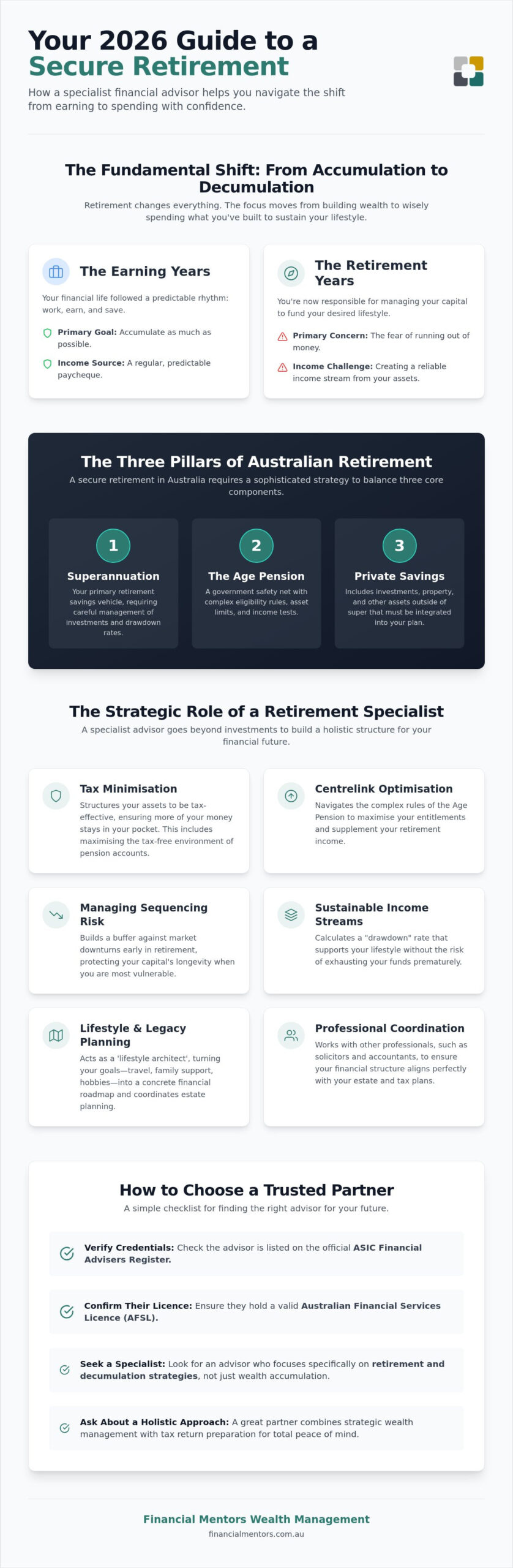
For decades, your financial life has likely followed a predictable rhythm: work, earn, save, and repeat. Stepping into retirement breaks that cycle, replacing a guaranteed fortnightly paycheque with the responsibility of managing your own capital. It’s a profound emotional shift that can feel both liberating and deeply unsettling. Suddenly, the focus is no longer on how much you can accumulate, but on how wisely you can spend what you’ve built.
This is where a retirement financial advisor becomes an essential partner. While a generalist might focus on building wealth, a retirement specialist focuses on “decumulation.” This is the art of drawing down your hard-earned savings in a way that sustains your lifestyle without the constant fear of running out. To understand the broader context of this profession, it’s helpful to look at what is a financial advisor and how their role has evolved to meet these specific, late-stage life needs.
The Complexity of the Australian Retirement Landscape
Retiring in 2026 involves much more than just checking your super balance. The Australian system relies on three pillars: your superannuation, the Age Pension, and your private savings. Balancing these requires a sophisticated strategy, especially as regulations and asset limits become more intricate. One of the biggest hurdles for new retirees is “sequencing risk.” If the market dips just as you begin your withdrawals, it can have a lasting impact on your fund’s longevity. A retirement financial advisor helps you build a buffer against these volatile periods, ensuring your income remains steady regardless of market whims.
Your Lifestyle Architect: More Than Just Numbers
A great advisor acts as a lifestyle architect. They don’t just look at spreadsheets; they listen to your stories about intended caravan trips, helping grandchildren with their first homes, or finally taking up that hobby you’ve deferred for years. This mentor-led approach validates your personal aspirations and turns them into a concrete financial roadmap.
If you have a clear plan, the stress of complex decision-making fades away. You can stop worrying about the “what-ifs” and start focusing on the moments that actually matter. It’s about moving forward with quiet confidence, knowing your future is being stewarded by someone who truly understands your journey. This partnership provides the peace of mind that comes from being prepared for every stage of the road ahead.
Beyond the Super Balance: The Strategic Role of a Retirement Specialist
Many Australians mistakenly believe that a retirement financial advisor is simply there to help them pick a high-performing super fund. While investment choice is important, it’s only one piece of a much larger puzzle. A specialist focuses on the big picture, ensuring your assets are structured to be tax-effective over the long term. This structural work is vital because it determines how much of your money actually stays in your pocket versus being lost to unnecessary taxes or missed entitlements.
If you’re wondering is your planned retirement secure, the answer often lies in how well your long-term strategy integrates with your daily cash flow. Your advisor acts as a bridge between these two worlds. They ensure your weekly budget is met while protecting the longevity of your nest egg. They also play a crucial role in coordinating with other professionals, such as solicitors, to ensure your estate planning and family legacy goals are perfectly aligned with your financial structure.
Optimising Superannuation and Income Streams
Once you reach your preservation age, you face several critical decisions. Should you utilise a Transition to Retirement (TTR) strategy to reduce your working hours while topping up your income? Or is it time to move into a full Account-Based Pension? For most Australians over 60, the earnings within a pension account are tax-free, which can provide a significant boost to your savings. Your advisor helps you navigate these choices, determining a “drawdown” rate that supports your lifestyle without exhausting your capital too early. This balance is the key to a stress-free future.
Navigating Centrelink and the Age Pension
The Australian retirement system is famous for its complexity, particularly regarding the Age Pension. In 2026, the Assets Test and Income Test remain the primary hurdles for middle-wealth retirees. An advisor can help you understand how certain assets are assessed and suggest legal ways to structure your wealth to maximise your pension entitlements. Sometimes, the goal isn’t a full pension; even a part-pension can open doors to the Commonwealth Seniors Health Card. This card is a valuable secondary goal, offering substantial discounts on healthcare and household bills. For more tips on finding the right help, this comprehensive guide to choosing a financial advisor provides a solid foundation for your search.
If you’re feeling overwhelmed by these moving parts, speaking with a mentor can help you organise your retirement strategy and provide the clarity you deserve.
Evaluating the Value: Advisor Fees vs. the Cost of Missed Opportunities
It is natural to ask: is the cost of a retirement financial advisor truly worth it? When you are moving into a stage of life where every dollar counts, paying for professional advice can feel like an expense you should avoid. However, the real question is often the cost of inaction. If you miss out on thousands of dollars in tax savings or fail to maximise your Age Pension entitlements, the “free” DIY approach becomes incredibly expensive. Professional guidance is an investment in your future self, designed to provide a return that far outweighs the initial outlay.
Choosing to work with a specialist isn’t just about spreadsheets. It’s about securing the freedom to enjoy your time without checking the stock market every morning. If a single strategic adjustment to your superannuation saves you more in tax than the cost of the advice itself, the service has already paid for itself. This “peace of mind dividend” is perhaps the most valuable part of the journey. It allows you to focus on your family and your hobbies, knowing that your financial stewardship is in capable hands.
Understanding Fee Structures in Australia
In the Australian market, the way you pay for advice has changed for the better. Most professionals now operate on a “fee for service” model. This usually begins with a Statement of Advice (SOA), which is a comprehensive document outlining your specific roadmap. Following this, you might choose an ongoing management arrangement to keep your plan on track as your life changes. It’s reassuring to know that commissions on investment products are a thing of the past in Australia. This shift ensures that your mentor’s recommendations are based solely on what serves your best interests. Transparency in these costs builds the foundation of a trusted, long-term partnership.
The ROI of Professional Retirement Advice
Quantifying the value of advice goes beyond just investment returns. Industry studies often highlight the “alpha” or added value that comes from behavioural coaching. Think about the peace of mind you gain when markets are volatile. Having a steady hand to prevent “panic selling” can save a lifetime of savings from a single emotional decision. Additionally, having an integrated approach where tax return preparation is part of your wealth strategy adds tangible value every year. By ensuring your tax and retirement goals work in harmony, you aren’t just saving money; you’re buying back your time and reducing your stress. A mentor helps you see the forest for the trees, ensuring every financial move you make is purposeful and protective of your lifestyle.
Your Selection Framework: How to Find the Right Partner for Your Future
Choosing a retirement financial advisor is one of the most significant decisions you’ll make as you approach the end of your working life. It’s not simply a matter of finding someone who understands numbers; it’s about finding a mentor who understands your specific vision for the future. To ensure you’re in safe hands, you need a methodical way to filter through your options and find a partner who prioritises your long-term security. This framework is designed to help you move from uncertainty to a place of quiet confidence.
- Verify the ASIC Register: Always start by checking the ASIC Financial Advisers Register. This allows you to see their employment history, qualifications, and any disciplinary action taken against them.
- Confirm the AFSL: Ensure the firm holds a valid Australian Financial Services Licence (AFSL). This is a legal requirement for providing financial advice in Australia and offers you essential consumer protections.
- Assess the Specialty: Does the adviser focus on retirement planning or general insurance? Retirement requires a different skill set focused on capital preservation and pension integration rather than just wealth accumulation.
- Test the Chemistry: Book an initial consultation. Do they listen more than they talk? You need someone who validates your concerns rather than dismissing them with industry jargon.
- Review the FSG: The Financial Services Guide (FSG) is a mandatory document that outlines fee transparency and how the firm handles potential conflicts of interest.
Essential Qualifications and the ASIC Register
Look for an adviser who holds relevant university degrees and is a member of a professional body like the Financial Advice Association of Australia (FAAA). It’s vital that they are listed as an “Authorised Representative” of an AFSL holder. Be wary of red flags such as high-pressure sales tactics or promises of “guaranteed” high returns. A true mentor will be honest about market risks and focus on steady progress rather than overnight wins. If an adviser can’t clearly explain how they’re paid, it’s usually a sign to look elsewhere.
Questions to Ask During Your First Consultation
When you sit down for that first meeting, come prepared with questions that dig deeper into their process. You might ask: “How do you help clients specifically in the transition to retirement?” or “What is your philosophy on risk and capital preservation?” It’s also wise to ask if they provide integrated tax and estate planning advice. Having these services managed under one roof ensures that your legacy is protected without you having to act as the middleman between different firms. This holistic approach is often what separates a standard service from a true partnership.
If you’re ready to start this conversation with a trusted guide, you can book a consultation to discuss your unique path forward and see how a tailored strategy can work for you.
The Financial Mentors Difference: A Holistic Path to Retirement Security
At Financial Mentors Wealth Management, we believe that your financial plan should be as unique as your life story. We move away from the cold, clinical atmosphere often found in large institutions, opting instead for a partnership based on quiet confidence and mutual respect. Since 2003, Murray Frean has acted as a trusted retirement financial advisor for Australians seeking a more personal touch. By choosing our wealth management office, you aren’t just hiring a service; you’re gaining a mentor who is deeply invested in your long-term well-being and family legacy.
Our approach is built on the idea of stewardship. We don’t just look at your assets today; we look at how they will support you through every transition of your post-work life. If you have a clear, organised roadmap, the fear of the unknown begins to fade. We take pride in being a steady companion, providing the practical wisdom you need to make big decisions with ease. This human-centric focus ensures that your aspirations always remain at the centre of every strategy we build together.
Why Integrated Tax and Estate Planning Matters
One of the biggest gaps in traditional advice is the separation of tax and wealth management. We believe that your tax return and your retirement income are two sides of the same coin. If these elements aren’t working in harmony, you could be losing money to avoidable taxes or administrative errors. By managing your tax return preparation alongside your retirement strategy, we ensure total alignment. This holistic view extends to your estate planning as well. We help you ensure that your superannuation death benefit nominations are perfectly synced with your Will, reducing the burden on your loved ones and protecting your legacy. Having a single point of contact simplifies your life and provides a level of clarity that siloed services simply cannot match.
Starting Your Journey with Confidence
Do you ever feel like you’ve left it too late to start planning? It’s a common worry, but the truth is that it’s never too late to organise a strategic plan. Whether you’re five years away from finishing work or you’ve already retired, there are always opportunities to maximise your entitlements and improve your cash flow. We invite you to reach out for a supportive conversation about your future. Let’s sit down and look at your unique circumstances together. If you’re looking for a retirement financial advisor who listens first and advises second, we’re here to help you take that first step toward peace of mind with total confidence.
Step Into Your Next Chapter with Confidence
Retirement is a significant milestone that deserves more than a “one size fits all” approach. You’ve seen how a dedicated retirement financial advisor does more than just manage investments; they harmonise your superannuation, tax obligations, and Age Pension entitlements into a single, cohesive roadmap. By integrating these complex elements, you move away from the stress of uncertainty and toward the freedom of a well-stewarded future. It’s about ensuring your daily cash flow supports your lifestyle while your family legacy remains protected.
At Financial Mentors Wealth Management, we’ve been helping Australians navigate these transitions since 2003 under our own AFSL. With the expert guidance of Murray Frean and our unique approach to integrated tax and estate planning advice, we provide the steady hand you need to make big decisions with ease. It’s never too late to organise your strategy and find the clarity you deserve. We invite you to secure your future with a personalised consultation at Financial Mentors Wealth Management. Your journey is unique, and we’re here to walk beside you every step of the way.
Frequently Asked Questions
How much does a retirement financial advisor cost in Australia?
Fees for professional advice depend on the complexity of your financial situation and the level of ongoing support you require. Most firms offer a fee-for-service model, which might include an initial fee for your Statement of Advice and a separate fee for implementation or annual reviews. You’ll always receive a clear breakdown of these costs in a Financial Services Guide before any work begins, ensuring there are no surprises.
Can a financial adviser help me with my Centrelink application?
An adviser can certainly help you navigate the Centrelink application process and manage your ongoing reporting obligations. They ensure your assets are structured correctly to meet the Income and Assets Tests, which can help you maximise your Age Pension entitlements. By acting as a bridge between you and Centrelink, your adviser reduces the administrative stress, allowing you to focus on enjoying your retirement years with confidence.
Is it better to have a flat fee or a percentage-based fee for advice?
The choice between a flat fee or a percentage-based fee depends on your personal preference and the nature of your portfolio. A flat fee provides total transparency and cost certainty, which many retirees appreciate for their budgeting. A percentage-based fee can sometimes be more appropriate for managed investment portfolios. Your adviser should discuss both options with you to find a structure that feels fair and supports your long-term goals.
What is the difference between a financial planner and a retirement specialist?
A retirement specialist focuses specifically on the “decumulation” phase of life, helping you spend your savings wisely, whereas a general financial planner may focus on building wealth. A retirement financial advisor has specialised knowledge in areas like Age Pension asset tests, superannuation income streams, and tax-effective drawdowns. They act as a lifestyle architect, ensuring your financial structure supports your personal goals throughout your post-work years.
How often should I meet with my retirement financial advisor?
Most people find that meeting for a formal review once a year is sufficient to keep their plan on track. However, if you experience a major life change or if government regulations shift, you might choose to meet more frequently. Your adviser acts as a steady partner through all of life’s transitions, so they should be available for a supportive conversation whenever you feel the need for extra clarity.
Can I pay for financial advice using my superannuation fund?
Yes, it is often possible to pay for advice that relates specifically to your superannuation directly from your fund’s balance. This can be a practical way to access professional support without using your out-of-pocket savings. However, strict regulations govern what can be paid for via super, so it’s important to discuss this with your retirement financial advisor to ensure your plan meets the necessary criteria.
What happens if I already have an accountant for my tax returns?
You can certainly keep your existing accountant, although there are significant benefits to integrating your tax and wealth management. At Financial Mentors, we offer the convenience of professional tax return preparation alongside our strategic planning services. This ensures your tax and retirement goals are perfectly synced. If you prefer to stay with your current accountant, we are happy to collaborate with them to maintain your financial clarity.
Do I need a certain amount of money before seeing a financial adviser?
You don’t need a specific amount of wealth to benefit from professional guidance. Financial advice is about making the most of your current resources, whether your super balance is modest or substantial. If you’re feeling uncertain about your future, that’s usually the best time to speak with a mentor. We focus on your unique journey and helping you build a supportive roadmap, regardless of your starting point.