

What if an inheritance intended for your child becomes part of the discussion during their separation? If you’re thinking about protecting inheritance from children’s divorce, it helps to know that an inheritance isn’t automatically excluded from a property settlement in Australia. How it may be considered depends on the circumstances.
It’s understandable to want your wishes to be respected and to worry that an inheritance could benefit someone else. Careful planning may help you consider how assets are passed on, but no arrangement can guarantee protection from a future settlement. The right approach depends on your family’s situation and current law.
This guide outlines factors that may affect an inheritance and planning options to discuss with qualified professionals, including a testamentary trust, a loan rather than a gift, or a binding financial agreement between your child and their partner. It also explains what information to gather and where financial advice can help you prepare for a conversation with a lawyer. Each step can support informed decisions without assuming one strategy suits every family.
Key Takeaways
- Understand why protecting inheritance from children’s divorce depends on the family’s circumstances, rather than a single label or document.
- Consider when the inheritance may be received and how it could be handled, then ask a qualified lawyer how current family law applies.
- Compare planning options by their purpose, control, complexity and ongoing administration before deciding what may suit your family.
- Before professional appointments, clarify your intentions and gather details of relevant assets, financial records and questions.
- Use financial advice to review your financial position and future goals, and seek legal advice on legal questions and documents.
Protecting Inheritance from Children’s Divorce in Australia: What Can You Do?
You may want to pass wealth to your child while keeping your family’s intentions in mind. The practical answer is that an inheritance is not automatically excluded from a property settlement if a marriage or de facto relationship ends. Under Australia’s Family Law Act 1975, how property is dealt with depends on the circumstances of the case, not simply on whether an asset came from an inheritance.
Planning can help you think carefully about how assets are passed on and what you hope to achieve. But no structure can guarantee that an inheritance will be kept outside a future settlement. If you’re considering protecting inheritance from children’s divorce, treat financial planning as preparation, not a promise of a particular legal result. A qualified family lawyer can assess how current law may apply to your family’s circumstances.
What does protecting an inheritance mean?
An inheritance means assets or money received from a deceased person’s estate. In this context, protecting it can mean arranging your estate planning to reflect your intentions for your child and the assets you leave them. That is different from guaranteeing how a court would treat those assets if your child’s relationship later ends.
For example, a testamentary trust is one structure families may discuss with legal and financial professionals. It may affect how assets are held and managed, but it should not be treated as automatically divorce-proof. Its suitability and possible effect depend on the details of the arrangement and the family’s circumstances.
Why can the answer differ between families?
A lawyer may need to consider when your child received the inheritance, how the assets were used and the wider financial and family circumstances. For instance, keeping an inherited asset separate from shared finances may raise different questions from using it towards a jointly owned home. That example does not determine the legal outcome. It shows why the history of an asset can matter.
The word inheritance alone doesn’t settle how an asset may be considered. The wider situation, including the couple’s financial circumstances and contributions, needs individual legal assessment. If you’re making plans now, keep clear records of your intentions and the assets involved, then ask a qualified lawyer what they may mean under current law.
General financial planning information can help you clarify your goals and prepare for estate planning discussions. It isn’t a substitute for individual legal advice. Financial advice can support your planning, while a qualified lawyer should advise on legal questions and documents.
How Could an Inheritance Be Considered During a Divorce?
For a family thinking about protecting inheritance from children’s divorce, it helps to understand that an inheritance is considered within the wider circumstances of a separation. The label attached to an asset, or the use of a particular planning document, doesn’t decide the outcome on its own. Under Australian family law, property matters are assessed based on the couple’s overall situation. The Australian Government’s guide to dividing property after separation provides an overview of this process.
Why timing and use of inherited assets may matter
A family lawyer may ask when the inheritance was received, how it was managed and whether it was used for shared purposes. An inheritance received before a relationship began may have a different history from one received during the relationship. That difference is relevant context for legal review, not a reliable way to predict the result.
Consider two hypothetical situations. One person receives money and keeps it in an account in their name. Another uses inherited funds towards a home they own with their partner. Those details may help explain what happened to the assets, but neither situation guarantees how they’ll be treated in a property settlement.
Records can make it easier for your child and their lawyer to trace the history and intended use of inherited assets. Useful information may include estate documents, bank statements, transfer records and records of significant purchases made with the funds. Keep what’s available, and ask a lawyer what is relevant to the circumstances.
How family circumstances may affect the assessment
A property settlement considers more than the source of one asset. The overall asset pool, each person’s financial and non-financial contributions, and their future needs may all be relevant. The final outcome must also be just and equitable. The weight given to these matters depends on the case, so a general example can’t tell you what would happen in your child’s situation.
For instance, the inheritance may be one part of a couple’s finances alongside a home, savings, debts and other assets. Their contributions and future needs may also differ from those of another couple. Gifting inherited funds, combining them with shared money or placing assets in a trust doesn’t, by itself, settle how they’ll be considered.
In short: timing, use of the inheritance, contributions, future needs and the couple’s wider asset pool may inform a property assessment, but none of these factors guarantees a particular outcome. A qualified family lawyer can assess the details against current law. Financial planning can help you organise your records and clarify your family’s goals. To consider that side of your planning, explore financial and estate planning advice.
Which Inheritance Planning Options Should Your Family Compare?
There’s no single approach that suits every family. If you’re considering protecting inheritance from children’s divorce, compare each option by its purpose, the control it offers, any ongoing administration and the legal advice needed. None guarantees that inherited assets will be excluded from a property settlement.
The table can help you prepare focused questions for professional advice. It isn’t a recommendation to choose any particular option.
| Approach to discuss | Considerations and questions | Professional input |
|---|---|---|
| Keep clear records of inherited assets | Can you trace the source, movement and intended purpose of the assets? What records are available? | Ask a family lawyer whether and how the records may be relevant. |
| Testamentary trust | What control and administration would it involve? Who would manage it, and would that suit your family’s aims? | Ask a lawyer about the legal structure and a financial adviser about its fit with your broader plans. |
| Loan rather than gift | Would the arrangement reflect a genuine loan, and what repayment expectations would apply? | Seek legal advice on documenting the arrangement and financial advice on its wider implications. |
| Binding financial agreement | Would your child and their partner wish to make an agreement about their finances? | Each partner needs independent legal advice about the agreement and its requirements. |
Keeping an inheritance separate and well documented
Good records can help show where inherited assets came from, how they moved and what they were intended for. Your child might keep estate documents, relevant statements and records of transfers or purchases together. This is a practical record-keeping step, not a legal guarantee. Ask a family lawyer how these details may relate to your child’s circumstances.
Discussing legal structures with the right professional
A trust, loan arrangement or agreement may be worth discussing, but the right choice depends on your family’s objectives, the assets involved and current legal advice. Ask about setup, control, administration and what may need review over time. For background on planning beyond a will, read about estate planning advice in Australia.
Financial advice can help you consider your financial position and long-term goals as part of estate planning. Legal questions and documents belong with a qualified lawyer. Financial Mentors Wealth Management provides estate planning advice but doesn’t draft legal documents.
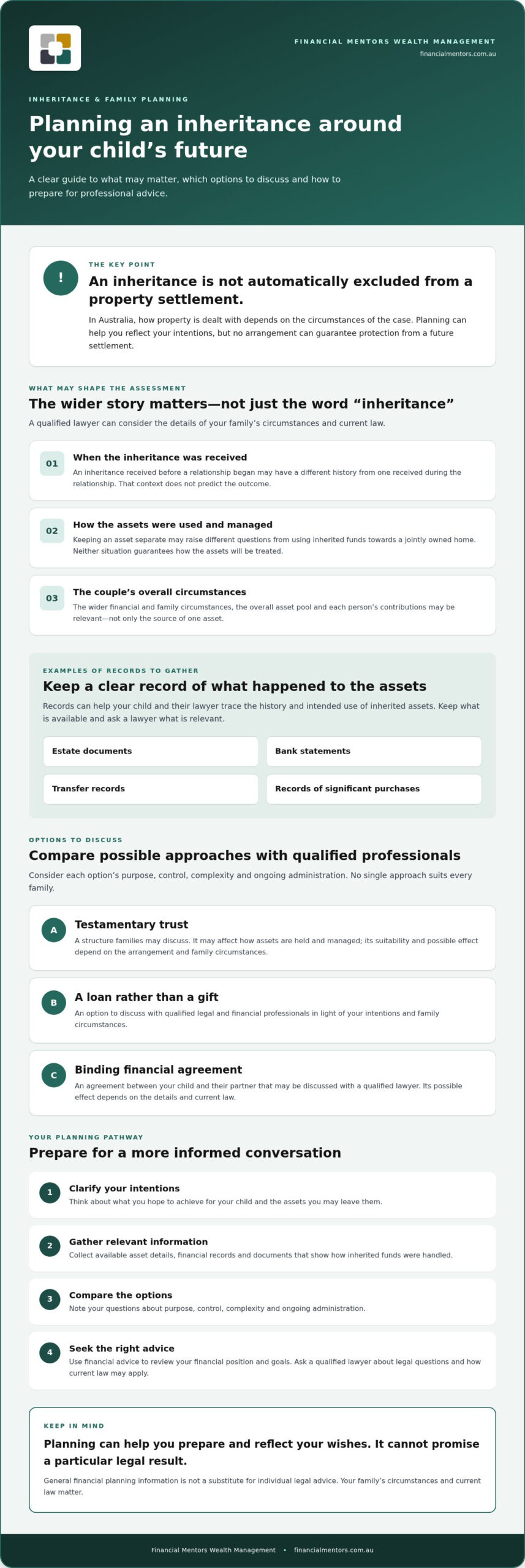
What Steps Can You Take Before Your Child Receives an Inheritance?
Planning ahead gives you time to clarify your wishes and seek advice before decisions need to be made. If you’re considering protecting inheritance from children’s divorce, use the steps below to organise your thinking. They can help you prepare for professional appointments, but they can’t guarantee how inherited assets may be treated in a future property settlement.
Prepare your family and financial information
- Clarify your intentions and identify the assets. Note what you may want your child to receive, such as money, investments or property. Record any known ownership details and where relevant documents are kept.
- Gather the available records. Collect information that helps explain the assets, including ownership records, statements and any existing estate planning documents. Note how assets have been managed or transferred if that information is available.
- Write down your family’s goals and concerns. Consider what you hope the inheritance will support and what questions you have about a future separation. Include existing arrangements, but don’t assume they remain suitable as your family or financial position changes.
- Keep sensitive information appropriately private. Share relevant details with the professionals advising you, rather than circulating personal financial information widely. Avoid rushed transfers or changes to ownership before getting advice about the possible legal and financial effects.
Coordinate financial and legal advice
Before each appointment, sort your questions by topic. Ask a qualified lawyer about current family law, the legal effect of possible arrangements and any documents that may be appropriate. A lawyer can assess your circumstances and explain legal options. Financial advice can help you review the assets involved, your financial commitments and how your intentions fit with your broader financial position and long-term goals.
For more background, read about estate planning advice in Australia. Financial planning and legal advice address different parts of your preparation, so make clear which questions need a financial assessment and which need legal guidance.
Why coordinate advice? It helps you consider your family’s financial goals alongside the legal questions, without assuming any strategy will prevent an inheritance from being considered in a settlement.
If you’d like to review how your assets and goals fit into your wider plans, discuss your financial planning with Financial Mentors Wealth Management.
How Can Financial and Estate Planning Advice Help You Plan Ahead?
Thinking about protecting inheritance from children’s divorce can raise financial questions as well as legal ones. Financial and estate planning advice can help you clarify what you want to achieve, understand the assets involved and consider how your plans fit your current financial position and future needs. It can support informed decisions, but it can’t guarantee how an inheritance may be considered in a property settlement.
Financial advice and legal advice have different roles. A financial adviser can help you review goals, assets and financial commitments. A qualified lawyer can advise on current family law and legal documents. Keeping these roles clear can help you direct each question to the right professional.
What to discuss with a financial adviser
Use your appointment to explain your inheritance intentions and the outcomes you hope your planning will support. You could discuss how those intentions fit with wealth management, retirement planning and other long-term goals. Recommendations depend on your circumstances and the agreed scope of advice, so ask what can be covered and what information is needed before recommendations are made.
To help build a clear picture, prepare details of relevant assets, income, debts, financial commitments and existing arrangements. You might also bring a list of questions, such as:
- How do these assets fit with my current financial position and future plans?
- What financial information would help you understand my circumstances?
- Which questions should I take to a lawyer?
- When should I review my plan if my family or financial circumstances change?
These discussions can help you organise your financial thinking. They don’t determine how a court may treat an inheritance, and your adviser should explain the scope and limits of any recommendations.
A calm next step for your family
Before meeting professionals, write down the questions you have for your financial adviser and those that need a lawyer’s view. Financial Mentors Wealth Management provides financial planning and estate planning advice, but doesn’t draft legal documents.
Coordinated financial and legal advice can help you consider your family’s intentions alongside your wider financial plans, without promising a particular legal outcome. If you’re ready to explore your financial planning needs, discuss your financial planning needs.
Take a considered next step for your family
Planning an inheritance is a way to express your intentions, but it can’t guarantee how assets may be considered if your child’s relationship ends. The outcome depends on the family’s circumstances and current law. If you’re thinking about protecting inheritance from children’s divorce, focus on clarifying your goals, keeping relevant records and getting advice before making changes or transfers.
Financial advice can help you understand how inheritance plans fit your wider financial position and long-term goals. A qualified lawyer can advise on legal questions and documents. The two perspectives can support more informed planning, without promising a particular result.
Financial Mentors Wealth Management offers estate planning advice but doesn’t draft legal documents. If you’re ready to discuss your circumstances, discuss your financial planning needs. A thoughtful conversation can help you take a steady next step for your family.
Frequently Asked Questions
Can an inheritance be protected from a child’s divorce in Australia?
You can plan how an inheritance is passed on, but you can’t guarantee it will be excluded from a property settlement if your child separates. The outcome depends on the family’s circumstances and current law. Estate planning can help express your intentions and organise how assets are managed. If you’re considering protecting inheritance from children’s divorce, discuss legal options with a qualified family lawyer and consider financial advice for your broader planning.
Does an inheritance automatically stay separate during divorce?
No. In Australia, an inheritance isn’t automatically kept separate from divorce-related financial considerations just because it came from a deceased person’s estate. A court may consider it as part of the wider circumstances, including the couple’s assets, contributions and future needs. The details matter, so your child should get advice about their situation rather than assume an inheritance is either included or excluded.
Can a trust protect an inheritance from divorce?
A trust may be one option to discuss with a qualified lawyer, but it doesn’t guarantee that an inheritance will be excluded from a property settlement. Its purpose, terms, control and administration may all be relevant, as may the family’s wider circumstances. Before considering a trust, clarify what you want it to achieve and ask a lawyer about its legal effect. Financial advice can help assess how it fits your wider plans.
Does it matter when a child receives an inheritance?
Timing may be relevant, but it doesn’t decide the outcome by itself. A lawyer may need to consider whether your child received the inheritance before or during their relationship, alongside how it was used and the couple’s overall circumstances. An inheritance received at different stages may have a different history. Keep available records and ask a qualified family lawyer how timing may apply to your child’s circumstances.
Can inherited money be affected if it is used for a family home?
Using inherited money towards a home shared with a partner may be relevant to how the asset is considered, but it doesn’t determine the result on its own. The ownership details, source of the funds, how they were used and the couple’s wider financial circumstances may need legal assessment. Keep records of transfers and property arrangements, then ask a qualified family lawyer how those details may apply under current law.
Should I speak with a financial adviser or a family lawyer about inheritance planning?
Speak with both if your questions cover financial planning and legal outcomes. A financial adviser can help you review your financial position, assets, financial commitments and long-term goals. A qualified family lawyer can advise on current family law and legal documents, such as a will or agreement. Financial advice supports planning, but it isn’t a substitute for legal advice. Prepare your questions and direct each one to the appropriate professional.
What records should a family keep when an inheritance is received?
Keep records that help explain the inheritance’s source, movement and intended use. Depending on the assets, these may include estate documents, account statements, transfer records, ownership information and documents for significant purchases made with inherited funds. Store them securely and update the file if assets are moved or circumstances change. Records can help professionals understand the history, but they don’t guarantee a particular legal outcome. Ask a family lawyer what may be relevant.