

What if the right estate plan is less about who receives an inheritance and more about how it is managed? If you’re researching testamentary trust benefits australia, you may want to understand what a trust could mean for your family, especially if beneficiaries have different needs or circumstances.
A testamentary trust may give you a way to set out how assets are managed after your death. It isn’t automatically the right fit, and it doesn’t guarantee a particular tax or asset protection outcome. Its value depends on your family’s goals, financial position and willingness to manage the trust over time.
This article explains potential benefits and limitations, and what to consider before exploring a trust. You’ll also find practical information to gather before seeking advice, and guidance on the professional conversations that may help you decide what to do next. Financial advice can support your broader estate planning discussion, while a legal professional can advise on and prepare the required documents.
Key Takeaways
- Learn how a testamentary trust may shape the management of an inheritance, and why its terms matter.
- Explore testamentary trust benefits australia while keeping potential tax and asset protection outcomes in perspective.
- Compare a trust with an outright inheritance by considering who manages assets and what administration may involve.
- Prepare for advice by gathering your financial details, family information and questions about intended beneficiaries.
- Understand how estate planning advice can help you consider your options, and when to speak with a legal professional about documents.
What is a testamentary trust, and why consider its benefits in Australia?
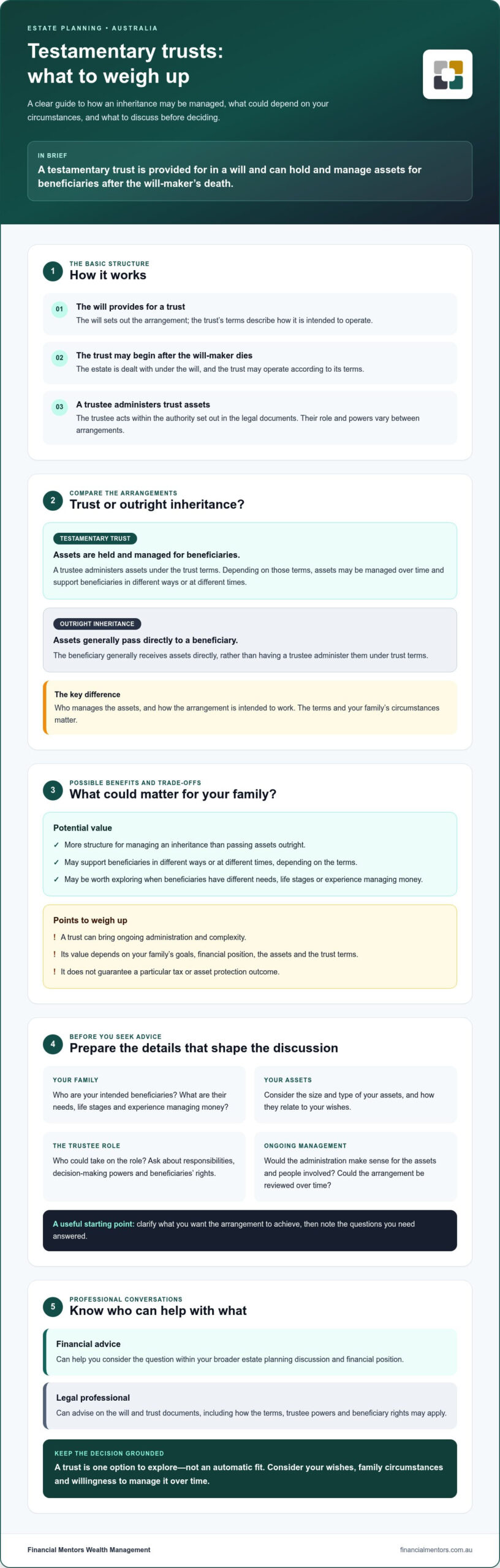
How could an inheritance be managed for your loved ones, rather than simply passed to them outright? A testamentary trust is one option to explore as part of estate planning. It is a trust provided for in a will that takes effect after the will-maker dies. The will sets out the arrangement, while the trust’s terms describe how it is intended to operate. The Testamentary trust overview offers a general introduction to this structure.
In brief: a testamentary trust is an arrangement created under a will to hold and manage assets for beneficiaries after the will-maker’s death. Unlike an outright inheritance, where assets are generally passed directly to a beneficiary, a trust involves a trustee administering assets under the relevant terms. That difference can matter, but it doesn’t guarantee a particular outcome. Potential testamentary trust benefits australia may depend on the will and trust terms, your family’s circumstances, and applicable legal and tax rules.
How does a testamentary trust work after someone dies?
The process begins with a will that provides for a trust. After the will-maker dies, the estate is dealt with under the will, and the trust may begin operating according to its terms. A trustee administers trust assets within the authority set out in the legal documents. The trustee’s role and powers vary between arrangements, so a qualified legal professional should review the documents with you.
This structure can shape how assets are managed for beneficiaries, but the details determine how it works in practice. Clarify who may make decisions, what responsibilities the trustee may have, and whether the arrangement could be reviewed over time. These are useful points to raise before settling on a structure.
Who might explore a testamentary trust?
You might raise the option if your intended beneficiaries have different needs, are at different life stages or have varying levels of experience managing money. For example, you may want to discuss how an inheritance could be administered if one beneficiary is still building financial confidence while another is ready to manage assets directly. These are reasons to ask questions, not proof that a trust is suitable.
No single structure fits every family. Consider the size and type of your assets, your wishes and the administration involved. A trust may bring ongoing responsibilities, so weigh its possible benefits against its complexity. Financial advice can help you consider the question within your broader financial position, while a legal professional can advise on the will and trust documents. This helps keep the decision grounded in your circumstances, rather than general claims about what a trust can achieve.
What benefits can a testamentary trust offer, and what depends on your circumstances?
A testamentary trust may provide more structure than an outright inheritance. Depending on its terms, it could allow assets to be managed over time and support beneficiaries in different ways or at different times. That flexibility may help when loved ones have different needs, but it also involves administration and doesn’t guarantee a particular result.
A trust’s benefits depend on its terms and your family’s circumstances. The will and trust documents set the framework, so discuss any intended flexibility with a legal professional and make sure it is reflected in the documents. You can read a practical overview of the Benefits of a testamentary trust, then consider which possibilities relate to your family’s wishes.
Can a testamentary trust help manage an inheritance for family members?
Potentially. For example, you may want one child to receive support for particular needs while another manages their inheritance more independently. If the trust terms allow, a trustee may manage assets and make decisions within the authority those documents provide. The trustee’s powers and each beneficiary’s rights depend on the governing documents, so don’t assume the arrangement will work in a particular way without legal advice.
This structure may help you plan for support over time, rather than leaving every decision to a beneficiary at once. But the terms need to reflect your intentions, and the ongoing administration should make sense for the assets and people involved. Consider what you want the arrangement to achieve, who could take on the trustee role, and how decisions may affect beneficiaries.
Are tax or asset protection benefits guaranteed?
No. Tax treatment depends on the trust’s terms, distributions and individual circumstances, and Australian tax rules can change. Before relying on an expected tax outcome, ask a qualified tax professional to assess your position under current rules.
A trust may be considered as part of a plan for managing assets, but it shouldn’t be treated as guaranteed protection from creditors, relationship breakdowns, claims or financial adversity. The outcome can depend on the documents and circumstances at the time. Seek advice from a legal professional and a tax professional about your position before deciding whether a trust is appropriate.
If you’re weighing up these possibilities, bringing your family goals and financial position to an estate planning advice discussion may help you clarify what to ask next. Financial advice can support your broader planning, alongside legal advice about the documents and tax advice about your circumstances.
Testamentary trust vs outright inheritance: which arrangement may suit your family?
Both arrangements can form part of an estate plan, but they differ in how an inheritance is managed. With an outright inheritance, assets are generally transferred directly to a beneficiary. Under a testamentary trust, a trustee manages assets according to the trust’s terms. Neither option is automatically better. Consider what you want the arrangement to achieve and how much ongoing management may suit your intended beneficiaries.
What is the difference between a trust inheritance and receiving assets directly?
An outright inheritance may give a beneficiary more direct control over assets once received. A trust places management with a trustee, whose decisions and authority depend on the legal documents. The trust terms may also shape how and when assets are managed or distributed. Consider whether your loved ones would prefer direct control or support under a trust arrangement, and what level of ongoing management would be appropriate.
| Consideration | Outright inheritance | Testamentary trust |
|---|---|---|
| Who manages assets? | The beneficiary generally manages assets received directly. | A trustee manages trust assets under the governing documents. |
| How is it arranged? | The will provides for assets to pass directly to beneficiaries. | The will provides for a trust, with its terms set out in legal documents. |
| What administration may be involved? | There may be fewer ongoing trust-related administration tasks. | Trust management may involve ongoing responsibilities and professional support. |
This is a general comparison, not a prediction of how a particular estate will be handled. The will, trust terms and relevant legal and tax advice can affect the outcome. If you’re assessing testamentary trust benefits australia, use the comparison to identify questions for qualified professionals, rather than assuming a trust will produce a specific result.
What trade-offs should you weigh before choosing?
A trust may offer a way to manage assets in line with your wishes, but the trustee’s responsibilities and ongoing administration need careful thought. Consider who could take on the role, what support they may need and whether the work fits your family’s goals. Direct inheritance may involve less trust administration, but it may not provide the same structure for managing assets over time.
Ask a legal professional to explain the documents, trustee responsibilities and beneficiary rights that would apply to your circumstances. A qualified tax professional can also consider relevant tax questions under current Australian rules. Comparing those practical demands with your family’s priorities can help you assess the potential benefits.
How to prepare for setting up a testamentary trust in Australia
Preparing before you seek advice can help you explain what you want your estate plan to achieve. Before deciding whether a testamentary trust is appropriate, gather details about your family, assets and priorities. This can make conversations with legal, financial and tax professionals more focused.
What should you decide before speaking with a solicitor?
Start by describing the outcomes you hope to support, rather than choosing a trust structure straight away. Use this checklist to organise your thoughts:
- People: List the beneficiaries you want to provide for and note any differences in their circumstances or support needs.
- Financial position: Prepare an overview of your assets, liabilities and ongoing financial commitments.
- Existing arrangements: Gather your current will and relevant estate planning information.
- Questions: Note concerns about who may manage assets, when support may be provided, the administration involved and beneficiaries’ needs.
Your notes don’t need to settle every detail. They give you a starting point for discussing whether a trust fits your family’s goals and what further information may be needed.
Which professionals may need to be involved?
A suitably qualified legal professional, such as a solicitor, can advise on and prepare the legal documents. Financial planning advice may help you consider the proposed arrangement as part of your broader financial plan and position. If tax treatment or a beneficiary’s circumstances could affect your decisions, seek advice from a qualified tax professional about your situation and the current rules.
Work through the plan in stages: clarify your goals, gather information, discuss options with the relevant professionals, then review the completed estate plan to check that it reflects your intentions. Ask each professional to explain their role and which questions they can address. Financial advice can support your planning discussion, but it isn’t a substitute for legal advice or document preparation.
Estate plans may need attention as family circumstances, assets and long-term goals change. A periodic review can help you identify when your wishes or financial position have shifted and whether to seek updated advice. If you’re considering testamentary trust benefits australia, prepare your notes and arrange an initial financial planning meeting to discuss how estate planning fits your broader financial position. This conversation can help you identify questions to take to your legal and tax professionals.
Your next steps: bring testamentary trust questions into estate planning advice
You don’t need to arrive at an appointment with every decision made. A short list of questions can help you understand whether a testamentary trust is worth exploring and which professional can address each part of your situation. If you’re weighing up testamentary trust benefits australia, focus on your family’s goals, the proposed arrangement and its practical responsibilities.
Questions to take to your estate planning appointment
Consider taking these questions to your professional appointments. The answers can help clarify what to explore next:
- What is the trust intended to achieve for my beneficiaries, and what circumstances could affect its suitability?
- Who may manage the trust, and what responsibilities or ongoing administration could be involved?
- How might the arrangement be reviewed if family needs, assets or wishes change?
- Which questions should I take to a legal professional, a financial planner or a tax professional?
Bring details of your current financial position, family circumstances and existing estate planning documents if available. You can also note any expected changes or concerns about managing an inheritance. This information gives professionals a clearer starting point for advice tailored to you.
How can financial planning advice fit alongside legal advice?
Financial planning advice can help you consider estate planning in the context of your broader goals, assets and financial commitments. It may also help you identify questions about how a proposed trust fits within your wider financial plan. Legal advice has a separate role: a suitably qualified legal professional can advise on and prepare wills and trust documents.
Financial Mentors Wealth Management provides estate planning advice, not legal document drafting. You can discuss your goals and broader financial position with the firm, then take legal questions to a legal professional. You can also read the estate planning advice guide for related information, or explore the Australian tax return preparation guide if tax planning is part of your questions.
To discuss how your estate planning goals fit into your financial picture, arrange an initial meeting. Use the conversation to clarify the financial questions you want to explore, then speak with a legal professional about the documents and a tax professional about your circumstances.
Take a considered next step for your estate plan
A testamentary trust may offer a way to manage an inheritance according to your wishes, but it isn’t right for every family. Its potential benefits depend on the trust terms, your beneficiaries’ circumstances and the advice you receive. Comparing it with an outright inheritance can help you clarify what level of management and administration may suit your loved ones. That’s central to understanding testamentary trust benefits australia.
Start by noting your family goals, financial position and questions about who may manage the arrangement. Financial Mentors provides estate planning and financial planning advice, but doesn’t draft wills or trust documents. Its advice can help you consider your goals and broader financial position as part of your planning. The firm operates under the AFSL licence of Financial Mentors AFSL Pty Ltd.
If you’re ready to explore how estate planning could fit your circumstances, discuss your estate planning goals at an initial meeting. A considered conversation can help you identify the right questions and decide what to raise with your legal and tax professionals.
Frequently Asked Questions
What is a testamentary trust in Australia?
A testamentary trust is a trust provided for in a will that takes effect after the will-maker’s death. The will and related trust documents set out how it is intended to operate. A trustee administers trust assets under those terms for beneficiaries. This differs from an outright inheritance, where assets are generally passed directly to a beneficiary to manage. The exact arrangement depends on the legal documents and advice.
What are the main benefits of a testamentary trust?
Potential benefits include structured management of an inheritance, the ability to plan for beneficiaries with different needs, and flexibility in how assets may be managed or distributed if the trust terms allow. These possibilities may be relevant if a beneficiary needs support over time or isn’t ready to manage assets independently. They aren’t guaranteed outcomes. Testamentary trust benefits australia families may consider depend on the documents, individual circumstances and applicable rules.
Can a testamentary trust reduce tax in Australia?
A testamentary trust may have tax implications, but it doesn’t guarantee a tax saving. Treatment can depend on the trust’s terms, the source and type of income, distributions, beneficiaries and the rules applying in the relevant financial year. Tax rules for minors and trust income can be specific. Before making decisions based on a possible tax outcome, ask a qualified tax professional to assess your circumstances under current Australian rules.
Does a testamentary trust protect an inheritance from creditors or relationship claims?
A testamentary trust shouldn’t be treated as guaranteed protection from creditors, relationship claims or other legal challenges. The outcome may depend on the trust documents, how the arrangement operates and the circumstances involved. If asset protection is a concern, discuss it with a suitably qualified legal professional who can consider your position and explain relevant risks. A financial adviser can help place the discussion within your broader financial position, but can’t promise a legal outcome.
Is a testamentary trust better than inheriting assets directly?
Neither option is automatically better. An outright inheritance generally gives a beneficiary direct responsibility for assets received, while a testamentary trust involves a trustee managing assets under its terms. A trust may add structure, but it can also involve ongoing administration. Consider your family’s goals, beneficiaries’ circumstances and the level of management that may suit them. A legal professional and tax professional can explain how each option may apply to your situation.
How do you set up a testamentary trust in Australia?
Start by clarifying who you want to provide for, your goals and the assets involved. Gather details of your financial position, existing will and any concerns about managing an inheritance. Then speak with a suitably qualified legal professional about whether a trust may suit you and the required legal documents. Financial planning advice can help you consider the arrangement alongside your broader goals. Seek tax advice if potential tax treatment matters to your decisions.
Who manages a testamentary trust after it is created?
A trustee manages the trust assets under the authority and responsibilities set out in the governing documents. The will and related trust terms determine who is appointed and what decisions they may make. The role can involve ongoing administration, so consider who may be suitable and what support they could need. Beneficiaries’ rights and the trustee’s powers depend on the documents. Ask a legal professional to explain the specific arrangement before relying on assumptions.