

What if the first step in managing finances after divorce Australia was not making a big decision, but getting a clear picture of where you stand? When your income, expenses, assets, debts and financial commitments change, it can be hard to know what needs attention now and what can wait.
You don’t need to solve everything at once. Start by understanding your new financial position, then separate immediate cash-flow needs from decisions about housing, superannuation, tax and retirement. A step-by-step approach can help you make informed choices while keeping your long-term goals in view.
This guide will help you map your finances, set a workable short-term budget and identify practical next steps. You’ll also see how current decisions may connect with your future security and estate planning. If tailored financial planning would help you make sense of the changes, a complementary initial consultation is step 01 in the advice process. Financial Mentors Wealth Management has provided professional planning advice since 2000.
Key Takeaways
- Use a clear snapshot of your income, expenses, assets and debts to understand your new financial position.
- Build a practical budget around essential costs, flexible spending and ongoing financial commitments.
- Compare financial choices by their effect on cash flow, flexibility and medium-term goals.
- Review how settlement outcomes may affect superannuation, tax and your long-term goals.
- Use a step-by-step approach to managing finances after divorce australia, with practical actions to help you plan what comes next.
Managing finances after divorce in Australia starts with a clear financial position
Your finances may feel unsettled after separation, but you can build clarity one step at a time. A practical starting point for managing finances after divorce australia is to gather the facts before making bigger financial decisions. This section covers financial planning, not legal advice or calculations about how a settlement should be divided. For background on the legal framework, see the Family Law Act 1975. Your settlement arrangements and personal circumstances will shape what to do next.
Begin with a simple sequence:
- Gather records: collect current documents showing your income, spending, assets and debts.
- Map cash flow: compare the money coming in with regular and essential costs.
- List commitments: note ongoing bills, loans and other payment obligations, including due dates.
- Flag decisions needing advice: record unresolved questions about assets, tax, superannuation or future plans.
What belongs in your post-separation financial snapshot?
Bring together your income, regular expenses, savings, debts, assets and financial commitments in one working record. Gather recent bank and loan statements, payslips, superannuation details and relevant tax records. Include account balances, loan repayments and regular household bills so you can see what needs to be covered by your current income.
Mark each item as confirmed, estimated or unresolved. For example, if you know a loan repayment but are waiting for an up-to-date balance, record those separately. This keeps gaps visible instead of making an estimate look certain. Your financial position is a snapshot of your assets, liabilities, income and expenses. Keeping the information together gives you a clearer basis for planning.
Which financial tasks should you address first?
Start with needs that affect day-to-day stability: immediate living costs, essential bills, access to funds and upcoming payment dates. A short list of what is due and when can help you prioritise payments and spot near-term cash-flow pressure. You can then consider longer-term choices with a better understanding of what your budget can support.
Review shared accounts, debts and other obligations carefully before changing arrangements. Note who is named on each account or loan, which payments are due and what questions remain. If you’re unsure about the financial effect of a change, record it as a decision needing advice rather than acting on an assumption. Your settlement and circumstances will guide the next steps, and a clear snapshot can help you prepare for them.
How to build a workable budget and compare financial choices after divorce
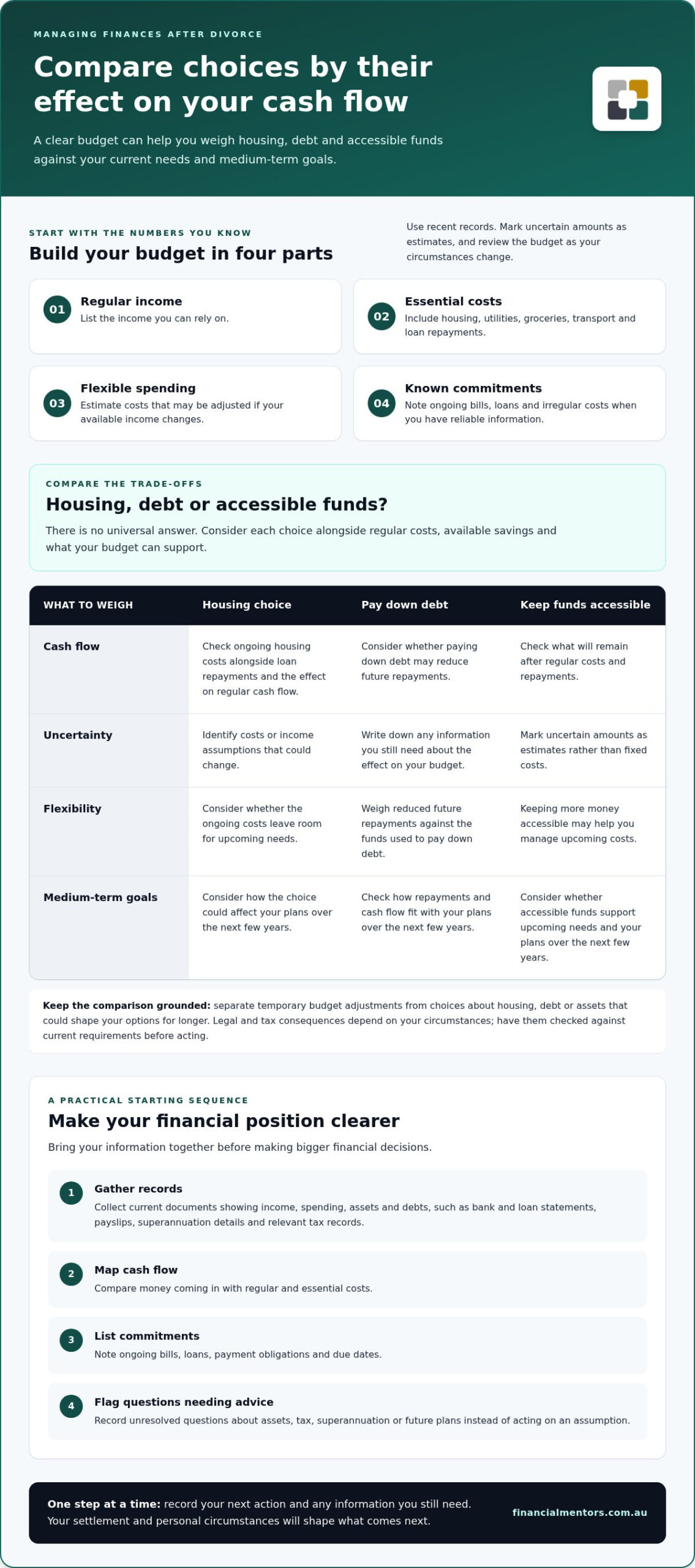
A post-divorce budget helps you test what your current income can support. Start with recent records, then organise your budget into four parts: regular income, essential costs, flexible spending and known financial commitments. This practical approach to managing finances after divorce australia turns a changed financial position into everyday decisions you can review and adjust.
How can you create a realistic post-divorce budget?
List reliable income and essential expenses first, including housing, utilities, groceries, transport and loan repayments. Then estimate flexible spending, which may be adjusted if your available income changes. Add irregular expenses, such as annual bills or planned repairs, when you have reliable information. Mark uncertain amounts as estimates rather than treating them as fixed costs.
Leave room to review the budget as your income, housing or care arrangements change. The Australian Government’s divorce and separation financial checklist can help you identify practical money tasks during the transition.
How should you weigh housing, debt and cash-flow decisions?
Compare each option by more than its upfront cost or next repayment. To assess a housing choice, for example, look at ongoing costs alongside loan repayments, available savings and the effect on regular cash flow. Paying down debt may reduce future repayments, while keeping more money accessible may leave you better placed to manage upcoming costs. The right balance depends on your circumstances.
For each option, note:
- Cash-flow effect: What will remain after regular costs and repayments?
- Uncertainty: Which costs or income assumptions could change?
- Flexibility: Will the choice leave funds available for unexpected needs?
- Medium-term goals: How might it affect your plans over the next few years?
Separate temporary arrangements from choices with lasting effects. You may be able to revisit a short-term budget adjustment, while a decision about housing, debt or assets could shape your options for longer. There’s no universal answer. Compare the likely ongoing affordability of each option and write down any information you still need. Legal and tax consequences depend on your individual circumstances, so have them checked against current requirements before acting.
Once you’ve compared the options, record your next action and any question that needs advice. You can also discuss your financial next steps as part of a wider review of your priorities.
How divorce can affect superannuation, tax and long-term goals
Settlement outcomes can change the resources available for retirement, housing and other long-term goals. When managing finances after divorce australia, look beyond the immediate amount or asset you receive and consider how the overall outcome may affect your plans over time. The next steps will depend on your circumstances and the arrangements reached.
What should you review about superannuation and retirement?
Check your latest superannuation statements and record your balance, fund details and any contributions you expect to continue. If your settlement includes an agreed superannuation outcome, consider how it affects your retirement resources and update your projections. The Australian Retirement Trust guide to how separation can affect superannuation provides further background.
Review the assumptions behind your retirement plan. Have your expected contributions, work plans or preferred retirement timing changed? Your goals may stay the same even if the path to reach them needs adjusting. You can also read this guide to planning for retirement as you consider what future security means for you.
What tax and estate planning questions belong on your list?
Before deciding what to do with transferred assets or investments, identify any tax questions that need current, personal verification. Tax treatment can depend on the asset, settlement arrangements and your circumstances, so don’t assume there will be no tax effect. Keep relevant records and seek advice before relying on an assumption.
A major life change is also a prompt to review your estate planning documents and intended arrangements. Consider whether the people, beneficiaries and instructions you previously chose still reflect your wishes. You can also explore information about estate planning advice in Australia.
It may help to separate decisions affecting your budget now from questions about future plans:
| Immediate cash-flow questions | Longer-term planning questions |
|---|---|
| What income and funds are available for current expenses? | How might the settlement affect your retirement resources? |
| Which payments or commitments need attention soon? | Do your contribution, work or retirement assumptions need updating? |
| Are there tax questions to verify before acting? | Do your estate planning arrangements still reflect your wishes? |
Use the short-term view to support day-to-day stability, then revisit longer-term goals with updated information. A financial plan can connect the two and help you understand how current decisions may shape your future options.
A practical step-by-step plan for rebuilding financial stability
You don’t need to resolve every financial question at once. A staged plan can turn the information you have into manageable actions while leaving room for details to become clearer. This practical approach to managing finances after divorce australia helps you keep immediate tasks moving without losing sight of future priorities.
What can you do in the first weeks of your financial reset?
Organise the records you already have and list upcoming payment dates. Record confirmed income and essential expenses, then mark figures or arrangements that are still estimates. If a decision depends on information you don’t yet have, write down what’s missing and what you need to find out instead of rushing to decide.
Turn your notes into an action list. For each item, write the next step, who will take it, a target date and any unresolved question. For example, you might obtain an updated loan statement and check the balance before reviewing repayment options. Set a manageable date to revisit the list and note what has changed.
How can you rebuild goals without overcommitting?
Once your records and budget are in order, begin setting provisional goals that fit your current capacity. Separate immediate needs from medium-term goals and long-term goals. You might focus first on meeting essential costs, then consider a future housing plan or retirement objective when you have a clearer view of your finances.
A goal can provide direction without needing a fixed dollar target straight away. Your income, expenses, settlement arrangements and personal priorities all affect what is realistic. Don’t assume one savings target or investment choice is right for everyone. Instead, note what you can commit to now and what you’ll reassess later.
Build a periodic review into your plan, especially if your income, housing, care arrangements or settlement details change. At each review, update your records, check which actions are complete and revise dates or goals where needed. This keeps the plan connected to your circumstances instead of relying on assumptions that may no longer apply.
- Now: organise records, confirm payment dates and note essential costs.
- Next: follow up unresolved questions and complete practical actions.
- Later: revisit medium-term goals and long-term goals as your financial position becomes clearer.
You can explore tailored financial planning to help connect your updated financial position with practical next steps.
When financial advice can help turn a new position into a plan
You may have a clearer picture of your income, expenses and assets, but still be unsure how the pieces fit together. Financial advice can help you connect day-to-day cash flow with retirement, estate planning and other priorities. A financial plan sets out strategies and recommendations around your goals, based on your circumstances and the information available.
What can a financial plan help you bring together?
A plan can help you consider how current decisions relate to future needs. For example, a change in income or housing costs may affect what you can set aside for retirement or other goals. Depending on your circumstances, planning may also consider wealth creation strategies and whether your estate planning arrangements still reflect your wishes.
The benefit is being able to consider how decisions relate, rather than treating each one in isolation. Recommendations depend on the details of your financial position, settlement arrangements and priorities. If information is incomplete, that can be recognised as part of the planning process rather than treated as certain.
What happens at the first appointment?
The initial meeting is step 01 of the Financial Mentors Wealth Management process. It’s an opportunity to discuss your circumstances and what you’d like your financial future to look like. A complimentary initial consultation offers a considered starting point for that conversation, without promising a particular outcome or advice scope.
To make the discussion practical, bring or prepare a simple snapshot of your:
- income and regular expenses
- assets, savings and debts
- known financial commitments and payment dates
- superannuation information and any relevant settlement details
- questions about cash flow, retirement or future plans
You don’t need every answer before the meeting. A list of unresolved questions can be as useful as confirmed figures. It gives you a clear place to begin and helps identify what information may be needed for future decisions.
Financial Mentors Wealth Management has provided professional planning advice since 2000. To discuss a practical way forward, take step 01 towards your financial plan. Tailored planning can help bring structure to managing finances after divorce across Australia while keeping your personal priorities at the centre.
Take your next step towards greater financial clarity
Managing finances after divorce australia can feel like a lot to hold at once, but you can make progress in stages. Start with a clear view of your financial position, then build a budget around current income, essential costs and ongoing commitments. Next, review how settlement outcomes may affect superannuation, tax, retirement and your long-term goals.
Your circumstances will shape the choices ahead, so give yourself time to check information and adjust your plans as things become clearer. A tailored financial plan can connect immediate decisions with future priorities, including retirement and estate planning.
Financial Mentors has provided professional planning advice since 2000. The initial meeting is step 01 of the process and a complementary opportunity to discuss your circumstances. If you’re ready to explore a practical way forward, take step 01 towards your financial plan.
Each considered step can help you build a clearer foundation for what comes next.
Frequently Asked Questions
How should I start managing finances after divorce in Australia?
Start by gathering current records and listing your income, expenses, assets, debts and ongoing financial commitments. This snapshot helps you identify immediate payment needs and unanswered questions. Next, draft a practical budget and note which decisions depend on settlement details or other information. Treat your first plan as a working document, not a fixed answer. As your circumstances become clearer, review it and adjust your priorities.
What documents should I gather after a divorce?
Gather recent bank and loan statements, income records, household bills, superannuation information, insurance details and recent tax documents. Include any settlement information relevant to your current finances. Keep a separate list of details that are missing or uncertain instead of guessing. These records help you understand your financial position and make budgeting or financial planning conversations more focused. Update them as information or circumstances change.
How do I make a budget after separation?
Build your budget around current income and essential expenses, then include debt repayments and other financial commitments. Add irregular costs, such as annual bills, if you have reliable figures. Separate essential spending from flexible costs and compare your estimates with recent records. If your income, housing or care arrangements change, update the budget to reflect your circumstances. Regular reviews can help you spot changes and make informed adjustments.
What happens to superannuation after divorce in Australia?
Superannuation may form part of financial arrangements after divorce, but the effect depends on your circumstances and any applicable settlement arrangements. Check your current fund information and note questions about contributions, access and projected retirement income. Don’t assume a general example applies to you. Before making decisions, verify current Australian rules and consider how your own arrangements may affect your future plans.
Should I close a joint account after separation?
There isn’t one answer that suits everyone. First, identify which payments, income and financial commitments use the account, and whether another person or arrangement is connected to it. Record any concerns and consider how a change could affect upcoming payments or access to funds. Your circumstances and settlement arrangements matter, so treat general online information as a starting point, not a personal recommendation.
Can I afford to keep the family home after divorce?
Assess more than whether you can meet the next repayment. Compare your income with housing costs, other debts, maintenance and likely irregular expenses, then consider how much flexibility would remain. Use current figures and account for costs that could change over time. Whether keeping the home is practical depends on your wider financial position and settlement arrangements. Compare it with other realistic options before deciding.
When should I speak with a financial adviser after divorce?
You can seek financial guidance when you need help understanding your financial position, setting a workable budget or connecting settlement outcomes with retirement and other goals. Advice may also help when key decisions depend on information you don’t yet have. Bring the records available to you and a list of questions. You don’t need every detail resolved before starting a conversation. Advice should reflect your circumstances and priorities.