

Cash can be a sensible part of your plan, yet it may lose purchasing power if its after-tax return falls below inflation. That doesn’t mean you need to rush into riskier investments. A measured approach starts with your goals and the time you have to reach them. If you’re asking “how to invest during high inflation australia”, begin by looking at your own financial position rather than reacting to a headline.
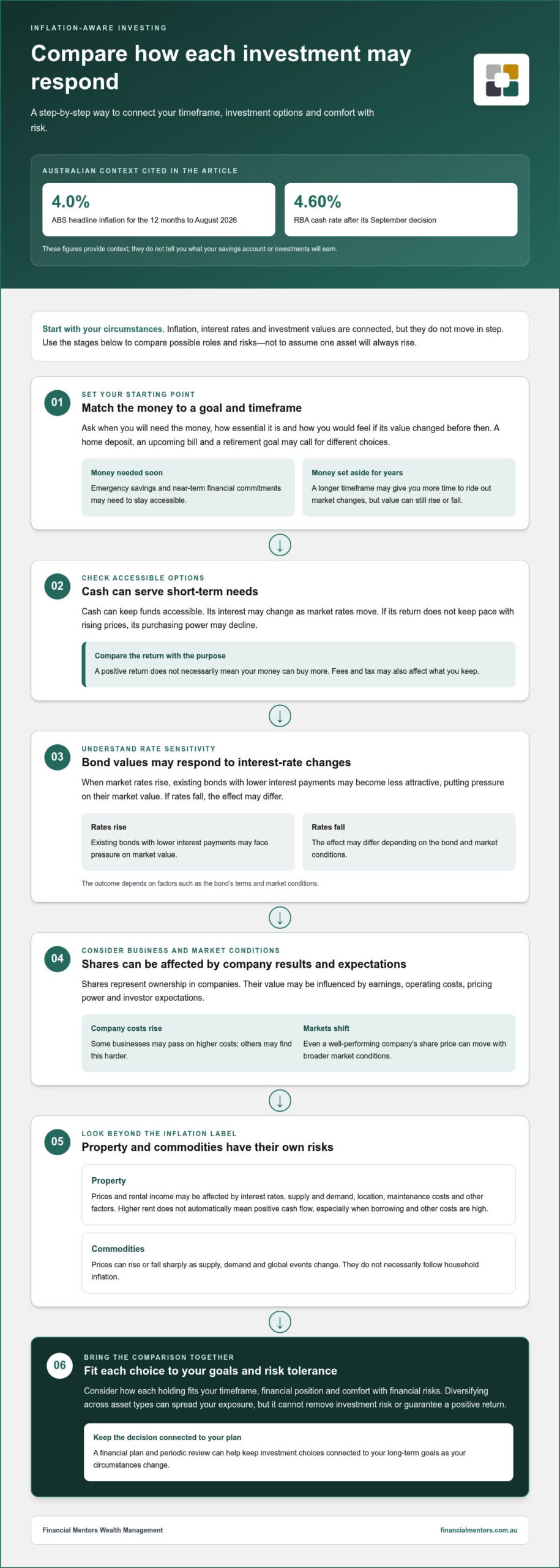
The ABS reported headline inflation of 4.0% for the 12 months to August 2026, while the Reserve Bank of Australia’s cash rate was 4.60% after its September decision. These figures offer context, but they don’t tell you what your savings account or investments will earn. Compare how cash, shares, bonds and property may fit your circumstances instead of relying on the latest figures alone.
This guide explains how inflation can affect your savings and different asset types, then sets out practical steps for weighing your timeframe, financial commitments and comfort with risk. You’ll also see how a financial plan and periodic review can help keep investment choices connected to your long-term goals as your circumstances change.
Key Takeaways
- Understand how inflation may affect the purchasing power of cash and the value of different investments.
- Compare cash, fixed interest, shares and property by considering their potential role, risks, liquidity and timeframe.
- Learn how to invest during high inflation australia by starting with your goals, financial position and comfort with risk, rather than reacting to headlines.
- Use a step-by-step process to review your income, assets, debts, expenses and financial commitments before making changes.
- Connect investment choices with your financial plan and long-term goals, then set a periodic review to revisit your approach.
How high inflation can affect your money and investment decisions
Inflation is a rise in prices over time, which means the same amount of money may buy less. If your savings earn a return below inflation, their purchasing power can fall. The result depends on the return you receive and how prices change. Look beyond the balance in your account and consider what that money may need to pay for.
Inflation and investment returns
Inflation measures how prices change over time. Investment return is the income or change in value an investment produces. A return may be positive, but if it falls short of inflation, your purchasing power may still decline. Neither outcome is guaranteed.
What does inflation mean for your purchasing power?
Imagine your regular household shop costs A$100. If prices for those items rise by 4%, the same shop would cost A$104. This is a simple illustration, not a prediction of what any household will pay. Your own costs may change differently because your spending habits won’t match the average basket exactly.
The Australian Bureau of Statistics (ABS) tracks the Consumer Price Index (CPI), which measures price changes across a basket of goods and services. The latest available CPI figure in the ABS data cited here was 4.0% for the 12 months to August 2026. Your household’s experience may differ depending on what you buy and how your costs change.
Some investors consider an inflation hedge when thinking about preserving purchasing power. It’s a useful concept, but no asset type guarantees protection. Consider your goals and risks before changing your investments.
Why your timeframe matters when investing
Money you may need soon often serves a different purpose from money set aside for long-term goals. Emergency savings and funds for near-term financial commitments may need to remain accessible, so a short-term fall in value could be difficult to manage. Money invested for years may allow more time to ride out market changes, but it can still rise or fall in value.
Start by matching each amount to a goal and timeframe. Ask yourself when you’ll need the money, how essential it is and how you would feel if its value changed before then. A home deposit, upcoming bill and retirement goal may call for different choices. Your comfort with financial risks matters too.
When deciding how to invest during high inflation in Australia, don’t let a headline set your timeframe. A clear view of your goals, financial commitments and ability to tolerate market changes can help you compare options calmly. Exploring wealth creation strategies may also help you consider how investment decisions fit into your wider plans.
How inflation, interest rates and investment risks interact
Inflation, interest rates and investment values are connected, but they don’t move in step. The Reserve Bank of Australia (RBA) may change the cash rate to influence borrowing and spending, while markets also respond to expectations, company results and wider economic conditions. The Reserve Bank of Australia’s explanation of inflation sets out how inflation is measured and why it matters. For you as an investor, the practical point is that an interest-rate change can affect different assets in different ways.
A nominal return is an investment’s stated return before adjusting for inflation, while a return after inflation reflects how that return changes your purchasing power. Fees and tax may also affect what you keep.
What can happen to cash, bonds and shares?
Cash can help you meet short-term needs and keep funds accessible. The interest it earns may change as market rates move, but cash isn’t a guaranteed inflation hedge. If its return doesn’t keep pace with rising prices, its purchasing power may decline.
Bond values can respond to interest-rate changes. If market rates rise, existing bonds with lower interest payments may become less attractive, which can put pressure on their market value. If rates fall, the effect may differ. The result depends on factors such as the bond’s terms and market conditions. Changing rates can also affect borrowing costs for households and businesses.
Shares represent ownership in companies, so their value may be influenced by earnings, operating costs, pricing power and investor expectations. Some businesses may pass on higher costs, while others may find this harder. Even if a company performs well, its share price can still move with broader market conditions.
Do property or commodities always protect against inflation?
No single asset is a dependable safeguard in every situation. Property prices and rental income can be influenced by interest rates, supply and demand, location, maintenance costs and other factors. Higher rents don’t automatically mean an investment property will produce positive cash flow, particularly if borrowing and other costs are high.
Commodities, including resources used in industry, can rise or fall sharply as supply, demand and global events change. Their prices don’t necessarily follow household inflation. Diversifying across asset types can spread your exposure, but it can’t remove investment risk or guarantee a positive return.
Investing during high inflation is less about finding one asset that must rise and more about understanding how each holding fits your goals and risk tolerance. If you’d like help connecting those decisions with your wider circumstances, financial planning advice can help you consider an approach suited to your situation.
How to compare investment options during high inflation
Compare investments by the role they may play in your plan, not just by how they’ve performed recently. Consider when you’ll need the money, how quickly you can access it, how much its value may change and how it fits with your other assets. A higher potential return may come with greater uncertainty and a higher risk of loss.
The table outlines general characteristics only. It isn’t a personal recommendation or a prediction of future performance. Calling an investment an inflation hedge doesn’t remove its risks or ensure it will keep pace with rising prices.
| Investment type | Possible role and key risks | Access and timeframe |
|---|---|---|
| Cash | Can provide ready access for emergency savings or near-term expenses. Its purchasing power may fall if its return doesn’t keep pace with inflation. | Generally accessible, though account terms may apply. Often considered for immediate or shorter-term needs. |
| Fixed interest | May provide income and balance other assets. Values can change as interest rates and market conditions shift. | Access varies by investment and terms. Consider whether the timeframe suits your goals and when you may need the funds. |
| Shares | May offer growth and income, but prices and company earnings can fluctuate. Australian shares listed on the ASX are one part of the wider market, not an endorsement of any investment. | Usually bought and sold through a market, but sale value can vary. Price movements may be more manageable when investing for longer periods, though losses remain possible. |
| Property | May provide rental income or potential for value changes. Costs, interest rates, location and demand can all affect the outcome. | Typically less readily sold than cash or listed shares. Consider carefully if you may need the money soon. |
Which factors help you compare investments?
Start with your timeframe and access needs. Then consider potential volatility, how the investment would sit alongside your existing assets, and your financial position, including debts and financial commitments. Diversification can spread exposure across different assets, but it can’t remove risk or guarantee positive returns. ASIC’s practical guide to investing also explains why goals and risk matter when comparing options.
How do superannuation and tax fit into the decision?
Superannuation is generally intended for the longer term, and rules can affect when you can access your money. Check current information from the Australian Taxation Office before making decisions about contributions or tax. Your tax position may depend on your circumstances, so consider how investment choices fit with your broader plans and tax return preparation.
A considered approach to investing during high inflation means weighing these features against your own needs, rather than choosing an asset based on its label or recent performance.
A practical process for investing during high inflation
A steady process can help you make investment decisions without letting a single inflation report or forecast set the direction. Work through these steps before changing your investments, and keep your goals at the centre.
- Start with your goals and timeframes. List what each pool of money is for, such as an upcoming expense, a home deposit or retirement. Note when you may need the funds. Money for near-term needs may call for a different approach from money set aside for long-term goals.
- Map your financial position. Bring together your income, assets, debts, expenses and financial commitments before making changes. Include your existing investments and any costs or access conditions that may affect a change. This gives you a clearer view of what you can invest while still meeting your day-to-day needs.
- Set priorities and consider your comfort with risk. Think about an emergency buffer that suits your household and commitments, without relying on a standard amount. Ask how you might respond if an investment fell in value and you needed to wait before selling. Your tolerance for uncertainty and potential loss should help shape your decisions.
- Compare options against your needs. Consider each investment’s possible role, timeframe, access to your money and financial risks. Look at how your choices work together, rather than judging each one in isolation. Diversification can spread exposure, but it can’t prevent losses or guarantee returns. Record why a choice supports a particular goal, including what could prompt you to reconsider it.
- Set a review plan. Choose a time to check whether your investments still match your goals, timeframes and financial position. Revisit the plan if your circumstances or priorities change. Avoid a rushed adjustment based on one inflation figure or forecast. A single report is only one piece of information, not a complete assessment of your needs.
This process offers a practical starting point: connect each investment decision to a goal, understand the trade-offs and give yourself a clear reason for acting. If you’d like support turning these steps into a financial plan, arrange an initial meeting to discuss your circumstances and priorities.
How financial planning can support inflation-aware investing
Investment choices are easier to assess when they sit within a wider plan. A financial plan can connect your savings and investments with your income, financial commitments, timeframes and long-term goals. That context matters during inflation because a decision that suits one person may not suit another, even if both are responding to the same economic conditions.
When may a tailored financial plan help?
Tailored advice may be useful if you’re nearing retirement, changing your goals or managing investments alongside several priorities. For example, you may need to balance building retirement savings with keeping money available for a home purchase or other upcoming costs. A plan can help you consider these needs together rather than judging an investment on its own.
Recommendations depend on your financial position, the timeframe for each goal and your comfort with financial risks. If retirement income is a key concern, retirement planning can help you consider how your investments relate to the income you may need and the choices available to you. Tax return preparation may also provide useful context when reviewing your broader finances, but tax outcomes depend on your circumstances.
If you’re weighing how to invest during high inflation in Australia, tailored advice can help connect general information to your own situation. Financial Mentors Wealth Management has provided professional planning advice since 2000.
What should an ongoing review consider?
A periodic review gives you a chance to check whether your plan still reflects your life and priorities. You might revisit:
- Your goals and the timeframes for each one.
- Your investment mix, access needs and exposure to financial risks.
- Changes in income, expenses, debts, family circumstances or financial commitments.
- Current Australian economic information, while treating forecasts as possibilities rather than certain outcomes.
If your circumstances or goals change, a review can help you consider whether your approach still fits. If nothing material has changed, it may reinforce the reasons behind your existing plan. Either way, it’s a chance to make decisions thoughtfully instead of reacting to each new headline.
The initial meeting is step 01 of Financial Mentors Wealth Management’s process. A complementary initial consultation gives you a calm first conversation about your circumstances and goals.
Build an investment approach around your future
Inflation can affect what your money buys, but no single investment offers a guaranteed answer. The right approach starts with your goals, timeframes and financial position. By comparing cash, fixed interest, shares and property carefully, you can weigh access needs and risks without rushing to act on a headline.
Understanding how to invest during high inflation in Australia is ultimately about making considered choices that fit your circumstances, then reviewing them as your goals or life changes. A financial plan can help connect investment decisions with priorities such as retirement and ongoing financial commitments.
Financial Mentors has provided professional planning advice since 2000. The initial meeting is step 01 of the process, and advice is delivered under the AFSL of Financial Mentors AFSL Pty Ltd. If you’d like to talk through your goals and circumstances, arrange a complementary initial consultation.
A steady, personal plan can help you move forward with greater clarity and confidence.
Frequently Asked Questions
How can you invest during high inflation in Australia?
Start by matching investment choices to your goals, timeframe and comfort with risk. Map your income, assets, debts, expenses and financial commitments before making changes. Keep money for emergencies and near-term needs distinct from funds intended for long-term goals. Then compare options such as cash, fixed interest, shares and property, considering access and possible losses. Your approach to investing during high inflation should reflect your circumstances, not follow headlines alone.
Is cash a bad investment when inflation is high?
No, cash can still serve a useful purpose, especially for emergency savings and money you may need soon. It is generally accessible, though account terms can apply. However, if the interest earned falls short of inflation, the money may lose purchasing power over time. Consider what each cash holding is for and compare its access and return with your needs, rather than treating cash as either a complete solution or a poor choice.
Can shares protect your money from inflation?
Shares may help support long-term growth, but they don’t reliably protect your money from inflation. Company earnings, operating costs, pricing power, valuations and market conditions can all affect share prices. Some businesses may manage rising costs better than others, but their shares can still fall in value. Consider shares as one part of a diversified approach, and check whether their potential volatility suits your timeframe and ability to tolerate losses.
What happens to bonds when interest rates rise?
Existing bond values may fall when market interest rates rise, because their fixed payments can look less attractive than newer investments offering higher rates. The effect depends on the bond’s terms, including when it matures, and on market conditions. Bonds can also provide income and play a role in balancing a portfolio. Their value and income aren’t guaranteed, so consider their risks and timeframe alongside your other investments.
Should you change your superannuation investments during high inflation?
Not automatically. Superannuation is generally intended for the long term, and rules can affect when you can access your money. Before changing your investment options, consider your age, retirement plans, timeframe, risk tolerance and the mix of investments already held. A decision based only on current inflation may not suit your broader circumstances. Check current Australian Taxation Office information for relevant superannuation and tax details, and consider tailored advice if you’re unsure.
Is property a reliable hedge against inflation in Australia?
No, property isn’t a reliable hedge in every situation. Property values and rental income can be affected by interest rates, local supply and demand, location, maintenance costs and other market conditions. Rising rents don’t necessarily mean rental income will cover loan repayments and other expenses. Property can also take time to sell compared with more liquid investments. Weigh these factors against your goals, timeframe and financial position before investing.
How often should you review investments during high inflation?
Set a periodic review plan that fits your goals and circumstances, rather than reacting to every new inflation report. At each review, check whether your investment mix, timeframes and access to money still suit your needs. Revisit your plan sooner if your income, expenses, family circumstances or priorities change. Economic data and forecasts can inform your thinking, but they can’t predict outcomes with certainty or determine what’s right for you.