

Start with shared values, then talk through your priorities, existing documents and anything that may need updating. This gives you a practical way to talk to your spouse about estate planning without trying to settle every decision at once. Your plans can cover what happens after death and who can make decisions if either of you cannot.
It’s understandable if the subject feels personal or difficult to raise. A calm conversation isn’t about agreeing on everything straight away. It’s about listening to each other and making your intentions clearer.
This article offers practical ways to choose the right moment, discuss family and financial priorities, and review the documents you already have. You’ll also find conversation openers to help you begin and ideas for revisiting your plans when life changes. A few thoughtful steps can help you and your spouse move forward with greater clarity and a shared sense of direction.
Key Takeaways
- Begin with the values and future goals you share, then discuss how you’d like your estate to support the people who matter to you.
- Choose a calm, private moment for the conversation and make space for each of you to raise concerns without interruption.
- Gather your existing documents and talk through who has which responsibilities, as well as what may need updating after a life change.
- Use open-ended prompts to get started, and treat the first conversation as a chance to understand each other rather than settle every decision.
1. Discussing values, financial goals and estate priorities
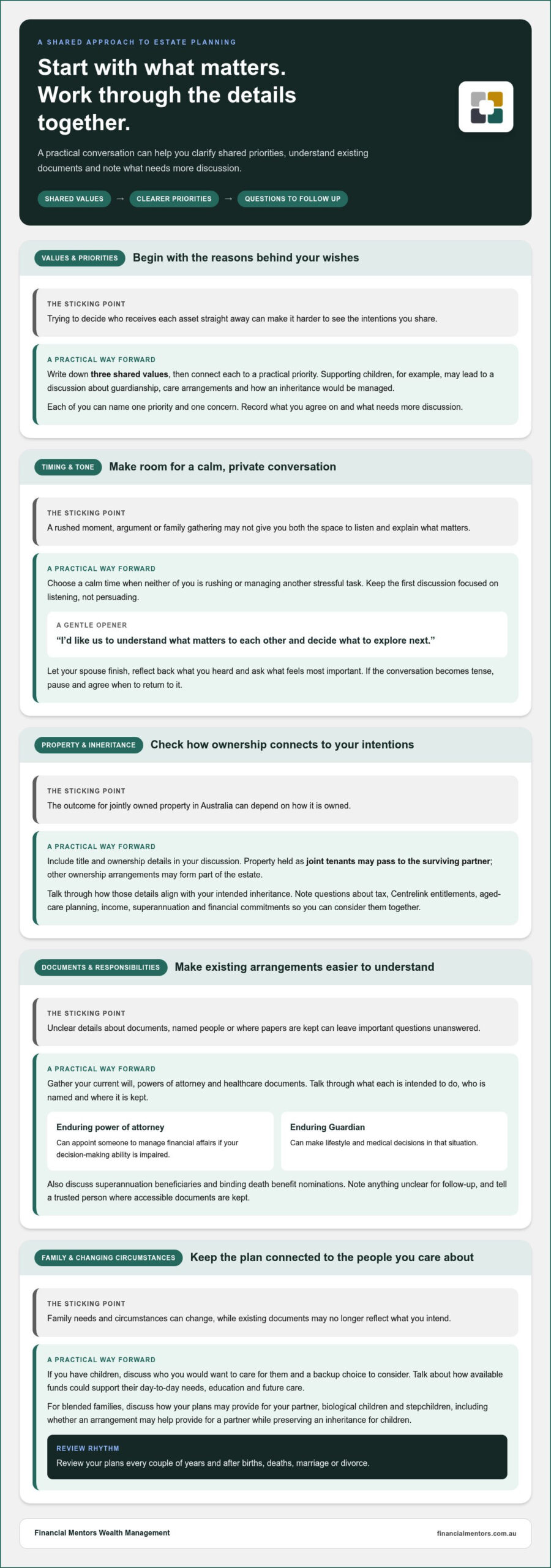
Start with what you want your estate plan to protect, rather than who receives each asset. You might both value supporting your children, keeping a family home available or providing for a partner. Write down three shared values, then connect each to a practical priority. For example, supporting children could mean discussing guardianship, care arrangements and how an inheritance would be managed. Shared aims give you a clearer basis for decisions, even if you differ on the details.
Before you sit down, make a short preparation list. Note your goals, concerns and questions, then gather key documents such as existing wills and records of jointly owned assets. Each of you can identify one priority and one concern. You might want to protect a surviving partner while also preserving an inheritance for children from an earlier relationship. Explain the reasons behind your preferences. That context can help an unexpected choice feel less personal.
For jointly owned property in Australia, the outcome can depend on how it is owned. Property held as joint tenants may pass to the surviving partner, while other ownership arrangements may form part of the estate. Include title and ownership details in your discussion, and consider how they align with your intended inheritance.
For tax, Centrelink entitlements and aged-care planning, identify how proposed inheritance or asset arrangements could affect your household finances and future care plans. Add these questions to your list alongside income, superannuation and financial commitments, so you can consider them together rather than in isolation.
Agree on shared estate planning goals before trying to settle every detail. Ask, “What would peace of mind look like for each of us?” Then record what you agree on and what needs more discussion. If you’re working out how to talk to your spouse about estate planning, focus first on values and intentions. A written summary gives you both a practical starting point for future decisions and updates.
2. Setting a positive tone and choosing the right time and place
Choose a calm time when neither of you is rushing to work, managing children or handling another stressful task. A quiet evening at home may suit you better than raising estate planning during an argument or family gathering. Set aside time for a conversation instead of trying to settle every detail in a brief chat. You could agree to discuss your wishes over dinner, then pause if either person feels overwhelmed. A planned time helps both of you arrive ready to listen.
Set a constructive tone by explaining why you want to talk. For example, you might say, “I’d like us to understand what matters to each other and decide what to explore next.” Keep the first discussion focused on listening, not persuading. Let your spouse finish, reflect back what you heard, and ask what feels most important to them. If you disagree about a choice, name the concern behind it. Understanding the reason can help you find common ground without forcing an immediate decision.
Start privately as a couple, then consider who else needs to be involved. You may later want to include an adult child, a proposed executor or someone you trust with sensitive information. Before sharing personal details, decide together what each person needs to know and why. If family trusts or caregiving wishes affect others, plan how to explain those topics clearly. Anyone asked to take on a role should understand what it involves and have space to respond.
If the conversation becomes tense, take a break and agree when to return to it. Write down unresolved questions so neither of you has to hold every detail in mind. You can then bring those questions to financial planning advice when you’re ready to connect estate priorities with your broader plans.
3. Explaining existing estate planning documents and updates
Gather your current will, powers of attorney and healthcare documents before discussing updates. Explain what each document is intended to do, who is named and where you keep it. In Australia, an enduring power of attorney can appoint someone to manage financial affairs if your decision-making ability is impaired. An Enduring Guardian can make lifestyle and medical decisions in that situation. Note any questions or unclear details for follow-up.
If someone dies without a will, state law determines how their property and responsibilities are handled. Loved ones may then have to manage arrangements that don’t reflect the person’s wishes. Discuss whether your current documents cover the people and circumstances you intend.
To make or update a will, first write down the changes you want, such as naming a different executor or updating provisions for children. Then seek advice about preparing or changing the document and the steps needed for it to take effect. Costs depend on the complexity of your wishes and the work involved, so consider this alongside any related documents. Also discuss superannuation beneficiaries and binding death benefit nominations. Include these details in the same review as your will, rather than assuming one document covers everything.
If you have children, discuss who you would want to care for them and name a backup choice to consider. Talk through how available funds could support their day-to-day needs, education and future care. Record any questions about guardianship and financial arrangements for follow-up.
For blended families, explain how you want your plans to provide for your partner, biological children and stepchildren. Discuss whether a trust or other arrangement may help provide for a partner while preserving an inheritance for children. Keep documents accessible, including through a secure online portal if you use one, and tell a trusted person where to find them. Review your plans every couple of years and after births, deaths, marriage, divorce or substantial financial changes. After each discussion, write down questions, agreed actions and who will follow up.
4. Conversation openers about estate plans
A direct, gentle opening can make the first conversation easier. Try, “Could we set aside time to talk about what we’d want our estate plan to achieve?” This invites a shared discussion without asking either person to decide immediately. You could also say, “I’d like to understand what matters most to you if our circumstances change.” Choose wording that feels natural, then give your spouse time to respond.
Use open questions to explore specific priorities. For example, ask, “What would you want our assets to provide for?” or “Which family wishes feel most important to include?” If you have existing plans, try, “Would you be comfortable looking at our documents together?” Keep each question focused on one topic. This makes it easier to hear each other’s reasons and note anything that needs more thought.
Choosing an executor is another useful starting point. You might ask, “Who do you think could manage those responsibilities, and why?” Discuss what the role involves and whether your preferred person would be willing to take it on. If you have different choices in mind, compare your reasons, such as reliability, familiarity with your family or ability to organise details. Aim to understand each other first, then record any decision or question for later.
If one of you feels unsure, suggest a small next step: “Could we each write down our main questions before we talk again?” A pause can help if the conversation becomes focused on frustration rather than understanding. Before finishing, summarise one point you agree on and one item to revisit. That gives your next discussion a clear starting place. If you’d like help connecting your priorities with an estate plan, explore estate planning advice.
Financial Mentors Wealth Management: Financial Planning
Financial Mentors Wealth Management can help you connect estate priorities with your broader financial plans. If you and your spouse have identified questions about inheritance, future income or how your plans fit retirement, its Financial Planning and Estate Planning Advice can help you consider these decisions together. You can bring your agreed priorities and questions to an initial meeting, the first step in its process. This can help you understand which financial considerations need attention and how they relate to your long-term goals. Advice can also support your wider retirement planning and wealth creation strategies, where relevant to your circumstances. The next step is a conversation about the priorities you’ve identified. Contact Financial Mentors Wealth Management to discuss your planning needs.
Keep your shared plans moving forward
A first conversation can begin a more deliberate approach to your future together. You don’t need to resolve every question at once. Instead, agree on one next step, such as setting aside time to review an unresolved point or noting a change you want to discuss. Learning how to talk to your spouse about estate planning can help keep your decisions grounded in what matters to both of you.
Your priorities may shift as family life, work and retirement plans evolve. Keeping communication open gives you a chance to revisit your intentions together, rather than treating planning as a one-off task. A shared understanding can make it easier to move forward with care and purpose.
If you’re ready to connect your estate priorities with your broader financial future, contact Financial Mentors Wealth Management to discuss the next step. You can build clarity together, one considered conversation at a time.
Frequently Asked Questions
How should I start a conversation with my spouse about estate planning?
Start with a shared intention, such as making sure your plans reflect what matters to both of you. A helpful way to begin talking to your spouse about estate planning is, “Could we discuss what we’d want our plans to achieve?” Then agree on one topic for that conversation. If either of you feels uneasy, pause and choose another time to continue.
What estate planning decisions should married couples in Australia discuss?
Discuss what you’d want to happen if either of you couldn’t make decisions, as well as how you want your assets and responsibilities handled. Consider digital accounts, personal keepsakes and who should receive important family information. For example, agree on a trusted person who knows where essential records are kept. Your choices can reflect your family circumstances, values and preferences.
When should a couple use an estate-planning lawyer or financial adviser in Australia?
Consider a lawyer when you need help understanding or preparing legal documents, or when family circumstances make your intentions difficult to express clearly. A financial adviser can help connect estate priorities with your broader financial position, retirement plans and wealth goals. If both legal and financial questions arise, identify which decisions need each type of expertise and keep the discussions coordinated.
How often should spouses review their estate plan after major life changes?
Review your estate planning documents after a birth, death, marriage, divorce or substantial financial change, as these events may affect your intentions. It’s also practical to revisit the documents every couple of years, even if circumstances seem steady. Note any changes in your family or finances, then discuss whether your arrangements still match your wishes.