

A super death benefit is usually paid to the deceased’s nominated beneficiary or legal personal representative. The superannuation death benefits tax treatment depends on whether the recipient is a tax dependant and on the benefit’s tax-free and taxable components. If a lump sum goes to a non-dependant, its taxable component is generally taxed at 15% for the taxed element and 30% for any untaxed element, while its tax-free component is not taxed.
It’s understandable to expect a will to determine who receives everything, but superannuation can be distributed separately by the fund. The rules can be more complex when a benefit is paid to an estate or includes different tax components.
This guide explains who may receive a super death benefit, how a recipient’s dependency status affects payment options, and how tax-free, taxed and untaxed components are treated. It also explains how an estate distribution can affect the tax outcome, helping you understand what may pass to your family.
Key Takeaways
- Identify who may qualify as a dependant, as this can affect both how a benefit is paid and its tax treatment.
- Separate the tax-free, taxed and untaxed components to understand how a lump-sum benefit may be taxed.
- Consider how a benefit paid to an estate may be allocated between dependant and non-dependant beneficiaries.
- Review beneficiary arrangements and estate planning together to help make your intentions clearer.
Who can receive a death benefit of superannuation?
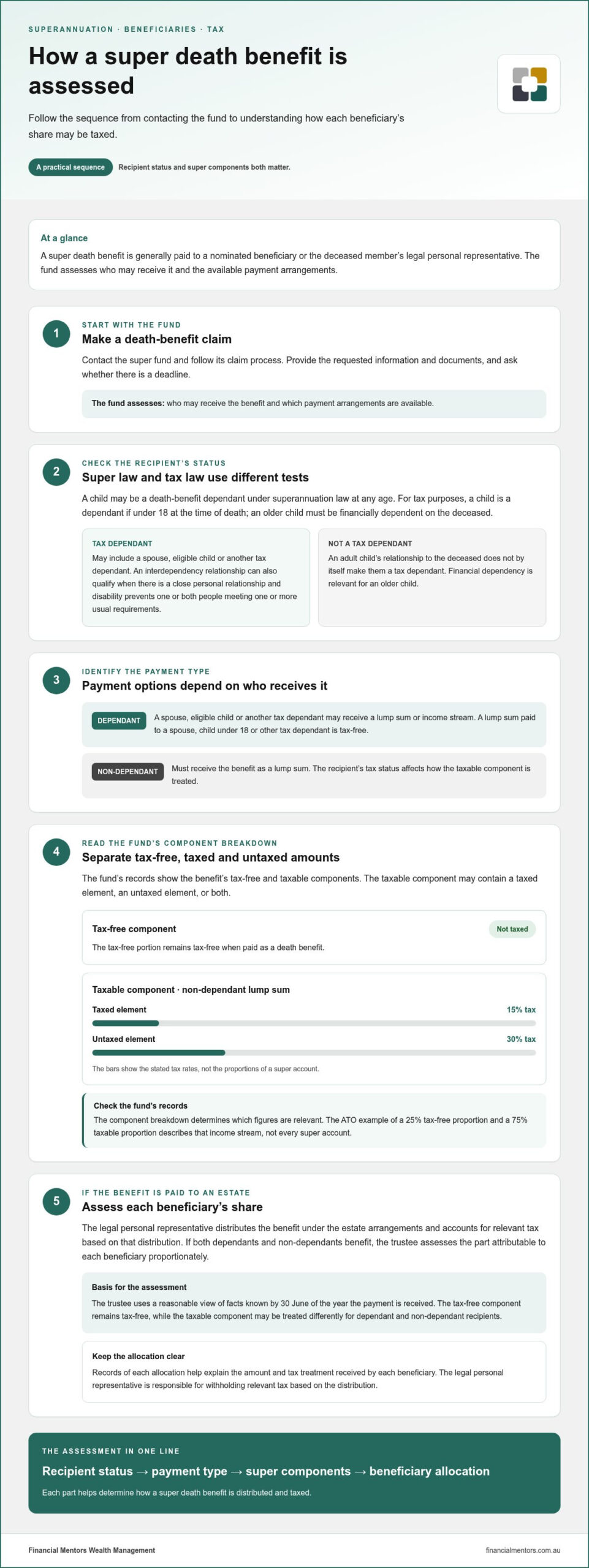
A super death benefit is generally paid to the member’s nominated beneficiary or legal personal representative. To make a claim, contact the super fund and follow its death-benefit claim process. Provide the requested information and documents, and ask about any deadline. The fund assesses who may receive the benefit and the available payment arrangements.
Superannuation law and tax law use different dependant tests. Under superannuation law, a deceased member’s child may be a death-benefit dependant at any age. For tax purposes, a child is a dependant if under 18 at the time of death. An older child must be financially dependent on the deceased to qualify as a tax dependant.
A spouse, an eligible child, or another tax dependant may receive a lump sum or income stream. A lump-sum benefit paid to a spouse, child under 18, or other tax dependant is tax-free. An interdependency relationship can also qualify: the people must have a close personal relationship, and disability must prevent one or both from meeting one or more usual requirements. These distinctions can change the superannuation death benefits tax treatment, even where superannuation law allows a child of any age to receive the benefit.
A recipient who is not a tax dependant must receive the benefit as a lump sum. The tax-free component is not taxed. The taxable component is taxed at 15% on its taxed element and 30% on its untaxed element. For example, if adult children receive a benefit and are not financially dependent, their relationship to the deceased does not by itself make them tax dependants. The component breakdown and each recipient’s status determine the relevant tax outcome.
If an estate benefits both tax dependants and non-dependants, the trustee assesses the part attributable to each beneficiary proportionately. The trustee uses a reasonable view of facts known by 30 June of the year the payment is received. This assessment helps distinguish each beneficiary’s share and its tax treatment.
Tax treatment of taxable and tax-free components
A super balance may include tax-free and taxable components. The taxable component can contain taxed and untaxed elements. These categories affect the amount a beneficiary receives after tax.
Taxable and tax-free components
The tax-free component is the portion of a super benefit that remains tax-free when paid as a death benefit. The taxable component is the remaining portion and may include a taxed or untaxed element. The fund’s records show this breakdown. Checking the components can help explain why beneficiaries receiving the same account balance may end up with different after-tax amounts.
Tax rates on taxable components
For a non-dependant receiving a lump sum, the taxed element of the taxable component is taxed at 15%, while the untaxed element is taxed at 30%. The tax-free component is not taxed. The taxable-component rates matter only after the recipient’s tax-dependant status and payment type are considered. A dependant’s super death benefit is generally tax-free on both taxable and tax-free components.
For example, the ATO’s income-stream example uses a 25% tax-free proportion and a 75% taxable proportion. Those proportions describe the deceased member’s income stream, not a universal split for every super account. The taxable amount and its elements depend on the fund’s records, so a trustee needs to identify the relevant figures before assessing tax.
Payment type can also affect the result. For a death benefit income stream from a taxed fund, payments are likely to be tax-free if the deceased or recipient was aged 60 or over at death. If both were under 60, different tax rules can apply to the taxable portion. This distinction matters when planning a transfer or comparing an income stream with a lump sum.
If you’re considering how beneficiary arrangements fit with broader estate plans, Estate Planning Advice can help you consider the tax components alongside your intended distribution.
Allocating estate distributions to super death benefits
A super death benefit is generally paid to the deceased member’s nominated beneficiary or legal personal representative. If paid to the estate, the legal personal representative distributes it under the estate arrangements. The payment to the estate is tax-free, but the representative must account for relevant tax based on how the benefit is distributed. The estate’s final allocation can therefore affect each beneficiary’s outcome.
Where an estate benefits both tax dependants and non-dependants, the trustee must assess the part attributable to each beneficiary proportionately. The trustee uses a reasonable view of the facts known by 30 June of the year the payment is received. For example, if an estate distributes super to a financially dependent spouse and a non-dependent adult child, each person’s attributable share must be assessed. The estate’s distribution, rather than a single assumed tax status, informs the treatment of those portions.
The tax assessment considers the beneficiaries and the relevant super components. The tax-free component remains tax-free, while the taxable component may be treated differently for dependant and non-dependant recipients. The legal personal representative is responsible for withholding relevant tax based on the distribution. Clear records of each allocation help explain the amount and tax treatment received by each beneficiary.
Estate planning brings beneficiary nominations and estate distributions into view together. Strategies to consider may include:
- Withdrawing amounts from superannuation funds.
- Making gifts before death.
- Considering recontribution strategies.
- Considering superannuation testamentary trusts.
These strategies can affect how wealth passes, but each has different financial and tax considerations. A recontribution strategy, for example, changes the balance of tax-free and taxable components, while a testamentary trust concerns how estate assets are distributed. For complex affairs and cross-border inheritance matters, consulting specialists such as Sheikh Najam TEP can assist in navigating trust and estate administration. Considering these choices as part of estate planning can help you understand how a future allocation may affect beneficiaries.
Tax treatment of super death benefits
In Australia, the tax outcome depends on the recipient’s relationship to the deceased, the payment type and the benefit’s components. A potential tax bill on a super balance can be as high as 32%. That figure reflects circumstances where taxable amounts and recipient status create a tax liability, rather than a single rate applying to every benefit.
For an income stream, tax depends on the ages of the deceased and beneficiary, whether the fund is taxed or untaxed, and the taxable proportion. If both were under 60 when a death benefit income stream begins, its taxable portion is assessable income, with a tax offset equal to 15% of that amount. If either was 60 or over, payments from a taxed fund are likely to be tax-free.
An untaxed fund has different rules. If both the deceased and beneficiary were under 60, the beneficiary receives no tax offset on the taxable portion. If the deceased or beneficiary was over 60 at death, the taxable portion of payments may qualify for a 10% offset. A child’s income stream must stop on or before their 25th birthday, unless the adult child has a permanent disability.
The ATO’s example illustrates how components affect an income stream payment. Anna died aged 66 on 1 December 2024 while receiving an account-based income stream. Brian’s lump sum included a A$50,000 tax-free component and a A$150,000 taxable component. The example shows why a nomination alone doesn’t determine tax: the fund type, recipient’s age and recorded components also matter.
A beneficiary whose marginal tax rate is below 17% may receive a tax credit after lodging their personal income tax return. That can affect the final tax outcome after withholding. Check how the super fund has classified each component and whether the payment is a lump sum or income stream.
If you’re reviewing how super fits your wider estate plans, consider Estate Planning Advice to help bring beneficiary arrangements and distributions into focus.
Financial Mentors Wealth Management: Financial Planning
Financial Mentors Wealth Management can help you consider super death benefits as part of your wider financial position. If you’re reviewing beneficiary nominations, estate distributions or retirement income, Financial Planning can connect these decisions with your broader goals. Estate Planning Advice can help you consider how super and other assets fit your estate arrangements, while Retirement Planning and Wealth Creation Strategies support decisions about your longer-term financial direction.
You may want advice when your family circumstances change, you update your estate plan or you want to understand how a potential benefit fits your existing plans. Bring your questions about beneficiaries, components and intended distributions to the conversation. Contact Financial Mentors Wealth Management or visit financialmentors.com.au to take the next step.
Make your next planning decision with clarity
Decisions about super and your estate can shape how your plans support the people who matter to you. Understanding the superannuation death benefits tax treatment is one part of that picture. A practical next step is to review whether your beneficiary arrangements still reflect your wishes and fit your wider financial priorities.
Financial Mentors Wealth Management offers Financial Planning, Retirement Planning and Wealth Creation Strategies. These services can help you consider how super decisions connect with your broader financial direction. If your circumstances or priorities have changed, a conversation can help you work through your questions and decide what to consider next.
Contact Financial Mentors Wealth Management to discuss your planning needs. Taking time to consider your options can help you move forward with greater confidence.
Frequently Asked Questions
How can I better plan to minimise this tax?
Review your beneficiary nomination and super components as part of your estate planning. The ATO recommends checking your nominated super beneficiary at least once a year. If your family circumstances change, reassess whether the nomination still reflects your intentions. You can also discuss strategies such as recontributions or gifts with a financial adviser, considering their tax and financial effects before acting.
How does it work?
After a member dies, the super fund assesses the nomination and who may receive the benefit. It pays the benefit to an eligible beneficiary or the deceased’s legal personal representative. The payment method and the recipient’s tax status affect the tax calculation. When the fund pays a beneficiary directly, it withholds tax. When the estate receives the benefit, the legal personal representative handles relevant withholding as distributions are made.
Is there a way to reduce the tax implications to my beneficiaries when I die?
Planning can help you consider how beneficiaries may be affected, but no single strategy suits every family. Review who is likely to receive your super and whether they qualify as tax dependants. You can also compare the likely effects of keeping funds in super, withdrawing amounts, making gifts or considering a testamentary trust as part of your wider estate arrangements.
What can be done to reduce this future tax?
Keep beneficiary details and estate arrangements aligned, then revisit them after major family or financial changes. One strategy to discuss is recontribution, which can alter the tax-free and taxable proportions of super. Other options include withdrawals or gifts before death. Consider how each choice affects your retirement income, assets outside super and intended inheritance, rather than focusing on tax alone.
What happens to my super when I die?
Your super fund assesses who can receive your benefit and pays it to an eligible nominated beneficiary or your legal personal representative. If the benefit is paid to your estate, it is distributed through the estate arrangements. Any income stream paid to a child has age limits: it must stop by age 25, except for an adult child with a permanent disability.
How are superannuation death benefits taxed in Australia?
Tax depends on the recipient’s tax-dependant status, payment type and the benefit’s components. For a non-dependant’s lump sum, the tax-free component is not taxed; the taxed element of the taxable component is taxed at 15%, and the untaxed element at 30%. A super fund withholds tax on direct payments. A beneficiary with a marginal tax rate below 17% may receive a tax credit after lodging a personal tax return.