

A family money plan should cover more than bills. It brings together income, spending, debt, savings and longer-term goals, helping you make decisions about milestones as a team. Getting your family on board with a financial plan starts with an open conversation about what matters to each of you.
Money conversations can feel awkward, especially when you have different spending habits or priorities. A practical plan doesn’t require you to agree on everything straight away. It gives you a shared view of your finances and a way to work through choices together.
You’ll learn what a family wealth plan can include and how to discuss spending and debt while keeping shared goals in view. The article also explores planning for milestones, setting priorities and making decisions as a family, one step at a time.
Key Takeaways
- Start by agreeing on the goals that matter most to your family, then turn them into practical savings priorities.
- Talk about spending habits and financial values with curiosity, so different perspectives can become part of the plan.
- Plan ahead for milestones such as education and family changes by considering how they may affect your finances.
- Review income, expenses and debt together to make shared decisions with a clearer view of your household finances.
1. What is Family Financial Planning?
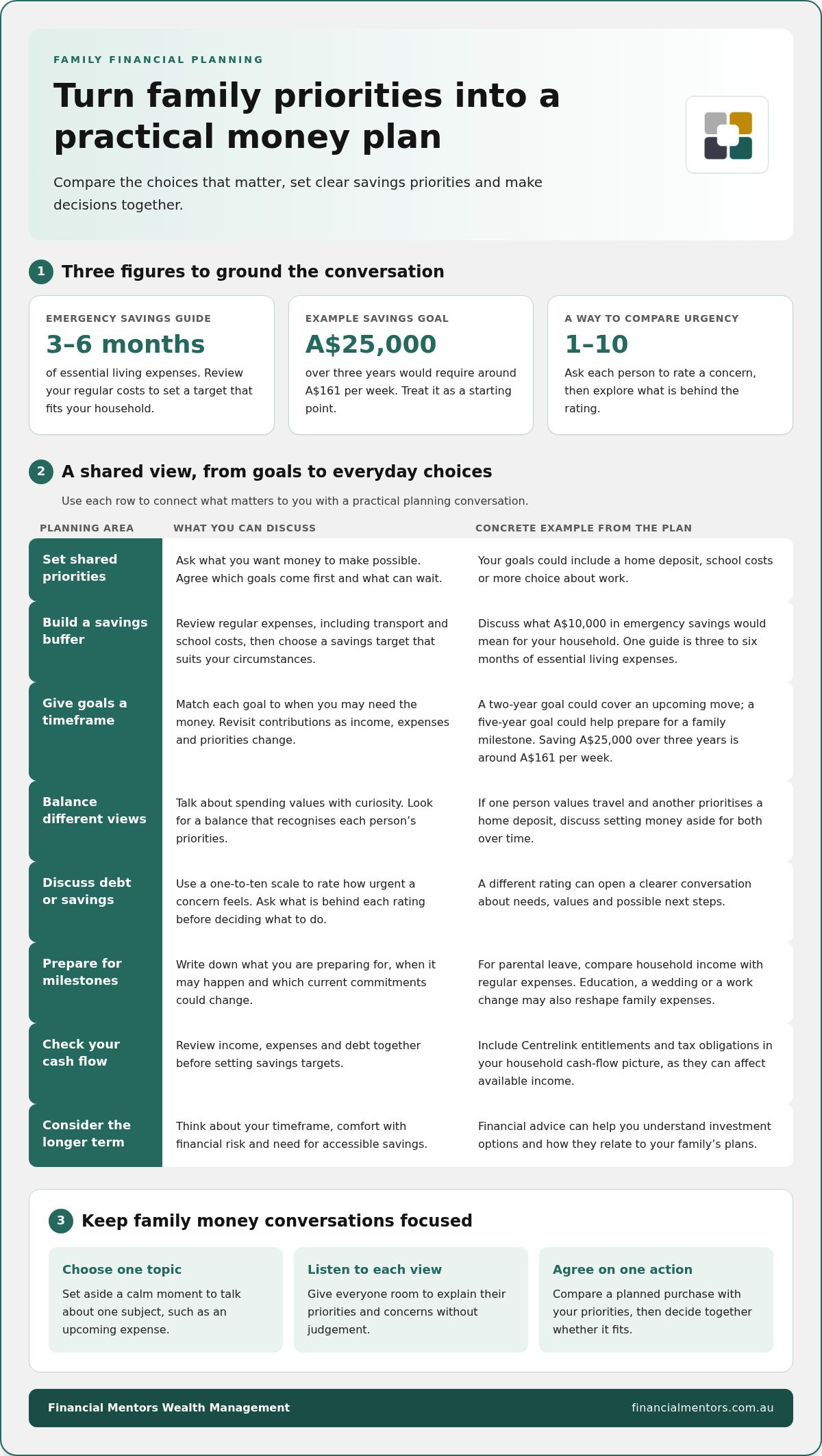
A family financial plan gives your household a shared way to manage income, savings, investments, debt and future milestones. Start by asking each person what they want money to make possible, such as a home deposit, school costs or more choice about work. Then agree which goals come first and what can wait. Getting your family on board with a financial plan is easier when everyone can explain their priorities and concerns without judgement.
Make the discussion specific. You could ask your partner how having A$10,000 in emergency savings would feel, then discuss what that amount represents for your household. A buffer of three to six months of essential living expenses is one planning guide. Review your regular costs, including transport and school expenses, to set a savings target that fits your circumstances.
Give each goal a timeframe. A two-year savings goal might cover an upcoming move, while a five-year goal could help prepare for a family milestone. For example, saving A$25,000 over the next three years would require around A$161 per week. Treat this as a starting point, then discuss how income, expenses and changing priorities affect your contribution.
For long-term goals, investment choices should reflect your timeframe, comfort with financial risk and need for accessible savings. Specialist practices such as Her Financial Planning demonstrate how tailored financial advice can help you understand your options and connect long-term wealth strategies with your family’s plans, rather than treating investments as an isolated decision.
Australian families may seek financial advice when they need help balancing competing goals, planning for a major change or considering investments. Centrelink entitlements and Australian tax rules can affect your household’s available income. Include payments received and tax obligations in your cash-flow picture before setting savings targets.
An emergency buffer of about 3 months’ worth of expenses can help with emergencies; the recommendation is three to six months of living expenses, or 3 to 6 months of essential living expenses. Savings goals may cover next 2 years or next 5 years.
2. Why is money management important for families?
Money management connects everyday choices with the life you want to build. If one partner values travel and the other prioritises a home deposit, discussing those values might reveal a shared goal, such as setting aside money for both over time. Clear conversations can also help you spot when regular expenses are crowding out priorities or creating pressure.
Start with a calm conversation about what money meant in each person’s family growing up. One person may see savings as security, while another values spending on experiences. Neither view needs to be dismissed. Agree on a practical balance, such as deciding together how much spare income to save and how much to put towards personal interests.
Use a one-to-ten scale to make difficult topics easier to discuss. Ask each person to rate how urgent a concern feels, such as reducing debt or building savings. If one person rates it higher, ask what’s behind that view before deciding what to do. This can turn a disagreement into a clearer conversation about needs, values and possible steps.
Keep family money discussions regular and focused. Choose one topic for a short household check-in, such as upcoming expenses, and finish by agreeing on one action. For example, compare a planned purchase with your current priorities, then decide together whether it fits. Regular conversations make financial planning a shared responsibility, rather than leaving one person to carry the decisions.
Give children an age-appropriate role, such as comparing options for a family outing or saving towards a chosen treat. Use that real example to explain the difference between spending now and saving for later. This builds practical understanding without making children responsible for adult financial concerns.
If your partner is hesitant about a household budget, begin with a shared purpose rather than restrictions. Invite them to choose one goal, review relevant expenses together and try a small change before revisiting it. Financial advice can also help connect day-to-day money habits with wealth goals and broader plans.
Children’s education and other milestones
Education, a wedding or a change in work can reshape family expenses. Treat these as planning considerations, not fixed costs. Think about how your preferred school, transport and activities could affect your household’s plans.
Turn each milestone into a practical planning conversation. Write down what you’re preparing for, when it may happen and which current commitments could change. If one parent expects to take parental leave, compare household income with regular expenses during that period. Then discuss how the plan might change if work arrangements or family circumstances shift.
For education, discuss the choices that matter most, such as school type, location and activities. These choices affect both timing and how much your family can set aside. Review the plan as your child’s needs become clearer, rather than assuming today’s preferences will stay the same. This connects education decisions with other priorities, including housing and superannuation.
Milestones also involve security and care. If you have children, consider who you would want to care for them if you could not. A will made with children in mind should include a guardian. You can also consider a Power of Attorney and Advanced Care Directive alongside making wills; researching the average cost for will and estate planning can help you budget realistically for this step. These conversations can feel personal, so make room for each partner to explain their wishes and concerns.
Marriage can bring new shared costs and decisions. Agree on a spending limit that fits your circumstances, then decide together what to prioritise. Planning this way helps balance current choices with future security.
4. Discussing spending and debt as a family
Choose a calm time to discuss spending, rather than raising concerns during a purchase or disagreement. Each person can bring one example, such as a subscription they value or an expense that feels difficult to manage. Listen first, then decide which issue needs attention. A shared conversation helps you understand the reasons behind spending choices, not just the amounts.
A family budget in Australia should include income, regular expenses, bills, loan repayments, savings and planned one-off costs. Include groceries, school costs, transport and annual insurance payments. Review financial records from the past year or so to spot less frequent expenses. Plan spending below household income, leaving room to prepare for unexpected costs.
Keep the process manageable with a brief weekly check-in. Review upcoming bills, note changes to income and agree on one adjustment. If a cost has risen, decide together whether to change another expense or revise a savings contribution. A short weekly review can help you notice changes before they disrupt the household budget.
Discuss each debt openly, including the balance, repayment amount and interest. Then agree which repayments to prioritise while keeping essential bills covered. Understand the responsibility attached to shared credit: people named on a joint credit card are responsible for repayments, while the primary cardholder is responsible for debt on primary and secondary cards. If one person on a shared loan does not pay, the other must repay the full amount.
For a practical start, each person can write down their income, debts and financial commitments before the next discussion. Compare the lists without blame, identify one change you both support, and agree when you’ll review it. If you want help connecting spending and debt decisions with your wider goals, discuss a family financial plan.
Financial Mentors Wealth Management: Financial Planning
Financial Mentors Wealth Management can help turn family priorities into a practical financial plan. If you and your partner are finding it difficult to bring savings, debt and future goals together, financial planning can help organise decisions around your household’s circumstances.
You might seek guidance when planning for retirement, considering wealth creation strategies or reviewing how investments fit your long-term goals. Estate planning advice can also help you consider how your wishes and family’s needs fit into your wider plans. These conversations can help you identify decisions to make together and steps that support your shared direction.
Before a discussion, note the goals you both care about, your main financial commitments and any questions about next steps. Contact Financial Mentors Wealth Management to discuss how financial planning could support your family’s goals.
Make your next money conversation count
Getting your family on board with a financial plan is an ongoing conversation, not a single decision. Choose one manageable next step, such as agreeing on a shared priority or setting a time to revisit a financial question. A small, specific action can help turn good intentions into a routine your household can maintain.
As your family’s needs change, you can return to the conversation and adjust your approach. If you’d like guidance connecting your family’s priorities with a practical plan, contact Financial Mentors Wealth Management.
You don’t need every answer before you begin. Keep listening, make decisions together and take the next step at a pace that works for your family.
Frequently Asked Questions
What does a family wealth plan include?
A family wealth plan brings your household’s money decisions together in one coordinated picture. It can cover income, expenses, savings, investments, debt, financial risks and plans for future milestones. It should also reflect who depends on household income and what you want your money to support. For example, a family weighing a home deposit against education costs can map both priorities and decide how to balance them.
What is Family Financial Planning?
Family financial planning means making money decisions around your family’s shared needs and individual circumstances. Start by setting out what each person wants to achieve, then consider how income, commitments and future changes affect those goals. Professional guidance can inform your choices, but it doesn’t replace family discussion. Financial information is general in nature, so consider your own circumstances and needs before acting on it.
Why is money management important for families?
Money management helps a family make everyday choices with a clearer understanding of their effects. For example, comparing a new recurring expense with existing commitments can show whether it fits without undermining another priority. It can also help you decide who handles tasks such as tracking bills or reviewing account statements. Agreeing on responsibilities can prevent missed details and keep decisions visible to everyone involved.