

What if building wealth depended less on choosing the perfect investment and more on following a plan that can grow with you? Your goals, income and financial commitments are personal, so a strategy that suits someone else may not fit your life. This guide to wealth creation strategies australia starts with practical decisions you can connect to your own priorities.
If you’re unsure where to begin or how to balance investing with everyday needs, start by looking at your current financial position. Then connect your choices to the goals that matter to you. A thoughtful approach considers growth, financial risks and long-term goals while allowing for changing circumstances.
You’ll explore ways to build a financial plan, including how superannuation, investments and tax considerations may fit into a wider strategy. You’ll also see how regular reviews can help keep your plan aligned with your life. The aim is to give you a clear starting point and a steady process for making considered decisions.
Key Takeaways
- Start with your goals and financial position, including your assets, liabilities, income and expenses.
- Compare wealth creation strategies australia by purpose, timeframe and the financial risks you’re comfortable taking.
- Consider how diversified investments, superannuation and property may fit different goals. No single option is right for everyone.
- Turn your priorities into practical actions, set timeframes and review your plan when your circumstances change.
- Tailored financial planning and tax return preparation can form part of a wider strategy for your goals.
What wealth creation strategies mean for your financial future in Australia
Wealth creation is the considered process of building and managing assets to support your personal goals over time. Your starting point, decisions, timeframe and investment risks all influence the outcome, so growth can’t be guaranteed. A useful strategy begins with what you want your money to help you achieve and your financial position, rather than a particular product or return forecast.
Wealth creation strategies australia can be relevant to households with different incomes and amounts already invested. The same approach won’t suit everyone. You may be saving for a home, building investments gradually or preparing for retirement. Start by understanding your resources and commitments, then consider which actions fit your goals and circumstances.
Wealth creation is different from chasing short-term gains or reacting to market trends. A change in the headlines can prompt questions, but it doesn’t automatically mean your plan should change. Consider how each financial decision relates to your priorities, timeframe and comfort with financial risks. These Wealth Management Principles offer background on how investment choices sit within wider financial planning.
What counts as wealth creation in practice?
Your household’s starting point includes income and savings, as well as assets and liabilities. Assets may include savings, investments or property. Liabilities can include loans and other debts. Together, these affect the choices available to you. For example, if you’re paying a mortgage while saving for a future family expense, your plan could balance both priorities instead of directing every spare dollar towards investing.
That’s wealth creation in practice: making deliberate choices about how to build and manage what you own over time. It doesn’t require one big move. Reviewing your budget, savings and financial commitments can help you identify a practical next step. What makes sense depends on your circumstances, and an investment’s value can rise or fall.
How your life stage shapes your long-term goals
Your priorities may shift as life changes. Starting a family can make flexibility and future expenses more prominent. Buying a home may affect how much you can set aside for other goals, while a career change could alter your income or timeline. These changes don’t mean you need to abandon your plan. They may be a reason to reassess it.
Start wealth creation with your financial position and a clear plan
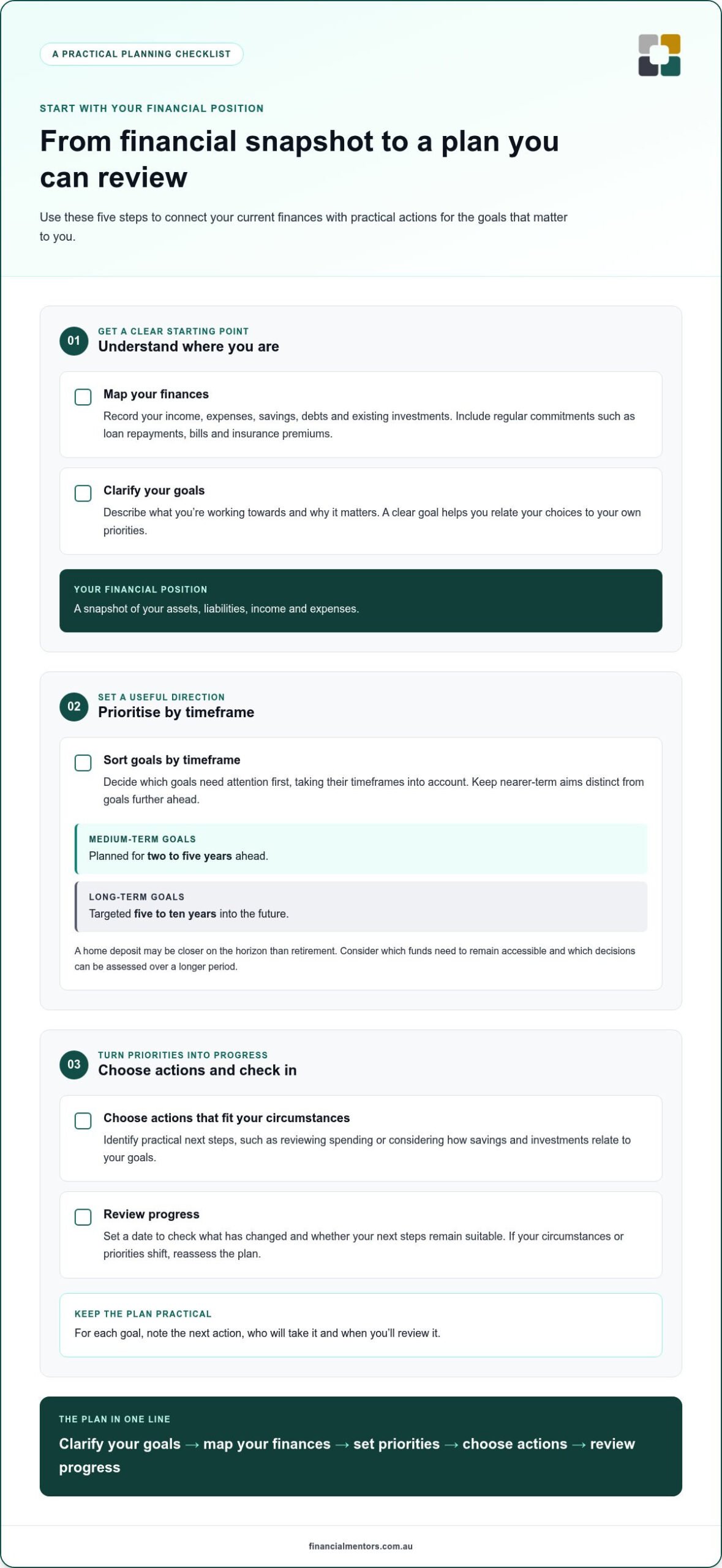
A clear starting point can make decisions feel more manageable. Before comparing wealth creation strategies australia, set out what you want to achieve and what your finances currently allow. Your financial position is a snapshot of your assets, liabilities, income and expenses. It helps you see how your goals relate to your day-to-day financial commitments, rather than planning around assumptions.
Take stock of income, expenses, assets and liabilities
Gather the details you can access: household income, regular expenses, savings, debts and existing investments. Include recurring commitments such as loan repayments, bills and insurance premiums. These costs affect how much may be available for saving or investing, and when. You don’t need to start with a particular balance or savings target. First, build a clear picture of what comes in, what goes out and what you own or owe.
Next, sort your goals by timeframe. Medium-term goals are objectives planned for two to five years ahead, while long-term goals are targeted five to ten years into the future. A home deposit may be closer on the horizon than retirement. Keeping these aims distinct helps you consider which funds need to remain accessible and which decisions can be assessed over a longer period.
Turn personal priorities into a written financial plan
A financial plan is a written document outlining strategies and recommendations to achieve your financial goals. It connects what matters to you with practical actions, timeframes and progress checks. If your circumstances or priorities shift, reviewing the plan can help you decide whether those actions still make sense. Financial planning can help organise related decisions around the same goals.
Use this sequence to move from a general idea to a workable plan:
- Clarify your goals. Describe what you’re working towards and why it matters.
- Map your finances. Record income, expenses, assets, liabilities and regular commitments.
- Set priorities. Decide which goals need attention first, taking their timeframes into account.
- Choose actions. Identify steps that fit your circumstances, such as reviewing spending or considering how savings and investments relate to your goals.
- Review progress. Set a date to check what has changed and whether your next steps remain suitable.
Keep the plan practical. For each goal, note the next action, who will take it and when you’ll review it. If a career change affects your income, for example, revisit the timing of a planned investment rather than relying on an outdated budget. Tailored advice can connect separate financial decisions in a written plan shaped around your goals. Learn more about tailored financial planning.
Compare wealth creation strategies by purpose, time horizon and risk
Different approaches can play different roles in a financial plan. Compare options by their purpose, timeframe, access and risks, not simply by which has performed well. These broad categories aren’t personal recommendations. Their suitability depends on your circumstances and the role each may play in your wider strategy.
- Diversified investments: May support building assets over time or an income objective. The timeframe depends on your goal and the investments selected. Values can fluctuate, and you may need to consider how easily you can access the money.
- Superannuation: May be one part of planning for retirement. Consider its role in your longer-term plans, applicable access conditions and how it fits alongside other savings and financial commitments.
- Property: May provide a home or form part of an investment strategy. Consider the timeframe, ongoing costs, access to your money and the risk of having a large share of your assets tied to one property or market.
Diversification can spread investments across different areas, but it doesn’t remove investment risks or guarantee a positive outcome. Each category has trade-offs. Some assets may be easier to access than others, and values may change over time. Consider how much flexibility you need, how long you can leave money invested and how comfortable you feel with potential changes in value.
How investment choices can serve different goals
A growth-focused objective aims to increase the value of assets over time. An income-focused objective gives more weight to the money an investment may produce. These aims can overlap, but the balance between them matters. If you may need funds for a nearer-term goal, consider the possibility of changing values and whether you can access the money when needed. A longer timeframe brings different considerations, but it doesn’t remove risk.
When assessing wealth creation strategies australia, compare each option with the goal it’s meant to support instead of treating an asset category as a complete plan. Your comfort with financial risks is personal. The same investment mix may feel manageable to one person and unsuitable to another, depending on circumstances, income needs and timeframe.
How superannuation and property fit into a broader strategy
Superannuation may sit alongside other savings and investments as part of your broader Australian strategy. Consider its intended role in your retirement plans, how it relates to other goals and whether its access conditions suit your timeframe. If retirement outcomes are becoming your main focus, retirement planning can help bring those questions into sharper view.
Property also needs to be considered in context. A home you live in and an investment property can serve different purposes, and each may affect cash flow and financial flexibility in different ways. Rather than assuming one is automatically preferable, weigh its role against your other assets, liabilities, goals and appetite for risk. This comparison can help you decide what deserves closer consideration.
Put your Australian wealth creation strategy into action and review it
A plan becomes useful when you turn it into clear next steps. A steady process for wealth creation strategies australia can help you act with purpose while leaving room to adjust as life changes. Record what you decide and why, so future reviews can refer back to your goals rather than relying on memory.
- Prioritise actions. Choose the next steps that support your most pressing goals and fit your current financial commitments.
- Set timeframes. Note when you plan to act and when you expect to check progress.
- Record decisions. Keep a simple record of the action, its purpose and any assumptions behind it.
- Schedule reviews. Set a regular time to reassess your objectives, progress and ongoing needs.
Keep tax considerations connected to your wider plan
Tax records can help you understand how income, savings and investment decisions fit together. Tax return preparation may sit alongside broader financial planning, but a return on its own doesn’t set your goals or determine which strategy suits you. Keep relevant records organised and consider tax as one part of the overall picture, rather than making an investment choice based only on a possible tax effect.
Australian tax and superannuation rules can change. Before relying on a rate, threshold or rule, check current details against official Australian sources. The existing Australian tax return preparation guide can provide more context on tax returns.
Use periodic reviews when your circumstances change
A periodic review is a regular reassessment of your objectives, achievements and ongoing needs. It gives you a chance to check whether your actions still fit your goals, without assuming that a review will produce a particular investment result. Update your plan when life shifts, rather than continuing with assumptions that no longer reflect your situation.
Family changes, a new role or career change, an inheritance, or approaching retirement can all prompt a fresh look. Review your goals, income, financial commitments and relevant assumptions. If your priorities have changed, consider whether the timing or order of your planned actions still makes sense. If your plan remains suitable, a review can help you stay clear about what comes next.
Tailored financial planning can help connect these decisions and keep your strategy focused on your personal goals. Read more about tailored financial planning.
Build a wealth creation plan with advice shaped around your goals
Financial decisions often connect. An investment choice may affect your retirement plans, while a change in work or family circumstances may shift what you can set aside. Tailored financial planning can bring these moving parts together, so your decisions relate to shared priorities instead of sitting in separate compartments. This can help if you’re weighing several goals and aren’t sure which to address first.
Financial Mentors Wealth Management has provided professional planning advice since 2000. The advice process begins with the initial meeting, step 01, where you can discuss your goals and circumstances. From there, the next steps can follow your needs and the agreed advice process. The aim is a considered plan that reflects your life, not a promise of investment performance or a fixed outcome.
What tailored wealth creation advice can bring together
Advice may connect your financial position with wealth creation decisions, retirement priorities and estate planning advice where relevant. Recommendations should reflect what you want to achieve, your timeframes and the financial risks you’re comfortable taking. For example, if you’re balancing retirement saving with a home goal, considering both together can help clarify how each decision fits the bigger picture. Your plan can be revisited as priorities change.
What to expect from the first appointment
The first appointment is a chance to talk through what matters to you, where you are now and what you hope to work towards. You can raise questions about your goals, financial commitments and any changes on the horizon. You don’t need to have every answer ready. A clear conversation can help identify which topics need attention and what information may be useful as the process continues.
To make the discussion more useful, you could prepare a few notes:
- The goals you want your financial decisions to support.
- Changes in work, family or other circumstances that may affect your plans.
- Questions about investments, retirement priorities or estate planning advice.
- Any concerns about balancing your goals with current financial commitments.
Tailored wealth creation strategies australia can connect these priorities in a plan shaped around your circumstances. The first meeting is an opportunity to explore what matters to you and consider a suitable next step, without pressure to have everything decided straight away. If you’re ready to start a conversation, take a step towards your financial goals.
Make your next financial decision with confidence
Your next step doesn’t need to solve every financial question at once. Choose one goal that matters now, then consider what information or decision would help you move towards it. As your circumstances evolve, your plan can evolve with them. This gives you room to make considered choices without expecting every detail of your future to be certain today.
For wealth creation strategies australia, the value is in having a direction that reflects your priorities and leaves room to reassess. Tailored financial planning can help connect your goals with a personalised financial plan.
Explore a financial plan shaped around your goals, and take your next step at a pace that feels right for you.
Frequently Asked Questions
What are wealth creation strategies in Australia?
Wealth creation strategies in Australia are ways to build and manage assets in line with your goals and circumstances. They may involve different choices over time, such as saving, investing or planning for retirement. The right mix depends on what you’re aiming for, when you’ll need the money and how much change in value you can accept. It’s a personal process, not a guaranteed result or a one-size-fits-all product.
How can I start building wealth if I am starting with little savings?
You can begin by understanding your cash flow, even if you have little set aside. Review recent bank transactions to spot regular expenses, debt repayments and any amount you could set aside without straining your budget. A small, sustainable step can help you build a saving habit while you clarify your priorities. If debt or irregular income makes this difficult, include those circumstances in your planning instead of comparing your starting point with someone else’s.
Is property or shares better for building wealth in Australia?
Neither property nor shares is automatically better. Each can suit different aims and carries different considerations. Shares can provide exposure to a range of businesses, depending on how they’re held, while property links a large part of your finances to a physical asset and its market. Think about access to your money, ongoing costs, concentration and how either choice fits your timeframe. Your circumstances matter more than a general ranking.
Can superannuation be part of a wealth creation strategy?
Yes, superannuation can form part of a broader strategy, particularly if retirement is one of your goals. Consider how it sits alongside savings and investments outside super, and whether the time horizon and access rules suit the purpose of the money. For example, funds intended for a nearer-term home purchase may need different treatment from money set aside for later life. Check current Australian superannuation rules before acting.
How much should I invest each month to build wealth?
There isn’t one monthly amount that suits everyone. Start with what remains after essential costs, debt repayments and other priorities, then decide whether a regular contribution is manageable without disrupting your budget. For example, you might choose an amount you can maintain through a typical month and review it if your income or expenses change. The key is matching contributions to your circumstances, not adopting an arbitrary target.
What risks should I consider before choosing an investment strategy?
Consider whether you could manage a fall in value, how quickly you may need access to the money and whether too much of your wealth would depend on one asset or market. Also think about income uncertainty, ongoing costs and the possibility that an investment may not meet your timeframe. Ask how each risk relates to your goals and capacity to absorb change. Understanding trade-offs can help you make a more considered choice.
How often should I review my financial plan?
Set a regular review point that suits your plan, and revisit it sooner if your circumstances change. A new job, a change in family needs, receiving an inheritance or approaching retirement may affect your priorities, available income or timing. At each check-in, compare your current position with the assumptions behind your decisions. If those assumptions no longer fit, consider whether your actions or goals need updating.