

What if the decision isn’t about finding the perfect moment to invest, but choosing a plan you can stick with? If you’re comparing dollar cost averaging vs lump sum investing in Australia, you may be concerned about investing just before markets fall or leaving money in cash while you wait.
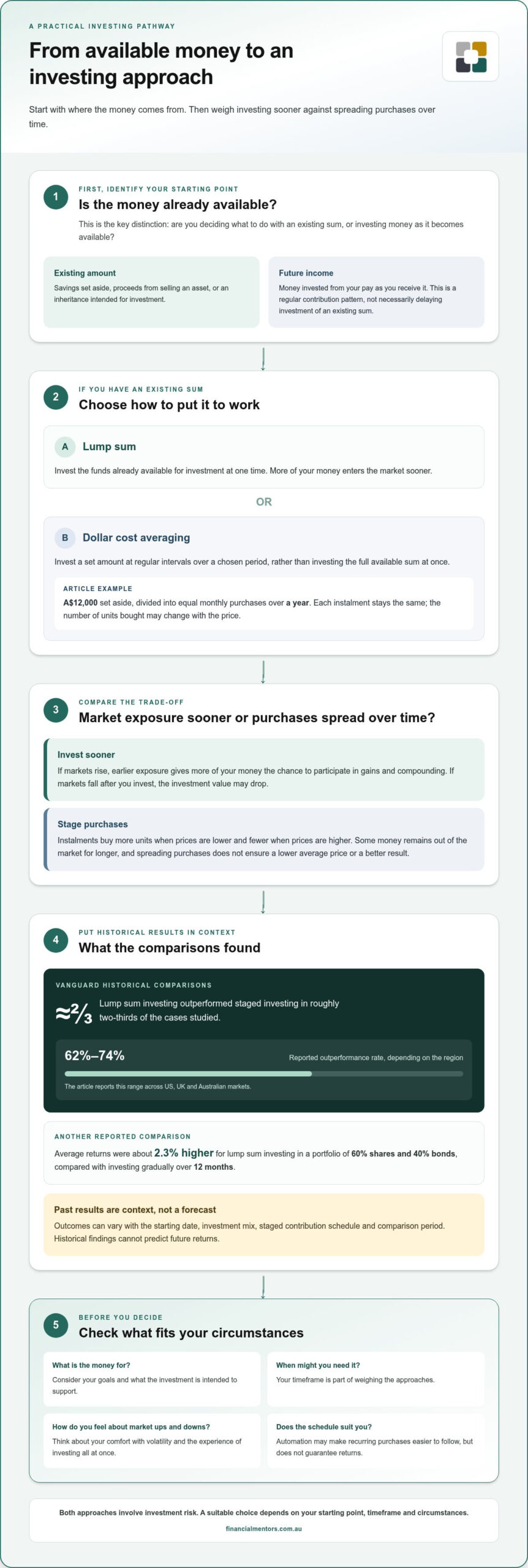
Vanguard’s historical analysis found that lump sum investing outperformed staged investing in roughly two-thirds of the cases studied. That’s useful context, not a promise about what markets will do next. The right approach also depends on whether you’re investing money as it becomes available or deciding how to invest a sum you already have.
This guide explains how each strategy works, what the evidence can and can’t tell you, and how to weigh immediate market exposure against the comfort of investing gradually. You’ll also consider your cash flow, timeframe and tolerance for volatility, along with Australian tax and super questions that may call for personal advice. By the end, you’ll have a clearer way to choose an approach that fits your circumstances and long-term goals.
Key Takeaways
- Understand the difference between investing a lump sum you already have and investing gradually as money becomes available.
- Compare dollar cost averaging vs lump sum investing australia by weighing time in the market against the comfort of staging your investment.
- Spreading purchases over time doesn’t guarantee a lower average purchase price or a better outcome.
- Before choosing, consider what the money is for, when you may need it and how comfortable you are with market ups and downs.
- Check how your investment structure, ownership, tax circumstances and super arrangements may affect your plan.
Dollar cost averaging vs lump sum investing: what is the difference?
It’s understandable to feel unsure about when to enter the market. Invest all your available money now, and prices could fall soon after. Wait and invest gradually, and some money stays out of the market for longer. The difference between dollar cost averaging vs lump sum investing australia comes down to whether you invest money you already have in stages or invest it at one time.
These are approaches to timing your purchases, not different types of investments. Either approach could involve buying the same investment, but the timing and size of each purchase differ. Your starting point is whether you have an existing amount set aside or are investing from income as you receive it.
What does dollar cost averaging mean in practice?
Dollar cost averaging means investing a set amount at regular intervals over a chosen period, rather than investing the full available sum at once. You make recurring purchases, so each instalment buys more units when prices are lower and fewer when prices are higher. The Dollar-cost averaging overview explains the basic method and its common considerations.
For example, imagine you have A$12,000 set aside for investment and decide to divide it into equal monthly purchases over a year. The amount invested at each interval stays the same, while the number of units bought may vary with the price. This doesn’t remove investment risk or ensure a better result. If prices rise during the period, some of your money may be invested at higher prices later.
You may be able to automate recurring purchases, which can make the process easier to follow. Automation doesn’t guarantee returns or make an unsuitable investment appropriate. Consider what you’re investing in, your timeframe and whether the schedule fits your circumstances.
What counts as lump sum investing?
Lump sum investing means investing funds already available for investment at one time, rather than dividing that amount into purchases over a chosen period.
The money might be savings you’ve set aside, proceeds from selling an asset or an inheritance. The key is that the funds are available and intended for investment. Money you expect to earn from future pay isn’t an available lump sum today. Investing part of each pay as it arrives is a regular contribution pattern, not necessarily a decision to hold an existing sum in cash before investing it.
This distinction matters for Australian investors. If you invest from regular income, you’re investing as the money becomes available. If you already hold a sum intended for the market but choose to stage purchases, you’re delaying investment of money that could otherwise be invested now. Both situations involve investing over time, but they present different choices.
Before comparing the approaches, identify which situation applies to you. Are you deciding what to do with an existing amount, or setting a routine for future contributions? That answer gives you a clearer starting point for weighing the trade-offs.
What does the evidence say about lump sum and DCA outcomes?
Historical comparisons can help you understand the trade-off, but they can’t tell you which approach will perform best from today. Lump sum investing puts more of your available money into the market sooner. If markets rise over time, that earlier exposure gives more of your money the chance to participate in gains and compounding. If markets fall after you invest, however, the value of your investment may drop.
Why can investing earlier affect the result?
Imagine a market that rises steadily over a chosen period. An investor who puts all available funds in at the start has more money invested during each rise. Someone who stages purchases still has some money waiting, so that portion doesn’t share in any gains until it’s invested. This is a simplified example, not a forecast. Real markets can rise, fall or move unevenly.
Compounding means investment growth can contribute to later growth. The longer money is invested, the more time it may have to compound, though returns aren’t guaranteed and losses are possible. This helps explain why studies often favour investing sooner when markets rise over the periods examined. It doesn’t mean an early investment will always end up ahead.
What are the limits of historical comparisons?
Vanguard’s reported historical comparisons found lump sum investing outperformed dollar cost averaging in roughly two-thirds of cases across US, UK and Australian markets. Its reported outperformance rate ranged from 62% to 74%, depending on the region. Another Vanguard comparison reported average returns about 2.3% higher for lump sum investing in a portfolio made up of 60% shares and 40% bonds, compared with investing gradually over 12 months.
Those figures describe past comparisons, not a reliable forecast for your investment. The summary of these findings doesn’t specify the exact sample dates or all the assumptions used for each regional result. Outcomes can also vary with the starting date, investment mix, staged contribution schedule and comparison period. A falling market may favour staged purchases if later instalments buy at lower prices. A flat or uneven market can produce a different result.
Historical findings can inform your decision, but they can’t predict future returns. A statistic about how often one approach came out ahead in past comparisons doesn’t show what will happen over your investment timeframe. For a practical foundation, ASIC’s guidance on developing an investment plan encourages you to consider your goals and circumstances when making investment choices.
Treat the evidence as context, not a rule. If you’re weighing an approach against your wider financial position and long-term goals, an appointment to discuss personal financial planning can help you clarify the questions that matter for your circumstances.
DCA vs lump sum: how do risk, timing, and behaviour compare?
Both approaches involve investment risk. The difference is when your money enters the market and how you experience the ups and downs. Investing a lump sum exposes the full amount sooner, so gains or losses can affect it straight away. Staging purchases spreads the entry points but leaves some available money outside the investment while you wait.
Waiting can feel reassuring if you’re concerned about investing just before a fall. But reassurance isn’t the same as lower overall risk or a better result. Consider both your financial capacity to handle losses and how comfortable you feel following the plan.
| Approach | Potential benefit | Trade-off | May suit when |
|---|---|---|---|
| Dollar cost averaging | A set schedule can make investing feel more manageable and reduce the pressure to choose one entry date. | Some available money stays out of the investment until later purchases. | You prefer a staged approach and can follow the schedule. |
| Lump sum | Available funds are invested sooner, giving them earlier exposure to market movements. | The full amount can fall in value soon after you invest. | You have funds ready, a suitable timeframe and comfort with fluctuations. |
Neither method removes market risk or guarantees a positive return. Your investment mix, timeframe and ability to absorb a loss matter as much as the timing method.
When might staging an available lump sum feel more manageable?
If investing a large amount at once feels difficult, a pre-set schedule may help you act without trying to guess the best day to invest. Decide in advance how often you’ll invest and when the schedule will finish. A clear structure can reduce the temptation to keep waiting for a more comfortable moment.
There’s a trade-off. Until each purchase is made, that portion remains outside the investment and may miss market gains. Staging may make the process easier emotionally, but it doesn’t mean the investment will perform better. It’s a way to manage your entry process, not a promise about returns.
When might investing a lump sum suit your circumstances?
If you have funds set aside for investment, a longer timeframe and the capacity to tolerate market falls, investing sooner may fit your plan. The full amount is exposed to market movements from the outset, which means gains and losses can arrive sooner too. Before deciding, consider whether a temporary fall could affect your financial commitments or prompt you to change course.
Ask yourself whether you could stay with your chosen investment mix through market fluctuations. If you’re unsure, revisit your financial plan and the purpose of the money. In dollar cost averaging vs lump sum investing australia, there’s no universal winner. A suitable choice balances your circumstances, investment mix and capacity for loss with a plan you can follow.
How can you choose an investing approach that fits your situation?
A clear decision starts with the money itself, not a guess about what markets will do next. Is it already available, or will it arrive through your regular income? Then consider its purpose, when you may need it and how you’d respond if its value fell. This step-by-step approach helps you compare the options against your life, rather than choosing based on headlines alone.
What questions should you answer before investing?
First, identify whether you’re setting up regular investments from income or deciding what to do with a sum you already hold. Then separate money for emergencies and near-term financial commitments from funds intended for long-term goals. If you may need the money soon, a fall in value could affect your plans at the wrong time.
Next, consider whether the investment and its overall mix fit your financial position and timeframe. When comparing dollar cost averaging vs lump sum investing australia, weigh these personal factors alongside the timing choice. You can also explore how Australian wealth creation strategies fit within a broader plan for your goals.
How can you make a decision and stick with it?
If you’re staging an available sum, set a realistic schedule and a clear end date for investing it. Choose intervals that fit your cash flow, and write down why you chose the approach. Set a review date and decide what would justify changing the plan, rather than reacting to every market headline. A written process can help you follow through, but it can’t guarantee an investment outcome.
Use this checklist to organise your decision:
- Identify the money: Is it already available, or will you invest as income arrives?
- Set its purpose: What goal is this money intended to support?
- Check the timeframe: When might you need access to it?
- Consider fluctuations: Could you stay with your plan if the investment value fell?
- Write the process: Record your approach, schedule if relevant, end date and review point.
Keep the plan realistic. If regular contributions leave too little room for bills or other priorities, adjust the schedule to match your budget. If the money is a one-off sum, avoid letting a temporary pause become an open-ended wait. The aim is to make a considered choice you can maintain while keeping the purpose of the money in view.
Your investment choice sits within a wider financial picture, including your long-term goals and retirement planning. If you’d like help considering those connections, an appointment to discuss your financial plan can give you space to explore your circumstances.
What should Australian investors consider before putting the plan into action?
Once you’ve settled on an approach, consider how you’ll put it into practice. In Australia, the account that holds an investment, who owns it and your personal tax circumstances may affect implementation. The choice between dollar cost averaging vs lump sum investing australia is one part of the decision, not a substitute for considering how an investment fits your wider financial position.
What tax and super questions may affect the decision?
Before investing, clarify the basics: who will own the investment, which account or structure will hold it, and where the money is coming from. If you’re considering super, check how the proposed investment relates to your existing arrangements and retirement plans. Tax outcomes depend on individual circumstances and the rules that apply at the time, so don’t assume the same approach will have the same effect for everyone.
Current Australian Taxation Office information can help you identify relevant tax questions. Seek advice suited to your circumstances if you need help interpreting them. Avoid relying on old examples or general statements about tax or super rules. The practical aim is to understand the implications before acting, not to let uncertainty about one detail keep your whole plan on hold.
When could a financial plan help you compare the options?
Investment timing can affect how much money remains available for bills, planned expenses and other priorities. It can also shape how your investments support retirement income needs. If you’re approaching retirement or already drawing on your savings, pay particular attention to when you may need the money and the role it plays in your plans. You can explore how retirement planning in Australia connects investment decisions with your future income goals.
A financial plan can consider the investment choice alongside your cash flow, financial commitments, retirement planning and long-term goals. This broader view may help you see whether the proposed timing works with your other priorities, without assuming one strategy will deliver a preferred result.
If you’d like to talk through how the choice fits your circumstances, an appointment is a practical next step. The initial meeting is step 01 in the process and gives you an opportunity to explore your goals and financial position. It isn’t a promise of a particular investment outcome. It’s a chance to consider the decision as part of your wider plan. You can arrange an appointment to discuss your financial plan.
Give your next investment decision a clear purpose
Your next step doesn’t need to be a prediction about what markets will do. It can be a decision grounded in what the money is for, when you may need it and how you want to approach investing. That gives you a steadier reference point when headlines or short-term market movements make you question your plan.
As you consider dollar cost averaging vs lump sum investing australia, focus on the choice that fits your circumstances and that you can follow with confidence. If your goals, cash flow or retirement plans are changing, revisiting the decision as part of your wider financial plan can help keep your investment choices connected to the life you’re building.
For support with your next step, explore financial planning support for your next step. Financial Mentors Wealth Management provides financial planning and retirement planning advice to help you consider your investment choices in the context of your wider goals. Arrange an appointment to discuss your financial plan.
Frequently Asked Questions
Is dollar cost averaging safer than lump sum investing?
Not necessarily. Spreading purchases across different dates may make market movements feel less confronting, but it doesn’t remove the possibility of losses or guarantee a better result. Emotional comfort and financial safety are different things. A staged approach may help you feel more settled, while the investment itself can still fall in value. Consider the investment, your timeframe and personal circumstances before choosing.
Can dollar cost averaging outperform lump sum investing?
Yes, it can outperform over some periods, such as when markets fall after a lump sum is invested. The outcome depends on the market path and the dates used in the comparison. Historical studies of dollar cost averaging vs lump sum investing australia have often found lump sum ahead across the periods examined, but that doesn’t predict what will happen next. Treat past results as context, not a forecast.
How much should you invest each time when using dollar cost averaging?
There’s no universal amount that suits every investor. Your contribution schedule depends on the money available, income, financial commitments and investment goals. If you’re investing from regular pay, you might contribute as funds become available while keeping enough for planned expenses. If you’re staging a sum you already hold, choose a schedule you can maintain and set a date to review it. Avoid stretching your budget to meet a schedule.
What happens if the market falls while you are dollar cost averaging?
If you continue with your schedule, each purchase is made at the price available at that time. A lower price may mean a contribution buys more units, but the investment can still lose value. A fall also doesn’t guarantee a recovery by a particular date. Before continuing, check that the investment still fits your timeframe and that you could manage a further decline without needing to sell unexpectedly.
Is lump sum investing suitable if you are close to retirement?
Being close to retirement doesn’t, by itself, determine whether investing a lump sum suits you. Consider when you may need the money, what income and other assets you have, the investment mix, and how you’d respond to fluctuations. For instance, money needed to support near-term spending may have a different role from funds set aside for later years. Consider the choice within your retirement income plan and seek personal advice if needed.
Can you use dollar cost averaging with superannuation in Australia?
Possibly, but the options depend on your super arrangement, available investment choices and the rules that apply. Don’t assume every fund allows the same investment timing or changes. Review your fund’s current information to understand how contributions and investment choices work within your account. If you’re considering a change, include relevant Australian tax and super rules in your decision, as their effect can depend on your personal circumstances.
Should you wait for a market downturn before investing a lump sum?
Waiting for a downturn is a timing decision, and no one can reliably know when a market has reached its lowest point. Keeping money in cash may avoid some declines, but it can also mean missing gains while you wait. Consider how long you’re prepared to wait, what the money is for and whether delaying fits your goals. A written decision date can help prevent an open-ended pause.