

What if the biggest obstacle standing between you and financial security isn’t a lack of money, but a lack of direction? It’s a question worth sitting with, especially if you’ve ever felt overwhelmed by the sheer number of financial decisions facing you, from growing your wealth to planning a comfortable retirement.
You’re not alone in that feeling. Most people understand that good financial planning matters, yet without personalised guidance, it’s easy to feel like you’re making important decisions in the dark. The options are endless, the terminology can be confusing, and the stakes, particularly when it comes to your long-term security, feel very real.
That’s precisely where money mentors make a difference. Rather than offering generic advice, they work alongside you to build a financial strategy that reflects your life, your goals, and the future you’re working towards. In this guide, you’ll discover how working with a financial mentor can bring clarity to your planning, help you develop a roadmap that’s genuinely tailored to your circumstances, and give you the confidence to make informed decisions at every stage of your journey.
Key Takeaways
- Money mentors offer personalised financial guidance that goes far beyond generic advice, working with you to build a strategy that reflects your unique goals and circumstances.
- Effective financial planning involves a clear roadmap that balances short-term priorities with long-term objectives, helping you make confident decisions at every stage of life.
- A tailored approach to financial strategy takes into account your individual situation, meaning no two plans look the same — and that’s precisely the point.
- From managing debt to navigating major life transitions, having a trusted mentor by your side can make complex financial challenges feel far more manageable.
- Knowing the right questions to ask when choosing a financial mentor can make all the difference in finding someone who is truly the right fit for your needs.
What is a Money Mentor and How Can They Assist You?
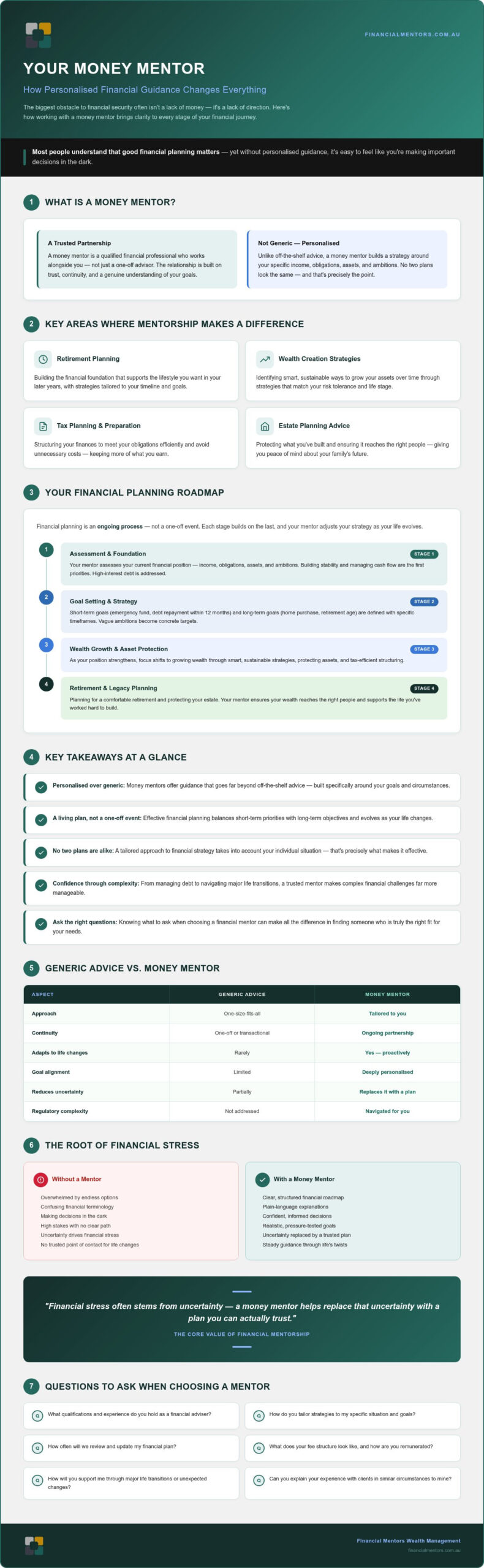
A money mentor is a qualified financial professional who works alongside you to build a clear, personalised strategy for your financial future. Unlike a one-size-fits-all approach, mentorship is grounded in understanding your specific circumstances, your goals, and the life you’re working towards. Think of it less as a transactional service and more as an ongoing partnership, one where your mentor is genuinely invested in helping you move forward with confidence.
The relationship is built on trust and continuity. Your mentor takes the time to understand where you are today before helping you map out where you want to be. That means looking honestly at your income, your obligations, your assets, and your ambitions, then crafting a roadmap that reflects all of it.
Key areas where this guidance tends to make the most meaningful difference include:
- Retirement planning: Ensuring you’re building the kind of financial foundation that supports the lifestyle you want in your later years.
- Wealth creation strategies: Identifying smart, sustainable ways to grow your assets over time.
- Tax planning and preparation: Structuring your finances to meet your obligations efficiently and avoid unnecessary costs.
- Estate planning advice: Helping you protect what you’ve built and ensure it reaches the right people.
The Role of Money Mentors in Financial Planning
A mentor’s first step is always assessment. Before any strategy takes shape, they’ll develop a thorough understanding of your current financial position, your short-term needs, and your longer-term aspirations. From there, they build a plan that’s specific to you, not a template pulled from a shelf. And as your life evolves, whether that’s a career change, growing family, or approaching retirement, your mentor adjusts the strategy alongside you. Financial planning isn’t a set-and-forget exercise; it’s a living process.
Why Engage a Money Mentor?
Good financial decisions are rarely straightforward. The options are plentiful, the regulations are complex, and the consequences of getting it wrong can follow you for years. Having an experienced professional in your corner means you’re not navigating those decisions alone. Beyond the practical expertise, there’s real value in the clarity that comes from working with someone who understands your full picture. Financial stress often stems from uncertainty; a mentor helps replace that uncertainty with a plan you can actually trust.
Building a long-term relationship with a mentor also means you have a trusted point of contact when life takes an unexpected turn. That kind of steady, personalised guidance is something generic financial tips simply can’t replicate.
Understanding Financial Planning: Your Roadmap to Success
Financial planning isn’t a single event. It’s an ongoing process that evolves alongside your life, your income, and your priorities. At its core, it involves taking stock of where you are today, defining where you want to be, and mapping out a clear, practical path to get there. For many people, the process begins with a simple but surprisingly powerful exercise: writing down what you actually want your financial future to look like.
That roadmap typically unfolds in stages. Early on, the focus tends to sit on building stability, managing cash flow, and clearing high-interest debt. As your position strengthens, attention shifts toward growing wealth, protecting assets, and eventually planning for retirement. The key is understanding that each stage informs the next, which is why having a clear structure from the outset matters so much.
Setting Your Financial Goals
Meaningful goals are specific, grounded in your real life, and connected to a timeframe. Short-term objectives might include building an emergency fund or paying off a credit card within twelve months. Longer-term goals, such as purchasing a home or retiring comfortably at a certain age, require a different kind of planning horizon and a different set of strategies.
This is where working with money mentors brings genuine value. Rather than leaving you to guess at what’s realistic, a mentor helps you pressure-test your goals against your actual financial position. They’ll ask the questions you might not think to ask yourself, and help you refine vague ambitions into concrete targets. Progress is then tracked against those targets over time, which keeps motivation high and course corrections manageable rather than overwhelming.
Budgeting Basics: A Key Component of Financial Planning
A budget is the foundation everything else is built on. Without a clear picture of what’s coming in and what’s going out, even the most well-intentioned plan can unravel. A good budget doesn’t restrict your life; it reflects it. It accounts for your fixed obligations, your lifestyle choices, and the savings you’re setting aside for future goals.
Common pitfalls to watch for include:
- Underestimating irregular expenses: Annual costs like car registration, insurance renewals, and school fees can catch people off guard if they’re not factored in from the start.
- Setting targets that are too rigid: A budget that doesn’t allow for any flexibility tends to fail. Building in a small discretionary buffer makes it far easier to stick with over time.
- Neglecting to review regularly: Your income and expenses will shift. A budget that worked twelve months ago may no longer reflect your current reality.
Practical tools like budgeting apps, spreadsheets, or even a simple notebook can all be effective, depending on how you prefer to work. What matters most is consistency. Checking in on your numbers monthly, rather than once a year, keeps small issues from quietly becoming larger ones.
Regular reviews of your broader financial plan are equally important. Life changes, tax laws shift, and your goals will naturally evolve. Building in scheduled check-ins ensures your strategy stays relevant and continues working in your favour. If you’re ready to put a structured plan in place, speaking with a qualified financial planning professional is a sensible first step.
The Personal Touch: How Money Mentors Tailor Strategies
No two people arrive at a financial planning conversation with the same story. One person might be a thirty-something professional managing their first investment property while juggling a young family. Another might be approaching retirement with a complex mix of superannuation, assets, and estate considerations to work through. Generic advice can’t hold both of those realities at once. Personalised strategy can.
This is the core of what makes working with money mentors so distinctly valuable. Rather than applying a standard framework to every client, a skilled mentor begins by genuinely listening. What does your life look like right now? What do you want it to look like in ten or twenty years? What keeps you up at night? The answers to those questions shape everything that follows.
Tailoring Financial Strategies to Individual Needs
Understanding a client’s lifestyle and aspirations isn’t just a courtesy; it’s the foundation of a strategy that will actually hold up over time. A plan built on assumptions about what someone should want tends to fall apart when it meets the reality of how they actually live. A plan built on honest conversation about priorities, values, and risk tolerance tends to stick.
Risk tolerance is a particularly important variable. Two clients with identical incomes and savings might have very different comfort levels with investment volatility. One might be well-suited to a growth-oriented portfolio; the other might sleep far better with a more conservative approach. Neither is wrong. A tailored strategy reflects those differences rather than smoothing over them.
Personalisation also extends to the structure of the plan itself. Consider how different the priorities look across life stages:
- Early career: Building financial habits, managing debt, and establishing an emergency buffer tend to take precedence.
- Mid-life: Wealth creation strategies, superannuation contributions, and protecting growing assets become central concerns.
- Pre-retirement: The focus shifts toward consolidating what’s been built, tax-efficient drawdown planning, and estate considerations.
Incorporating Life Changes into Your Financial Plan
Life rarely follows a tidy schedule. Marriage, the arrival of children, a career change, an inheritance, or a health challenge can each shift your financial picture significantly. What mattered most in your plan twelve months ago may no longer be the priority today.
A mentor’s role during these transitions is to help you recalibrate without losing momentum. Rather than starting from scratch every time circumstances shift, a well-structured plan is designed with flexibility built in. Your mentor reviews what’s changed, adjusts the strategy accordingly, and ensures the path forward still aligns with your broader goals.
That kind of steady, adaptive guidance is especially valuable during emotionally charged moments, such as the financial complexity that can follow a divorce, or the estate planning conversations that arise after losing a parent. Having someone who already understands your full picture means you’re not explaining everything from the beginning at precisely the moment when that would feel most overwhelming.
Stability through life’s transitions doesn’t happen by accident. It’s built, carefully and deliberately, through planning that was designed to move with you from the start.
Overcoming Financial Challenges with Guidance
Financial difficulty rarely arrives with a warning. Whether it’s a sudden job loss, a medical expense that wasn’t budgeted for, or the slow creep of credit card debt that’s quietly grown beyond what feels manageable, these situations can leave even the most organised person feeling genuinely stuck. The good news is that challenges like these don’t have to be faced alone, and with the right guidance, they become far more navigable than they might first appear.
Addressing Common Financial Challenges
Debt is one of the most common concerns people bring to a financial planning conversation. High-interest debt in particular can feel like a moving target, especially when minimum repayments barely make a dent. A mentor works with you to prioritise which obligations to tackle first, structure a realistic repayment plan, and identify ways to free up cash flow without upending your lifestyle. Over time, this kind of structured approach can also support improvements to your credit position, which opens doors for future goals like property ownership or investment.
Unexpected expenses are another area where having a plan in place makes an enormous difference. When there’s no buffer to draw from, even a modest car repair or dental bill can derail months of careful saving. That’s why building an emergency fund sits near the top of most well-constructed financial plans. Having three to six months of essential living expenses set aside in an accessible account provides genuine breathing room when life doesn’t go to plan. It’s not glamorous advice, but it’s consistently one of the most impactful steps a person can take.
Practical strategies money mentors often recommend for building that buffer include:
- Automating a small transfer to a dedicated savings account each pay cycle, before discretionary spending kicks in.
- Redirecting windfalls such as tax refunds or bonuses directly into the emergency fund rather than absorbing them into everyday spending.
- Setting a specific target rather than saving vaguely, which keeps the goal concrete and progress measurable.
The Role of Mentors in Alleviating Financial Stress
There’s a dimension to financial mentorship that doesn’t always get discussed openly: the emotional side. Money is deeply personal, and the anxiety that comes with financial uncertainty can affect sleep, relationships, and decision-making in ways that compound the problem. Having a trusted professional who creates genuine space for honest conversation changes that dynamic significantly.
A good mentor doesn’t just review your numbers. They listen. They ask questions that help you articulate fears you might not have put into words before, and they respond without judgement. That kind of open dialogue makes it far easier to surface the real concerns driving your financial decisions, whether that’s a fear of running out of money in retirement or uncertainty about whether you’re doing enough for your family’s future.
Proactive financial management, supported by consistent mentorship, builds a different kind of confidence over time. Rather than reacting to problems as they arise, you develop the habits and the structure to see challenges coming and respond from a position of stability. That shift from reactive to proactive is, for many people, one of the most meaningful changes that comes from working with a qualified financial professional.
If financial stress is affecting your decisions or your peace of mind, speaking with a financial planning professional is a practical and worthwhile first step.
Your Next Steps: Engaging with a Money Mentor
Knowing you need guidance is one thing. Taking that first step toward finding the right person is another. The good news is that the process doesn’t have to feel daunting, and getting it right from the beginning makes everything that follows considerably smoother.
Finding the Right Match
Start by getting honest with yourself about what you actually need. Are you primarily focused on retirement planning? Building wealth over the next decade? Sorting out a complicated tax situation? Clarity about your priorities helps you identify money mentors whose expertise genuinely aligns with your circumstances, rather than simply choosing whoever appears first in a search result.
When researching potential mentors, look for professionals who hold an Australian Financial Services Licence (AFSL) or operate under one. This is a meaningful indicator that the person you’re speaking with is operating within a regulated framework, which matters when you’re trusting someone with your long-term financial security. Beyond credentials, consider their areas of specialisation and whether their experience reflects the kind of planning you need.
Before committing, set up an initial consultation. Most people underestimate how much this first conversation reveals. Come prepared with a few key questions:
- How do you approach building a financial strategy for a new client?
- How do you handle significant life changes that affect an existing plan?
- How often would we meet to review progress?
- How do you communicate between scheduled appointments?
The answers matter, but so does how they make you feel. You’re looking for someone who listens carefully, explains things clearly, and treats your goals with genuine respect.
Building a Productive Mentor Relationship
Once you’ve found someone who feels like the right fit, the work of building a productive relationship begins. Be upfront about your financial situation from the start, including the parts that feel uncomfortable to share. A mentor can only build an accurate strategy from accurate information.
Agree early on how you’ll communicate and how often you’ll review your plan together. Life moves quickly, and a strategy that isn’t revisited regularly can quietly fall out of step with your reality. Embrace feedback, even when it challenges assumptions you’ve held for years. That’s often where the most valuable progress happens.
The relationship works best when it’s genuinely collaborative. You bring the life; your mentor brings the structure. Together, that combination is what turns good intentions into lasting financial outcomes.
If you’re ready to take that first step, speaking with a qualified financial planning professional is a practical and worthwhile place to begin.
Your Financial Future Starts with the Right Support
A clear financial plan doesn’t happen by accident. It’s built through honest conversations, personalised strategies, and the kind of steady guidance that helps you move forward with genuine confidence. Throughout this guide, you’ve seen how money mentors work alongside you to tailor strategies to your unique circumstances, support you through life’s inevitable transitions, and help you face financial challenges from a position of strength rather than uncertainty.
What makes this kind of support so valuable isn’t just the professional expertise. It’s the empathetic, human approach that treats your goals as worthy of careful, considered attention. Whether you’re focused on wealth creation, retirement planning, or simply getting a clearer picture of where you stand, having the right person in your corner changes everything.
You don’t have to keep navigating these decisions alone. Start your financial journey with a trusted money mentor today and take the first step toward a future you’ve actually planned for.
Frequently Asked Questions About Money Mentors
What is the role of a money mentor in financial planning?
A money mentor is a qualified financial professional who works alongside you to build a personalised strategy for your financial future. Their role goes well beyond simply reviewing your numbers. They assess your current position, understand your goals, and help you create a clear roadmap that evolves as your life does. Think of them as a steady partner rather than a one-off adviser.
That ongoing relationship is what sets mentorship apart from a single consultation. Whether you’re navigating debt, growing your wealth, or approaching retirement, your mentor adjusts your strategy to keep pace with where you are and where you’re headed.
How can a financial mentor help me achieve my retirement goals?
A financial mentor helps you move from a vague intention to retire comfortably into a concrete, structured plan. They’ll assess your current superannuation balance, project what you’ll realistically need, and identify any gaps between the two. From there, they can recommend contribution strategies, tax-efficient structures, and asset allocation approaches suited to your timeline and risk comfort level.
Retirement planning isn’t something you set in motion once and forget. A mentor reviews your progress regularly, adjusting the strategy as your income, lifestyle, and retirement timeframe shift over the years.
What should I expect during my first meeting with a money mentor?
Your first meeting is primarily a conversation, not a sales pitch. Expect your mentor to ask detailed questions about your income, expenses, debts, assets, and what you’re hoping to achieve. It’s also a chance for you to ask questions and get a genuine sense of whether this person’s approach feels right for your circumstances. Come prepared to share an honest picture of your financial situation, including the parts that feel uncomfortable.
By the end of that initial session, you should have a clearer sense of your current position and a rough outline of the next steps. A good mentor won’t rush you into decisions; they’ll help you understand your options first.
Are there costs associated with hiring a money mentor?
Yes, professional financial planning services involve fees, and the structure can vary between providers. Some charge a flat fee for a comprehensive financial plan, others work on an ongoing retainer basis, and some may charge a combination of both. Rather than quoting figures that may not reflect your specific situation, it’s worth asking any mentor you meet with to outline their fee structure clearly before you commit.
It’s also worth considering the cost of not having professional guidance. Poor financial decisions, missed tax efficiencies, or inadequate retirement planning can carry consequences that far outweigh the cost of sound advice. Always confirm fee arrangements in writing before proceeding.
How do I know if I need a money mentor?
If you’re feeling uncertain about whether you’re on track financially, that uncertainty itself is a reasonable signal to seek guidance. You don’t need to be in financial difficulty to benefit from working with a mentor. People at all income levels and life stages, from young professionals building their first savings habit to those approaching retirement with complex assets, find genuine value in having a structured, personalised plan.
Particular moments that often prompt people to seek support include major life transitions such as marriage, starting a family, receiving an inheritance, or changing careers. If any of those resonate, a conversation with a financial planning professional is a worthwhile first step.
What qualifications should I look for in a financial mentor?
In Australia, a reputable financial mentor should hold or operate under an Australian Financial Services Licence (AFSL). This is a regulatory requirement that signals the professional is operating within a structured, accountable framework. Beyond licensing, look for demonstrated experience in the areas most relevant to your needs, whether that’s retirement planning, estate planning advice, wealth creation strategies, or tax planning.
Don’t hesitate to ask about their professional background and how they’ve helped clients in similar circumstances to yours. Credentials matter, but so does the quality of the relationship. The right mentor will listen carefully, explain things clearly, and treat your goals with genuine respect.