

A financial security checklist for families should cover household cash flow, debts, insurance, superannuation, estate planning documents and key financial records. Revisit it after a major change, such as a new child, a move or a change in income, so your plan reflects your family’s current circumstances. Check whether your accessible savings are enough for essential expenses. Review debt closely, because repayments affect how much you can save and put towards other goals.
It’s easy to focus on savings and put borrowing off until later. A clear review brings both sides of your financial position into view without turning the process into a major project.
This guide covers what to check at year end, including how to organise debts and consider repayment priorities alongside essential expenses. You’ll also review protection, super, wills and beneficiaries, and learn when financial advice can help connect these details with your family’s longer-term plans.
Key Takeaways
- Review your household cash flow, savings, insurance and key records at year end, then revisit them after major life changes.
- Keep powers of attorney and advance healthcare documents organised so your family can find them when needed.
- Review your will and beneficiary nominations when family circumstances or financial arrangements change.
- List your debts, compare their costs and repayment terms, then set a manageable order for paying them down.
End-of-Year Financial Checklist: Is Your Plan Still on Track?
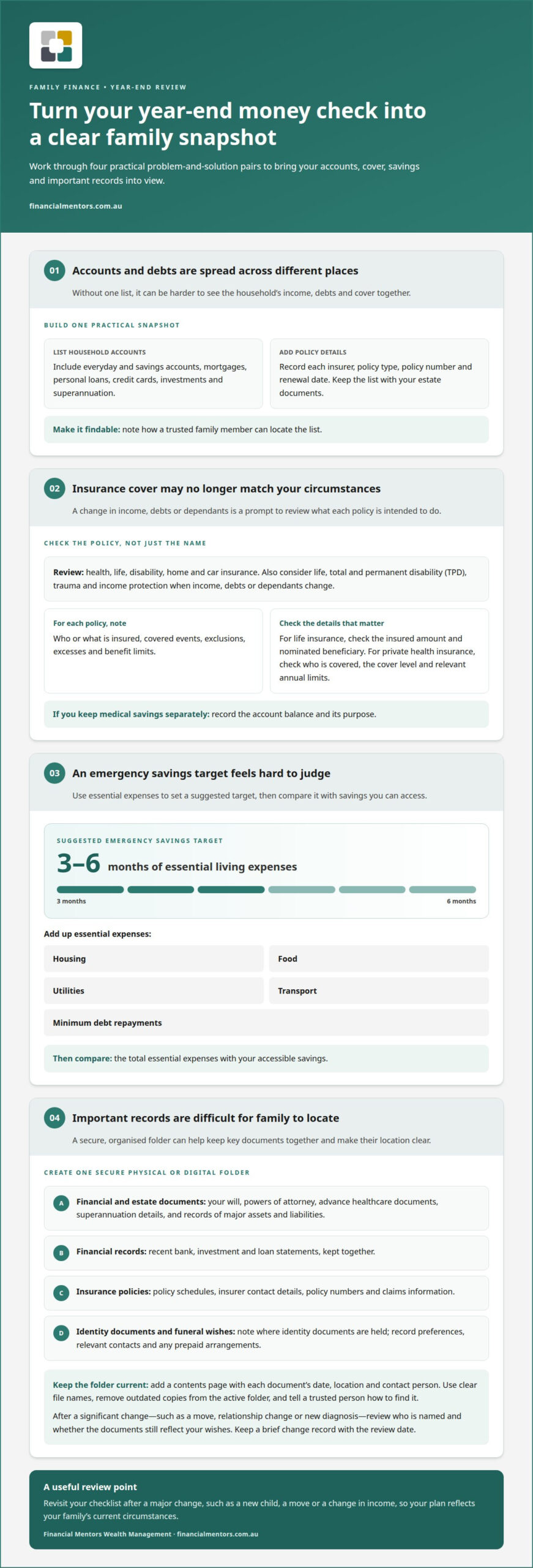
Start by listing every account your household relies on. Include everyday and savings accounts, mortgages, personal loans, credit cards, investments and superannuation. Record each insurer, policy type, policy number and renewal date. Keep the list with your estate documents and note how a trusted family member can find it. This gives you a practical snapshot of income, debts and cover in one place.
Review health, life, disability, home and car insurance against your current circumstances. For each policy, note who or what is insured, the events covered, exclusions, excesses and benefit limits. For life insurance, check the insured amount and nominated beneficiary. For long-term care needs, read the policy wording for covered care, eligibility conditions, waiting periods and benefit limits. These details help you understand how cover may respond and where your family could face a shortfall.
Review life, total and permanent disability (TPD), trauma and income protection insurance when income, debts or dependants change. Compare the purpose of each policy with current commitments, such as a mortgage or regular household expenses. For private health insurance, check who is covered, the level of cover and any annual limits relevant to your family. If you keep a separate account for medical costs, record its balance and purpose.
How much emergency savings should an Australian family keep? A suggested target is at least three to six months of essential living expenses. Add up housing, food, utilities, transport and minimum debt repayments, then compare the total with your accessible savings.
Finish with these year-end checks:
- Update account access instructions and store policy documents securely, so family members can find them when needed.
- Review nominated beneficiaries and contact details after a birth, separation or other family change.
- If you or your children are in immediate danger, call 000, according to the Australian Communications and Media Authority.
Powers of attorney and advance healthcare documents
A power of attorney records who may make decisions on your behalf, depending on its type and when it takes effect. An advance healthcare document records your preferences for future medical care. Names and processes differ across Australian states and territories, so keep documents relevant to where you live. Make sure the people named understand their role and know where the signed copies are stored.
Create one secure physical or digital folder for financial and estate documents. Include your will, powers of attorney, advance healthcare documents, superannuation details and records of major assets and liabilities. Add a contents page showing each document’s date, location and contact person. Store originals safely, protect digital copies with strong access controls, and tell a trusted person how to find them.
- Financial records: Keep recent bank, investment and loan statements together, so an authorised person can understand regular commitments.
- Insurance policies: File life insurance and other policy schedules with insurer contact details, policy numbers and claims information.
- Identity documents: Record where passports, birth certificates, Medicare details and marriage certificates are held, without leaving sensitive copies unsecured.
- Funeral wishes: Write down preferences, relevant contacts and any prepaid arrangements, then tell the person likely to organise them.
Use clear file names, such as “Will, updated” or “Health preferences”, and remove outdated copies from the active folder. After a significant change, such as a move, relationship change or new diagnosis, review who is named and whether the documents still reflect your wishes. Keep a brief change record with the review date so family members can identify the current version.
If you need to align these records with your broader plans, estate planning advice can help you consider how your wishes and financial arrangements fit together.
Reviewing wills, powers of attorney and beneficiaries
Review your will’s intended distribution against your family’s current priorities. Consider whether gifts, guardianship wishes and your choice of executor still reflect what you want. A will can set out your wishes, while nominated beneficiaries on financial accounts may follow separate processes. Treat these instructions as connected parts of your estate plan and note any differences that need attention.
For each superannuation or insurance account, consider whether its nomination reflects your intended recipient and the role that money would play. For example, you may want funds to support a partner’s living costs or a child’s future needs. Keep this purpose clear in planning discussions and review how each nomination aligns with your will. This is a consistency check, not a substitute for legal advice.
What family budget and cash-flow steps help improve financial security in Australia? Group spending into essentials, flexible costs and future goals, then compare planned and actual amounts. If expenses rise, decide together which discretionary costs to adjust before changing savings or debt plans. A monthly cash-flow snapshot can show whether your priorities fit your household income.
Which government benefits and family payments can Australian households claim? Centrelink entitlements and family payments may be available, depending on eligibility and household circumstances. Consider whether changes in caring responsibilities, income or family arrangements affect the support you can seek. Include eligible payments in your household plan once assessed.
Set a review rhythm that suits your family, such as an annual discussion, and revisit priorities when plans change. A financial plan can connect housing, education, debt reduction and retirement goals, so decisions in one area are considered alongside the others. Agree on which goal comes first, what action supports it and when you’ll assess progress. If you need specialist input, coordinate financial and legal advice around the same priorities. This keeps your next decisions focused on the future your family wants to build.
Debt repayment strategies
Begin with a complete debt list: lender, balance, interest rate, minimum repayment, due date and any fixed-rate period. Include credit cards, personal loans, car finance and the mortgage. Compare interest rates and fees to see which debts cost most over time. Credit card interest rates remained high in 2025, so review card balances carefully before directing spare cash elsewhere.
Choose a repayment order you can maintain. With the highest-interest-first approach, direct extra repayments to the costliest debt while making minimum payments on the others. This can reduce interest costs over time. Alternatively, paying the smallest balance first may give you an early result, while higher-interest debts continue to accrue interest. Keep your method clear and avoid adding new balances where possible.
Build your plan around real household expenses and responsibilities. Set aside money for essential bills and scheduled repayments before deciding what extra amount you can afford. If income varies, base the plan on a lower-income period, then put additional income towards debt when it arrives. Keep accessible emergency savings in view rather than committing every available dollar to repayments.
Review each debt’s terms before changing repayments. Check whether extra payments affect fees, fixed-rate conditions or other contract terms. If you’re considering consolidating debts, compare the new interest rate, fees, repayment period and total amount repayable. A lower regular payment can mean a longer repayment period, so weigh short-term cash flow against the total cost.
What Australian rules and services help families experiencing financial hardship or debt? Contact your lender’s hardship team early, explain changes to your income or expenses, and ask what repayment arrangements it can consider. A financial counsellor can also help you understand debts and prepare for conversations with lenders.
Set a review date and track balances, repayments and changes to income. If debt decisions affect retirement saving or other long-term goals, financial planning support can help you weigh those priorities together.
Financial Mentors Wealth Management
Financial Mentors Wealth Management can help you connect your family’s cash flow, debt priorities, insurance and estate considerations within a broader plan. If a new child, home purchase, income change or approach to retirement has shifted your priorities, financial planning can help you consider how those decisions fit together. Estate planning advice can support a review of how your wishes and financial arrangements align, while retirement planning and wealth creation strategies can help you consider longer-term goals.
Bring account and debt summaries, policy details, current financial documents and questions to guide the discussion. If you’d like support reviewing your family’s financial position and next steps, contact Financial Mentors Wealth Management.
Give your next financial decision a clear direction
A useful next step is to turn one family priority into a decision you can act on. Choose a goal that matters now, such as making room for a future change or clarifying what financial progress means to you. Then agree on what information you need, who should be involved and when you’ll revisit the decision. A financial security checklist for families can support that conversation, but your priorities give it direction. They may shift over time, and that’s a normal part of planning.
Focus on choices you can make with the information available today. If a decision feels too large, break it into a smaller action, such as setting a discussion date or identifying the question you still need answered. Write down what you decide and what might prompt you to reconsider. With a shared direction, your family can move forward thoughtfully and adjust its approach as circumstances change.
Frequently Asked Questions
How do insurance, superannuation and tax fit in?
These matters affect different parts of your family’s financial picture, so consider them when setting priorities. For example, a change in work arrangements may affect household income, super contributions and tax records. Keep receipts and income statements organised for tax return preparation, and note questions about investment choices or cover held through super. This helps bring connected decisions into one planning conversation.
How should banks, cards and debts be handled?
Protect access as well as managing repayments. Use unique passwords for online banking, keep contact details current and enable available security alerts. Review who can access shared accounts and whether each card is still needed for its original purpose. If you use a card for household spending, agree how purchases will be recorded and the balance managed, so both adults understand the arrangement.
Should funeral costs be part of the checklist?
Yes, include funeral costs as a future household commitment when considering how your family would meet expenses after a death. Decide whether you intend to use savings, an existing arrangement or another source of funds, and discuss the plan with people who may need to act. The amount required depends on the choices and arrangements made, so avoid relying on a generic estimate.
What should be on a financial security checklist for Australian families?
Clearly record who makes key financial decisions, your family’s current priorities and the events that would prompt a review. For example, a change in work, caring duties or housing plans may alter what matters most. Note unresolved questions and the next action for each. This makes your checklist a practical planning tool, not just a collection of records.
How do Australian families choose suitable life, income protection and trauma insurance?
Start by estimating the financial impact your family would face if an earner died, could not work or experienced a serious illness. Consider how long the household would need support and which existing resources might contribute. Then compare available cover with those needs and your family’s budget. Reviewing cover held through super alongside separate policies can help identify potential overlap.
How much superannuation should parents have, and what happens to super if a parent dies?
There is no single super balance that suits every parent. A useful target depends on expected retirement spending, when you plan to stop work, other income and assets, and how long your savings may need to support you. If a parent dies, the family can contact the super fund to begin its claims process and learn what information it needs to assess the benefit.