

Your family’s financial future is shaped by more than the assets you pass on. Creating a financial legacy for your family means planning how wealth will be transferred, considering tax, and preparing the next generation to manage money thoughtfully. It also means sharing the values and intentions behind your decisions.
You may already know that a will matters, but a lasting plan can involve more than one document. Clear conversations, careful preparation and regular reviews can help keep your wishes and financial arrangements aligned as life changes.
This guide covers practical ways to plan wealth transfers and consider tax, share financial knowledge and values, and prepare heirs for future responsibilities. It also explains when professional advice and a review can help you respond to family changes while keeping your long-term goals in view.
Key Takeaways
- Map your assets and consider how each should be transferred, including the tax implications of your choices.
- Talk with your family about the values and intentions behind your financial decisions to reduce the chance of misunderstandings.
- Build heirs’ confidence through age-appropriate conversations and gradual involvement in financial decisions.
- Revisit your arrangements after major life changes so they continue to reflect your family’s needs and goals.
1. Structuring wealth transfers and managing tax liabilities
An estimated A$3.5 trillion is expected to pass from baby boomers to younger generations in Australia in the coming decades. Planning early gives you time to map your wealth, decide who receives each asset and consider the tax effects of different transfer choices. Start with an inventory of property, investments, superannuation, insurance, bank accounts and business interests.
A will records your wishes for distributing estate assets, while trusts can set conditions for how and when beneficiaries receive wealth. For example, a trust may direct funds towards a beneficiary’s education or home ownership. Consider each structure’s purpose, administration and tax implications, especially if your estate includes a business or property. Family circumstances and the possibility of disputes also matter when planning distributions.
To help protect your family, review superannuation and life insurance beneficiary nominations separately from your will. Confirm that each nomination reflects your current intentions and fits your broader estate plan. A wealth adviser can help you consider how these choices relate to your investment strategy, dependants and other assets.
When planning for aged care costs, consider likely care needs and how income, savings and assets could help meet them. In your estate plan, identify dependants and consider how your will or trust arrangements could provide for their ongoing needs. Record care preferences and the people you want involved in important decisions.
Coordinate your documents, ownership arrangements and tax considerations with appropriate estate planning and wealth advice. Estate law varies between Australian states, so where you live can affect your planning choices. When considering tax, weigh the asset type, timing and intended recipient. Review your plan after changes such as a new child, a relationship change, a property purchase or a business sale. Clear instructions help the next generation understand the purpose of each transfer and reduce uncertainty about your wishes.
2. Passing financial knowledge and values to the next generation
Transferring wealth gives heirs assets, but family conversations can help them understand the values behind those assets. Explain what you want money to support, such as education, caring for relatives or charitable giving. A short family mission statement can record these priorities and guide decisions across generations. Keep it practical: describe which goals matter and how family members can contribute.
Hold regular family meetings to discuss plans in clear, age-appropriate language. Younger children might help compare prices for a shared activity, while older children could discuss saving, budgeting and investment choices. Invite questions without expecting everyone to agree. For example, discuss how an inheritance might support study, a first home or another shared purpose.
Financial education is more meaningful when each generation takes part. Share real examples, such as how a household budget balances income, bills and savings. As young adults gain experience, involve them in suitable decisions about a family business, charitable project or investment discussion. These steps build practical confidence and help future leaders understand their responsibilities before taking on larger roles.
Succession planning can start with a conversation about who may lead a family business or oversee shared responsibilities. Identify the skills they need, then offer opportunities to learn through supervised tasks and gradual decision-making. If several relatives are involved, agree how decisions will be made and how to raise disagreements. Clear roles support a smoother handover and help preserve relationships alongside family assets.
Link financial choices to shared values through volunteering or a family giving project. Discuss why a cause matters, how contributions will be decided and what younger relatives can manage. For support aligning these conversations with your wider goals, financial planning can help connect family priorities with practical next steps.
3. Professional advice and regular plan reviews
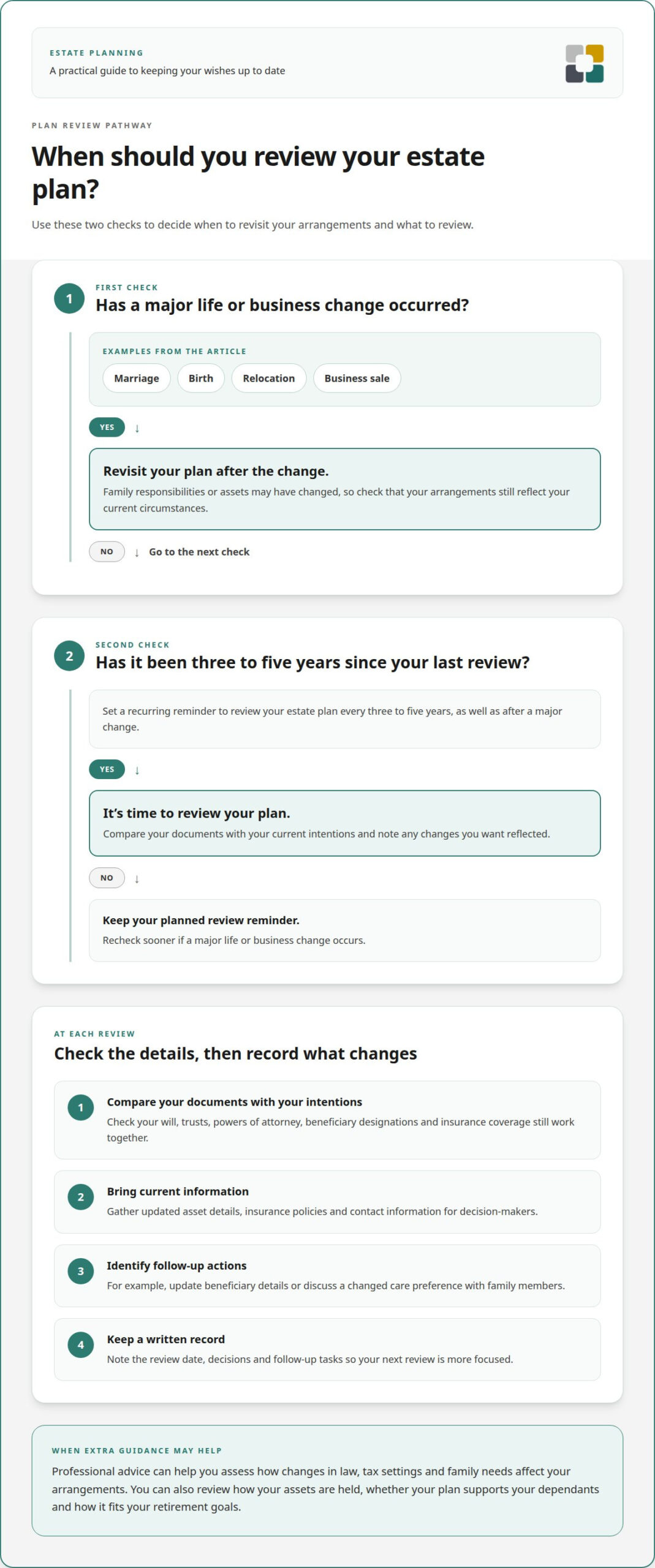
Set a recurring reminder to review your estate plan every three to five years. Revisit it after a marriage, birth, relocation or business sale, when family responsibilities or assets may change. A new child, for example, may affect who you want to provide for and how your wishes are recorded. Regular reviews help keep your plan aligned with your family’s current circumstances.
At each review, compare your documents with your current intentions. Check that your will, trusts, powers of attorney, beneficiary designations and insurance coverage still work together. If a relationship changes, consider whether the people named to make decisions or receive assets remain appropriate. Record changes in your circumstances and the decisions you want reflected, rather than relying on memory or informal conversations.
Professional advice can help you assess how changes in law, tax settings and family needs affect your arrangements. An adviser can review how your assets are held, whether your estate plan supports your dependants, and how your financial plans fit your retirement goals. If you have charitable intentions, include the purpose and intended recipients in your review. This can help keep those wishes meaningful and clear to family members.
Bring updated information to each review, including current asset details, insurance policies and contact information for decision-makers. Then identify actions, such as updating beneficiary details or discussing a changed care preference with family members. After relocating, consider whether your estate arrangements still suit your circumstances. Keep a written record of review dates, decisions and follow-up tasks to make the next review more focused and help your family understand why choices were made.
4. Financial literacy and mentoring heirs
An inheritance may include cash, shares or property, and each asset brings different decisions. Before a transfer, help heirs understand its purpose, ongoing costs and responsibilities. For example, an inherited rental property requires upkeep and record-keeping, while shares involve decisions about holding or selling. Discussing these responsibilities connects generational wealth with practical knowledge, not just ownership.
Build financial literacy through everyday practice. Ask a young adult to track income, bills and savings in a simple budget, then discuss how those choices support their goals. You could review a sample financial plan together, explaining how it balances current spending with future needs. For family members approaching an inheritance, discuss what to consider before making major financial decisions.
Mentoring works best when responsibilities grow gradually. A younger relative might start by helping organise financial records, then take part in a discussion about an investment or family asset. Explain the reasoning behind each strategy, including its purpose, risks and possible trade-offs. This gives future generations time to ask questions and develop judgement before managing more complex assets.
Consider how heirs will receive and manage assets, not just who will receive them. If your estate plan uses a trust, explain its conditions and the intended timing of distributions in plain language. For example, a distribution might support study or another agreed goal. Discuss who will oversee decisions and how beneficiaries can seek guidance. Clear explanations help heirs understand the plan and their responsibilities.
Keep learning connected to family values. Invite younger members to help compare options for a charitable contribution or discuss how an asset could support shared goals. These conversations make financial planning relevant and help preserve the intentions behind wealth transfers. To build strategies around your family’s goals, start a conversation about wealth creation.
Financial Mentors Wealth Management: Financial Planning
Financial Mentors Wealth Management can help you bring family wealth goals and practical financial decisions into the same conversation. Its financial planning, retirement planning, wealth creation strategies and estate planning advice can help you consider how today’s choices relate to your family’s future.
If you’re considering how to prepare for retirement, build wealth over time or align your estate intentions with broader financial goals, professional advice can help you organise your next steps. Bring a clear picture of your priorities, current arrangements and questions about the next generation. This is a useful starting point for discussing which areas of planning need attention.
To explore your options, contact Financial Mentors Wealth Management or visit financialmentors.com.au.
Give your family’s future a clear next step
A lasting legacy doesn’t need to begin with a perfect plan. Choose one decision you’ve been putting off and write down what you want it to achieve for your family. This simple starting point can make your next conversation more focused and help turn your intentions into practical action.
Creating a financial legacy for your family is an ongoing process shaped by your priorities and the people you care for. Financial Mentors Wealth Management offers financial planning, retirement planning and wealth creation strategies to help you consider how your financial choices relate to your future. Bring your questions, current priorities and hopes for the next generation to a discussion about possible next steps.
If you’re ready to explore your options, contact Financial Mentors Wealth Management. A considered first step today can help you move towards a future that reflects what matters most to you.
Frequently Asked Questions
What Is Legacy Planning?
Legacy planning gives you a way to shape what your family receives, learns and carries forward. Alongside financial assets, you can record personal intentions, such as the principles you hope will guide future decisions. For example, explain why you want a particular resource to support education or a shared family purpose. Begin by identifying what you want your legacy to represent.
What Should a Financial Legacy Plan Include?
Keep a clear record of your priorities, key financial information and the people you want involved in future decisions. You might note where important records are held, who should be contacted about them and what responsibilities need attention. Add the reasons behind major choices. An organised plan helps family members understand your intentions and find relevant information when they need it.
What does creating a financial legacy for your family involve?
Creating a financial legacy means turning your intentions into practical decisions about resources, responsibilities and the knowledge you share. For example, explain how a family asset supports a long-term goal, then discuss what maintaining it may involve. Consider who needs to understand each decision and what information will help them act thoughtfully. This gives your family context, not just instructions or transferred assets.
How can Australians build generational wealth for their family?
Start by understanding your household cash flow, setting clear saving priorities and choosing investment strategies that suit your financial goals and risk tolerance. For example, review regular expenses, decide how much to direct towards savings, and discuss investment choices with a financial adviser. Explain these choices to younger family members as they grow so they can learn the reasoning behind financial decisions over time.
What estate planning documents do Australians need, including a will and enduring power of attorney?
A will records your wishes for distributing your estate. An enduring power of attorney can document your chosen decision-maker and the decisions you want them to handle. Consider how these documents suit your circumstances and keep relevant details accessible to trusted people. Requirements and terminology vary across Australian states and territories, so make sure the documents reflect the rules that apply where you live.
How do inheritance and estate taxes work in Australia, including capital gains tax and superannuation death benefits?
Consider capital gains tax and superannuation death benefits separately, rather than assuming the same tax treatment applies to every inheritance. Record each asset’s type, ownership and intended recipient, then assess the relevant tax treatment before a transfer or sale. The asset’s details and the people involved can affect what needs consideration, so keep clear records to support informed decisions.