

Yes, everyday Australians can build generational wealth without an inheritance or a large starting sum. Building generational wealth in Australia can begin with steady budgeting, saving and managing debt, then grow through considered investing and planning how assets may pass to family.
It’s understandable to wonder whether small, practical steps can make a lasting difference. Your income, commitments and goals shape your starting point, but a clear plan can help you make progress over time. This article explains how everyday habits support wealth creation, why financial and estate planning matter, and how options such as superannuation, shares and property may fit into a plan. It also looks at how to think about the next generation, so today’s decisions can support the future you want for your family.
Key Takeaways
- You can start building wealth from your current financial position by setting goals and shaping an investment approach around your circumstances.
- A clear budget can help you find room to save, while a considered debt plan can support steady progress.
- Financial advice and estate planning can help connect your wealth-building decisions with the future you want for your family.
- Compare options such as superannuation, shares and property against your goals, time frame and comfort with financial risks.
1. Can everyday Australians build generational wealth from nothing?
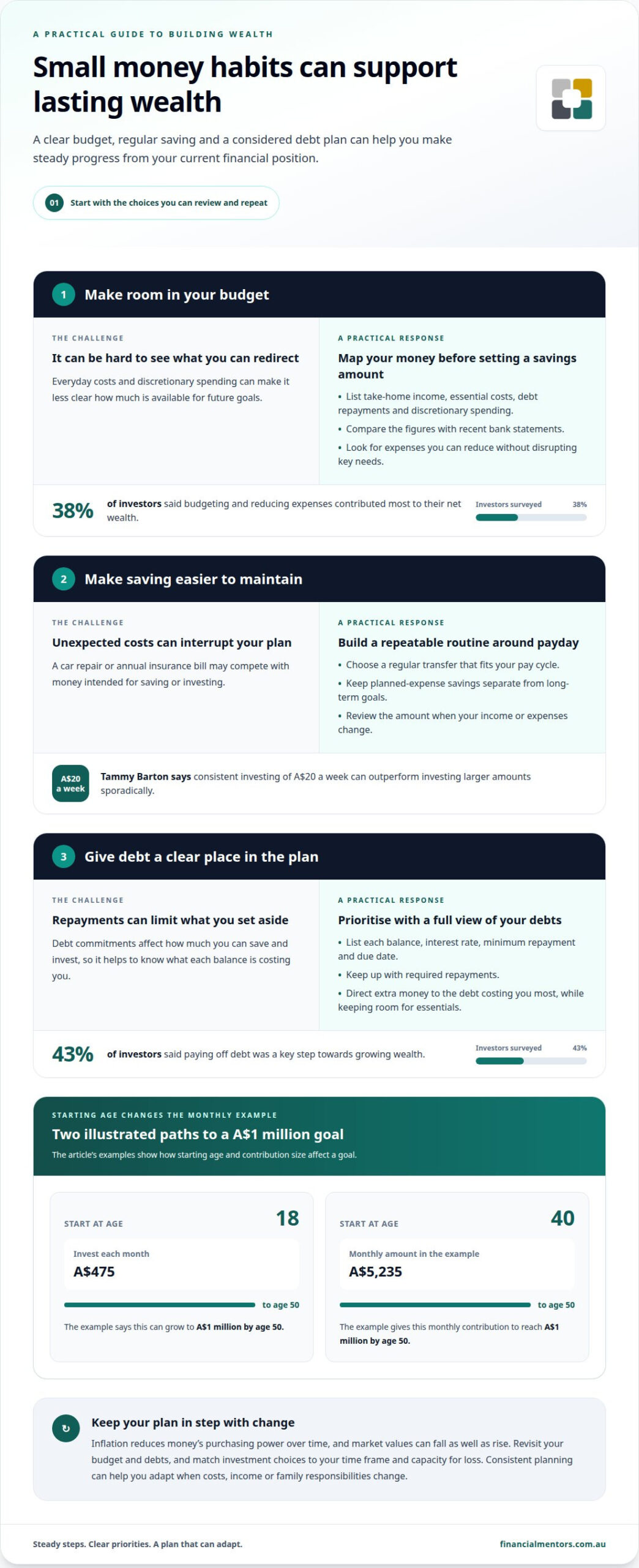
Yes. Everyday Australians can build assets without an inheritance by matching an investment strategy to their circumstances. Investing A$475 a month from age 18 can grow to A$1 million by age 50. At age 40, reaching A$1 million by age 50 would require A$5,235 monthly. These examples show how starting age and contribution size affect a goal. Set your target, review your financial position, then choose a regular contribution and investment mix you can sustain.
Property is one option, either through a direct purchase or a property syndicate, where investors pool funds to buy an asset. Pooling can reduce the initial capital needed. For buyers taking their first step into residential ownership, tailored house and land packages from specialists like Power Housing provide a practical pathway to building long-term equity. Before investing, assess the location, rental demand and potential for capital growth. Include stamp duty, legal fees and ongoing maintenance in your calculations. If you already own property, its equity may help fund another purchase. Borrowing lets an investor buy a larger asset than their own funds could cover, so weigh repayments against your income and other financial commitments. Property and superannuation account for 74% of Australian household wealth.
Shares and superannuation can form part of a long-term approach. Managed funds and exchange-traded funds provide ways to invest in diversified share portfolios. Spreading investments across companies, sectors and industries can reduce reliance on any one area. Consider brokerage and ongoing management fees, as well as capital gains tax and dividend imputation. Super contributions are subject to limits, and concessional and non-concessional contributions have different tax treatment. Plan contributions with the applicable limits and your circumstances in mind.
Regular saving is another practical starting point. Tammy Barton says consistent investing of A$20 a week can outperform investing larger amounts sporadically. Set an automatic weekly transfer, then review it when your income or expenses change. Centrelink entitlements, family grants and tax concessions may support eligible households. Include the support you qualify for in your budget and consider how it affects your cash flow. A savings account, shares and super suit different time frames and access needs, so choose a structure that fits your goals.
2. Budgeting, saving and debt management
A working budget shows where your income goes and what you can redirect towards future goals. Start by listing take-home income, essential costs, debt repayments and discretionary spending. Compare those amounts with recent bank statements, then identify expenses you can reduce without disrupting key needs. In Australia, 38% of investors said budgeting and reducing expenses contributed most to their net wealth. That finding points to a practical first step: review spending before setting a savings amount.
Choose a regular transfer that fits your pay cycle. For example, arrange an automatic transfer after payday into a separate savings account, then increase it when a bill ends or your income rises. Keep savings for planned expenses separate from money intended for long-term goals. This can help prevent an unexpected car repair or annual insurance bill from derailing investment contributions. Review your plan when your household costs, income or family responsibilities change.
Debt also affects how much you can save and invest. List each balance, interest rate, minimum repayment and due date. Keep up with required repayments, then direct extra money towards the debt that is costing you most, while maintaining room for essential expenses. In Australia, 43% of investors said paying off debt was a key step towards growing wealth. Lower debt commitments can create more capacity for future saving, though repayment priorities depend on your loan terms and cash flow.
Inflation reduces the purchasing power of money over time, while debt repayments can limit what’s available to build assets. Investment risk matters too: market values can fall as well as rise, affecting the wealth you may pass on. To manage these pressures, revisit your budget, review your debts and match investment choices to your time frame and capacity for loss. Consistent planning can help you adapt to changing costs without abandoning long-term goals.
3. Financial advice and estate planning
Financial advice can connect investment choices with your income, debts, family needs and long-term goals. Before a major decision, bring together a clear picture of your assets, liabilities, income and expenses. Then identify what you want your wealth to support, such as retirement, helping children with education or passing assets to family. General information cannot account for your specific objectives, financial situation or needs. Financial Mentors Wealth Management provides financial advice to help you consider your choices in light of your circumstances.
Estate planning involves arranging how your assets are managed and passed on after death. Start by listing property, savings, investments, business interests and superannuation. Note who you intend to benefit, and consider whether your arrangements still reflect your wishes after a new relationship, the arrival of a child or a significant purchase. Keep important information organised so the people responsible for your affairs can understand what you own and locate relevant records.
A family trust is one structure Australian families may consider to manage pooled assets and distribute them according to family members’ wishes. Its effects, including any potential tax implications or asset protection, depend on the circumstances. A trust also involves decisions about control, beneficiaries and how assets are managed, so clarify its purpose before considering this structure. Financial advice can help you assess how estate planning choices fit with your broader financial plan.
Make estate planning part of your regular financial review. Revisit your asset list and intended beneficiaries when family circumstances or financial commitments change. If you receive an inheritance, buy property or build an investment portfolio, consider how the asset fits your existing arrangements. Financial advice can also help align retirement planning with how you intend to pass on wealth. This joined-up approach considers both the assets you build and the people you want them to support.
4. What are the most effective ways to build generational wealth in Australia?
There’s no single asset that suits every Australian family. A practical approach is to consider investments with different roles, then review them as your goals change. Shares provide exposure to companies, while property and superannuation may support other financial goals. Managed funds and exchange-traded funds offer ways to invest in diversified share portfolios. Spreading investments across companies, sectors and industries can help avoid relying on one area for your portfolio’s performance.
Property may suit investors seeking rental income or potential capital growth, but research the location and rental demand before committing. When exploring regional markets or potential purchases, agency resources like olliejamesrealestate.com.au can provide practical insight into local listings and values. Australian house values rose 382% over the past 30 years, averaging around 7.2% each year over that period. Past growth doesn’t tell you what a particular property will do next. Include purchase and ongoing costs in your decision, and consider how property fits with your other assets and financial commitments.
Superannuation can support wealth-building over the long term. In Australia, you can make additional contributions through salary sacrifice or personal contributions. Before increasing them, consider contribution limits, tax treatment, access needs and your investment time frame. Compare super options by looking at fees, performance, risk and how each fits your goals. Periodically review your contributions and investment settings as your work and family life change.
Passing on financial knowledge matters alongside passing on assets. Talk with children about saving, investing and how household decisions are made. With adult children or parents, discuss shared expectations and future plans in plain language. Some families also establish foundations, which are non-profit organisations supporting charitable causes; they can provide tax benefits and help create a legacy. Choose approaches that reflect your family’s wishes, then keep the arrangements under review as circumstances change. Which combination fits your priorities and the future you want to support?
Financial Mentors Wealth Management: Financial Planning
Financial Mentors Wealth Management can help bring your wealth-building decisions into a clearer plan. If you’re weighing investment choices, preparing for retirement or considering what your family may inherit, financial planning can connect those priorities with your financial position and long-term goals.
Wealth creation strategies can help you consider how to grow assets over time, while retirement planning can shape decisions about your later years. Estate planning advice can help you consider how assets may be managed and passed on. Together, these areas can help align today’s decisions with your future and your family’s needs.
If you’re ready to discuss your goals and the steps that may suit your circumstances, contact Financial Mentors Wealth Management to start a conversation.
Shape the future you want to pass on
Building generational wealth in Australia is about more than accumulating assets. It also means deciding what those assets should make possible for the people you care about. Write down the purpose behind your financial decisions, whether that’s greater choice in retirement, support for your children or a lasting family legacy.
Then choose one practical action to move towards that purpose. You might clarify a long-term goal, organise key financial information or discuss future expectations with your family. These conversations can turn broad intentions into decisions that reflect what matters to you. Revisit your priorities and adjust your plans as circumstances change.
If you’d like support turning your priorities into a considered financial plan, contact Financial Mentors Wealth Management. A conversation can help you consider a suitable next step for your circumstances and the future you hope to create.
Frequently Asked Questions
Can everyday Australians build generational wealth from nothing?
Yes. You can begin without an inheritance by building assets and financial knowledge over time. Building generational wealth in Australia can start with a modest goal, such as creating more choice for your children’s future, then making decisions that support it. Your starting point may affect the pace, but it doesn’t prevent you from planning. Consider what you want your family to inherit beyond money, including useful financial knowledge.
How can someone with very little spare money begin investing?
Start by understanding your essential expenses and keeping enough cash accessible for near-term needs. Then explore investment options that accept contributions suited to your budget, and compare their fees, risks and access conditions before deciding. For example, you might set a small recurring contribution that matches your pay cycle. If even that feels difficult, focus first on stabilising cash flow and revisit investing when your circumstances allow.
How much money do you need to create generational wealth?
There’s no fixed amount required. It depends on what you want to provide, how much time you have and how your assets perform. A family aiming to pass on financial stability may set a different goal from one seeking to fund a home deposit or education. Define the outcome first, then work backwards to set a contribution target you can review as your income and responsibilities change.
What does ‘generational wealth’ really mean, and why does it matter?
Generational wealth is the financial resources and knowledge that help family members create opportunities across generations. Assets alone don’t explain how they were built, managed or intended to be used. For example, discussing the reasoning behind a family’s saving choices can help younger relatives make informed decisions later. Shared knowledge can support a lasting legacy, even before substantial assets are passed on.
What financial habits matter most for long-term wealth-building success?
Consistency, informed decisions and honest family conversations all play a part. Keep records of your goals and the reasons behind major financial choices, then assess whether they still fit. Avoid changing course solely in response to short-term market movements. You can also make financial learning part of family life by discussing everyday choices, such as comparing needs and wants when planning a large purchase.
What overlooked tools help families actually pass wealth on?
A clear asset register can help family members understand what exists and where important records are kept. Note account and ownership details, key contacts and the location of relevant documents, then update the record when things change. A family conversation about your intentions can also reduce uncertainty. These practical steps connect your plans with the people expected to manage or receive assets.