

Retirement readiness is about more than your super balance. A pre-retirement financial checklist should cover your assets, income, debts, insurance, investments, savings and government benefits, so you can see how they may support the life you want. Australians may be eligible for a full or part Age Pension from age 67, depending on their circumstances, income and assets, according to Services Australia.
It’s natural to focus on whether you’ve saved enough, but retirement also brings decisions about when to stop working, how to draw an income and which financial commitments to address. Reviewing these areas together can help you see what needs attention.
This guide walks you through the key areas to check, from estimating your retirement spending and reviewing super to considering insurance, debt, estate planning and Centrelink entitlements. You’ll also find practical steps for preparing at different stages, so you can turn the checklist into a plan that reflects your priorities and next chapter.
Key Takeaways
- Estimate your retirement spending and compare it with income from super, savings and other assets.
- Review debts, insurance and investments to see what may need attention before you stop working.
- Check your super accounts, nominated beneficiaries and potential eligibility for government benefits.
- Map out practical steps for the years leading up to retirement, including how you’ll organise your income.
- Consider how the Age Pension income and assets tests may affect your retirement plans.
Considering other assets and retirement income
Start by estimating the annual income your retirement lifestyle may require. List regular spending on housing, food, transport, health care and leisure. Separate essential costs from flexible choices, such as travel or hobbies. This gives you a practical income target rather than a figure based on your super balance alone. A pre-retirement financial checklist can help organise your estimates and highlight assumptions to revisit. Note which costs are ongoing and which depend on a particular plan or activity.
Next, map your assets and income sources. Record super, savings, investments, property and any expected inheritance. For each, note when it could provide income and whether its value or payments may change. Rental income and share dividends can vary, so distinguish them from more predictable payments. Include property costs and possible periods without rent when estimating rental income. Also note whether each asset is owned jointly or individually, so your estimate reflects how income is shared.
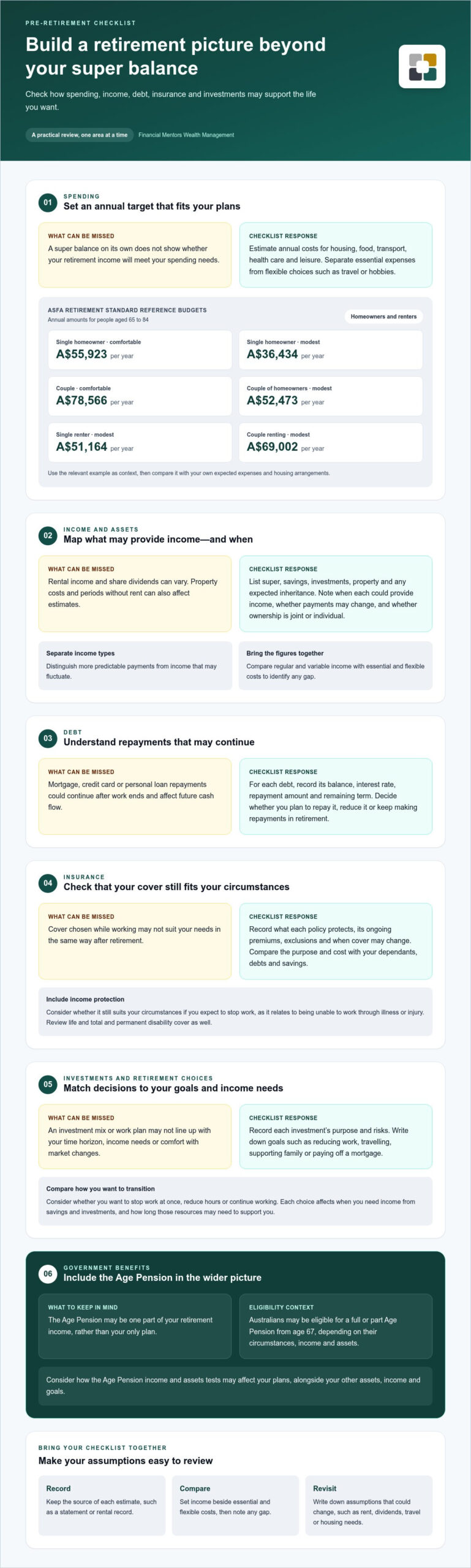
- Estimate annual spending. The ASFA Retirement Standard for March 2026 estimates that a single homeowner aged 65 to 84 needs A$55,923 annually for a comfortable lifestyle, or A$36,434 for a modest one. Compare these reference budgets with your own planned expenses.
- Compare household circumstances. ASFA estimates a comfortable annual budget of A$78,566 for a couple aged 65 to 84. Modest annual budgets are A$52,473 for a couple of homeowners, A$51,164 for a single renter and A$69,002 for a couple renting. Housing arrangements can change the spending picture, so use the relevant example as context.
- Allow for retirement phases. Your spending and income needs may change over time. Consider early retirement plans, later-life costs and how long your retirement funds may need to last. Write down which assumptions could change, such as travel plans or housing needs.
- Choose an income approach. Compare accounts or retirement products by payment structure, access to funds and investment approach. Check the age-based percentage drawdown limits that apply to retirement income products. Consider whether payment timing matches your regular bills.
Bring your estimates together in an income-and-spending table. Compare regular and variable income with essential and flexible costs, then identify any gap. If rent, dividends or investment returns fluctuate, use a cautious estimate of the income you expect. Keep your assumptions visible so you can update them as circumstances change. Note the source of each estimate, such as a statement or rental record, to make future reviews easier.
A second review can show how different choices affect your available income. For example, compare a planned reduction in travel spending with the income needed for household bills. A pre-retirement financial checklist gives you a structured way to record options and revisit them as retirement approaches. Beside each decision, note what would prompt a review, such as a change in rent, dividend income or retirement plans. This helps show how your assets may support your plans.
Debt, insurance and investment reviews
List each debt, its balance, interest rate, repayment amount and remaining term. Include your mortgage, credit cards and personal loans. This gives you a practical view of repayments that could continue after work ends. The checklist recommends resolving outstanding debts before retirement. Prioritise costly balances and decide how repayments fit your retirement plan.
Review your insurance in light of the changes retirement may bring. Record the cover you hold, what it protects and its ongoing premiums. If you expect to stop work, consider whether income protection still suits your circumstances, as it relates to being unable to work through illness or injury. Review life and total and permanent disability cover alongside your dependants, debts and savings. Note policy exclusions and when cover may change, keeping in mind that specialist agencies such as SI Insurance emphasise tailoring individual coverage to current life stages rather than retaining outdated policies.
- Set a debt action for each balance. Mark whether you plan to repay it, reduce it or keep making repayments in retirement. This makes the effect on your future cash flow easier to assess.
- Check insurance against your current needs. A policy chosen while working may no longer fit the same way after retirement. Compare its purpose, cost and cover with your dependants and financial commitments. Independent agencies such as All Insurance LLC highlight how reviewing personal policies can help ensure your protection matches your changing stage of life.
- Review your investments as a group. Record each investment, its purpose and the risks it brings. Consider whether the mix still matches your time horizon, income needs and comfort with market changes.
- Write down your retirement goals. Include practical aims such as reducing work, travelling, supporting family or paying off a mortgage. Use each goal to guide decisions about debt, insurance and investment risk.
- Compare retirement options. Consider whether you want to stop work at once, reduce hours or continue working. Each choice affects when you need income from savings and investments, and how long those resources may need to support you.
Consider the Age Pension as one possible part of your income, rather than relying on it as your only plan. Your other assets, income and goals also matter. If you have a partner, discuss how each option could affect shared spending and individual priorities. Keeping a clear record can help identify choices that need further thought.
Bring your debt, insurance and investment notes together, then compare them with your retirement goals. If you’d like help weighing those choices, you can discuss your retirement plan with an adviser.
Super, savings, investments and government benefits
Before selling investments or downsizing, include possible tax consequences in your decision. Also consider how sale proceeds could affect the income and assets used to assess Centrelink entitlements. In Australia, eligible people aged 55 or over may contribute up to A$300,000 from selling their main residence to super, subject to the rules. A qualifying couple may contribute up to A$600,000.
Create a clear record of your super, savings and investments before deciding what to change. Check where each super account is held, its balance, investment options, fees and insurance. For savings and other investments, note ownership, access and potential income. These details help you assess how each asset could support your retirement plans.
- Find all your super accounts. Check recent statements and use the ATO’s lost super guide to look for accounts you may have lost track of. This helps you see your total super balance.
- Compare accounts before consolidating. Review investment options, fees, insurance and beneficiary nominations first. Combining accounts can simplify oversight, but assess what each account currently provides before making changes.
- Check super access timing. Australians can generally start accessing super at age 60, the preservation age stated in the research. Plan how access timing fits your work plans and retirement income needs.
- Track additional contributions. Record employer and personal contributions, and monitor concessional and non-concessional contributions against their applicable caps. The transfer balance cap is A$2 million in 2025-26 and A$2.1 million in 2026-27; it is separate from contribution caps.
- Review super insurance and beneficiaries. Check whether cover suits your circumstances and whether your nominated beneficiaries reflect your wishes. A change to accounts can affect where insurance and nominations sit.
- Review government benefits. Consider whether you could qualify for the Age Pension and how your income and assets affect eligibility. Include benefits in your overall retirement income estimate, rather than treating them as guaranteed income.
If you’re considering selling shares or other investments, record their cost, current value and your reason for selling. This information can help when assessing potential tax consequences. If you sell your home, track where the proceeds will go, including any eligible downsizer contribution, savings or debt repayment. How you use the money can affect future cash flow and your Centrelink assessment.
Keep statements, contribution records and beneficiary details together. Review them when your plans change, particularly before consolidating accounts, changing investments or making a downsizer contribution. An up-to-date record makes decisions easier to assess.
Preparing for the transition into retirement
Use a timeline to prepare, rather than leaving every decision until your final working months. Australian retirement guidance recommends starting superannuation and retirement-income planning 15-20 years before retirement. If you’re closer, begin planning at least five years ahead, then update your steps as your intended date approaches.
- Start planning early. If retirement is 15-20 years away, connect your super, savings and work plans with the lifestyle you want. Starting at least five years beforehand gives you time to review options and make considered adjustments.
- Review your retirement plan 5-10 years beforehand. Revisit your expected retirement date, income sources and spending plans. Consider a transition-to-retirement strategy with a financial adviser if you want to reduce work gradually.
- Check finances and debts 1-2 years before retiring. Update your financial position, review repayments and confirm how your retirement arrangements fit together. If your income estimate falls short, consider whether delaying retirement could help.
- Review savings six to twelve months before retirement. Compare your balances and expected income with planned spending. The checklist recommends holding 1-3 years of spending in cash or defensive assets before retirement.
- Finalise income arrangements 3-6 months before your chosen date. Confirm how you’ll draw income, cover regular bills and manage larger costs. This helps you prepare for the first three to six months, when your weekly routine may change.
- Consider your pension and future care needs. Review whether you may qualify for the Age Pension, then include aged-care costs in your planning. The Australian Government’s My Aged Care guide can help you understand aged-care options.
- Update key documents before retiring. Check that your will reflects your wishes, and consider an Enduring Power of Attorney and an advance health directive. These arrangements help record who should act or make decisions if you cannot.
- Plan for your partner’s future. Consider what may happen if your partner outlives you, including how household income and assets could change. Discuss this together and factor the outcome into your retirement and estate planning.
Write each action beside a target date, then review the list as your plans develop. For example, a person five years from retirement could review their strategy now, check savings six to twelve months beforehand, and settle income arrangements in the final 3-6 months. A staged approach helps you address decisions in a useful order.
How does the Australian Age Pension assets and income test affect retirement plans?
The Age Pension can form one part of your retirement income, alongside super, savings and investments. Australians may be eligible for a full or part Age Pension from age 67, depending on their circumstances, income and assets, according to Services Australia. The assets and income tests make it useful to assess your whole financial position, not just your super balance.
In your retirement plan, list income sources and assets separately. Include employment income if you plan to keep working, along with super, savings, shares and property. Record your relationship status and whether you own or rent your home. These details help you prepare for an eligibility assessment and consider how potential pension income fits your budget.
- Estimate your income. Note regular payments from work, investments and retirement products. The income test considers income, so compare the total with the spending estimate you prepared.
- List your assets. Record savings, investments, property and other assets. The assets test considers assets, so keep values and ownership details together.
- Plan for different outcomes. Model your budget with no pension, a part pension and a full pension. This shows how other income may need to support your spending.
- Include a partner’s circumstances. If you’re part of a couple, organise both people’s income and assets. A household plan should reflect the resources and spending needs you share.
- Revisit estimates after a change. Selling an investment, receiving an inheritance or changing work hours can alter your financial position. Update your records when these events change your income or assets.
For context, the maximum annual full Age Pension rate shown in the research is A$31,223 for a single person and A$47,070 for a couple. Treat these as reference points, not assumed income in your budget. Your circumstances, income and assets determine whether you qualify and the amount payable.
Keep a dated summary of your income, assets and planned changes with your retirement records. Before a major decision, such as selling an investment, consider the effect on cash flow and potential pension eligibility. This helps you weigh immediate proceeds against future income needs.
If you’d like help connecting these figures with your wider retirement plan, seek retirement planning advice tailored to your goals.
Financial Mentors Wealth Management: Financial Planning
Financial Mentors Wealth Management can help bring your retirement decisions together through financial planning and retirement planning. Once you’ve reviewed your income, super, debts and potential Age Pension eligibility, the next step may be to shape those details into a plan that reflects your priorities.
You can also discuss Wealth Creation Strategies and Estate Planning Advice if your retirement goals involve managing investments or considering how assets may be passed on. The initial meeting is step 01 of the process, giving you an opportunity to discuss your circumstances and the decisions ahead.
If you’re ready to talk through your retirement plans, contact Financial Mentors Wealth Management.
Turn your next decision into a clear step forward
Your plans can evolve as your priorities change. Treat your pre-retirement financial checklist as a working guide: choose one decision to progress, note what information you need, then set a time to review your plan. A clear next step can make a complex transition feel more manageable.
If you want help connecting your retirement goals with your finances, Financial Mentors Wealth Management offers financial planning, retirement planning and wealth creation strategies. The focus may depend on whether you’re refining your income plan, considering investment decisions or aligning your resources with future goals.
Start with the question that matters most to you, then bring your current information and priorities into the conversation. Contact Financial Mentors Wealth Management to discuss your next step. With a thoughtful plan in place, you can move towards retirement with greater clarity and confidence.
Frequently Asked Questions
What age can Australians access superannuation and the Age Pension?
Australians can generally start accessing super at age 60. Age Pension eligibility begins at age 67, depending on your circumstances, income and assets, according to Services Australia. These are separate milestones: reaching the super access age does not automatically qualify you for the pension. As you plan, consider how you’ll fund the years between accessing super and any potential Age Pension eligibility.
How much superannuation do Australians need to retire comfortably in 2026?
There isn’t one super balance that guarantees a comfortable retirement for every Australian. Your target depends on expected spending, whether you own or rent, other income and how long your savings may need to last. Estimate your annual costs first, then compare them with potential income from super and other assets. ASFA’s retirement budgets describe spending needs, not a required super balance, so use them as a reference point.
What are ASFA’s comfortable and modest retirement budgets for Australian singles and couples?
The ASFA Retirement Standard for March 2026 estimates comfortable annual budgets of A$55,923 for a single homeowner aged 65 to 84 and A$78,566 for a couple aged 65 to 84. Modest annual budgets are A$36,434 for a single homeowner, A$52,473 for a couple of homeowners, A$51,164 for a single renter and A$69,002 for a couple renting. These are budget estimates, not individual spending targets.
How can I estimate retirement income from super, the Age Pension and other assets?
Estimate your yearly income by listing each source separately, including super, savings, investment income and any potential Age Pension. Separate regular payments from variable income, such as share dividends or rent, to see which amounts may fluctuate. Compare your estimated income with planned expenses, including occasional larger costs. Test different retirement dates or spending choices to see how they affect the overall picture.
What superannuation contribution caps and tax rules apply before retirement in Australia?
Contribution caps and tax treatment depend on the type of contribution and your circumstances, so distinguish contribution limits from the transfer balance cap. The transfer balance cap is A$2 million in 2025-26 and A$2.1 million in 2026-27. These figures are not contribution caps. Before adding to super or choosing a lump sum or income stream, consider how the contribution type and withdrawal method affect your tax position.
Should I consolidate super funds, and what fees, insurance or benefits could I lose?
Consolidating accounts may make your super easier to track, but compare them before transferring balances. Check fees, investment options, insurance cover, beneficiary nominations and any account features you rely on. Closing an account, for example, could affect insurance attached to it, so understand what happens to that cover before transferring. Keep account records and review the consequences of consolidation before taking action.
What debts should I repay and what emergency savings should I keep before retiring?
List each debt with its balance, interest rate and repayment amount, then prioritise repayments in light of your retirement cash flow. The checklist recommends resolving outstanding debts before retirement. It also recommends holding 1-3 years of spending in cash or defensive assets before retirement. Treat this as a planning reference: consider how much accessible money you need for bills and unexpected costs, alongside your other income sources.
How should I review investment risk and asset allocation as retirement approaches?
Review whether your investments still suit your income needs, retirement timing and comfort with market changes. Check how much you hold in each asset type, whether one investment dominates and how quickly you could access funds for planned spending. Compare your current investment mix with your intended retirement income approach. Revisit it after changes to work plans, spending needs or other assets, rather than reacting to a single market movement.