

Achieving a true feeling of being financially secure in retirement requires balancing structured superannuation drawdowns, inflation-hedged investments, and strategic government benefits (Centrelink entitlements). By calculating a personalised drawdown rate and diversifying your retirement income (money coming in), you can protect your wealth management (retirement savings) against cost-of-living pressures. The decisions that shape that outcome are practical ones: how you audit super and assets, how you set a sustainable drawdown, and how you align Centrelink entitlements with estate and healthcare costs. Schedule a consultation with our team to map out your long-term objectives and safeguard your future.
Key Takeaways: Feeling financially secure in retirement requires balancing a personalized drawdown rate with inflation-hedged investments and strategic government benefits to ensure income covers daily expenses.
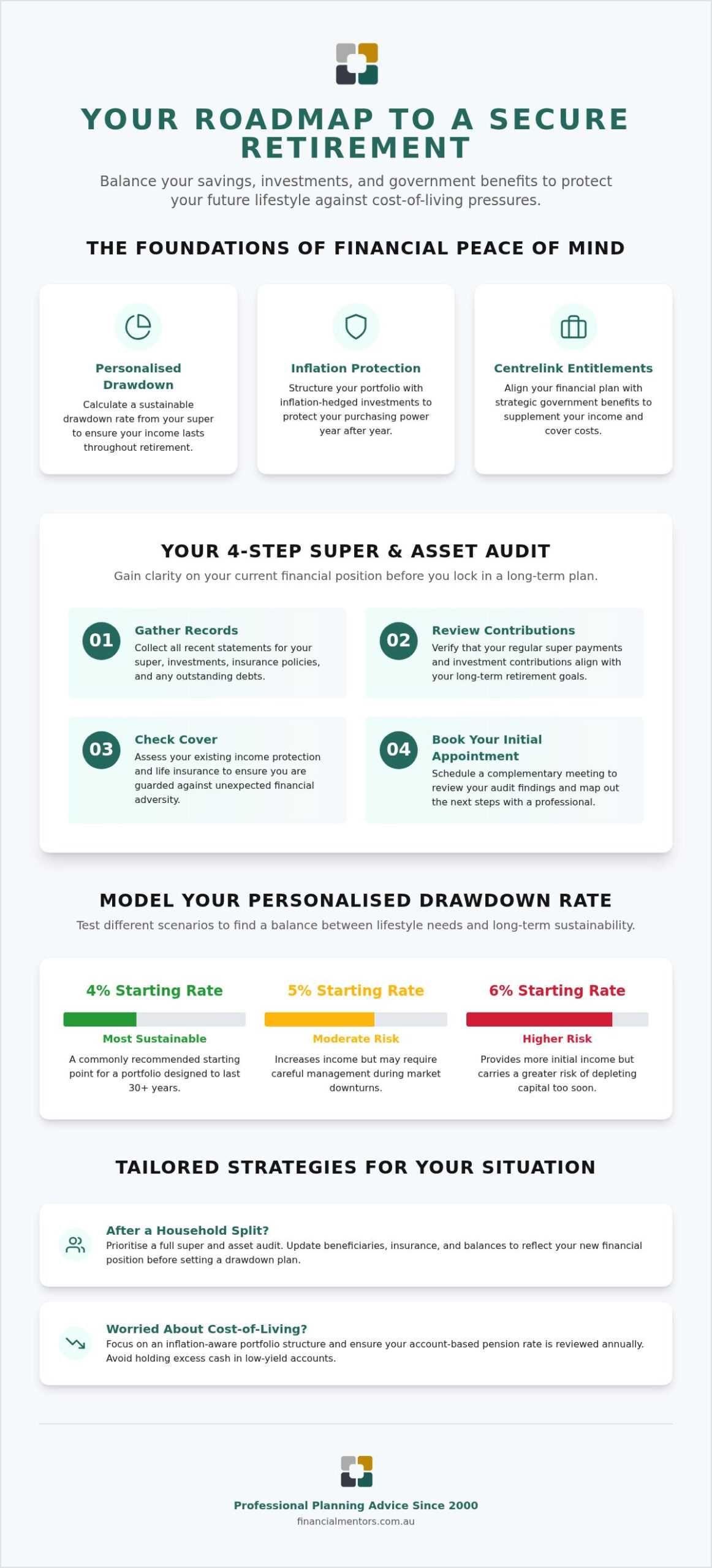
- Test sustainability by modeling a 4% starting drawdown rate against 5% and 6% scenarios.
- Unless you review account-based pension rates annually, inflation can erode your real purchasing power.
- Best-for those seeking stability: divide retirement savings into predictable buckets for living and discretionary costs.
- ASIC 2026 releases confirm that moving from anxiety to action helps Australians build independence.
Finding the retirement financial strategy that fits you best
Personalised planning helps you handle complex life changes like property moves or split households. Clients often arrive after a sudden transition has disrupted long-term goals; proactive steps restore clarity while those adjustments settle.
Before you choose a path, match the situation you are in to a concrete next step already used in this guide:
- After divorce or a household split, prioritise a full super and asset audit (the 4 steps below) so beneficiaries, insurance and balances reflect your new position before you set any drawdown.
- If cost-of-living pressure is your main worry, focus on inflation-aware portfolio structure and a reviewed account-based pension rate rather than holding excess cash in low-yield accounts.
- If you are close to drawing an income stream, model a personalised drawdown from your balance first, then test how Centrelink entitlements and estate settings interact with that income.
Securing your retirement savings (wealth management) works best with a tailored approach. Managing your money coming in (retirement income) becomes simpler when specialists assess your full position. Working alongside our advisory team helps you protect your lifestyle and qualify for government benefits. A tailored financial plan functions as a customised roadmap for the future you want. Make a time with us when you are ready for that review. More on this: Financial Mentors Wealth Management.
A commenter in the forumwealth.com thread "Forum Wealth Management: Home, Financial advisers …":
"Having been rather unsure of how to proceed with my money, after a messy divorce, I now feel very secure in how my financial future is being looked after." (https://forumwealth.com/)
That feedback shows how professional financial advice can restore personal certainty after major disruption. Guided planning gives you firmer ground for long-term security.
What feeling financially secure in retirement really means for you
Financial peace of mind means your incoming funds, such as pension payouts, cover daily expenses without ongoing anxiety about shortfalls.
Making choices for your future can feel daunting. According to ASIC’s 2026 releases, moving from anxiety to action helps Australians build independence. You gain clearer direction when you work with advisers who know your goals. More on this: Financial Mentors Wealth Management.
A tailored financial plan maps your long-term goals and identifies suitable government benefits. Structured steps let you steward assets with less guesswork and more lasting clarity.
Tip: Establish clear medium-term goals alongside long-term goals to maintain liquidity during market fluctuations.
Audit your super and assets in 4 steps before you lock in a plan
You cannot set a safe drawdown or Centrelink strategy until you know what you hold. Auditing your financial position (snapshot of assets and liabilities) shows whether your retirement savings remain on track for the goals you have named.
- Gather records: Collect all recent statements for your accounts, investments, and debts.
- Review contributions: Verify that your regular super payments meet your long-term goals.
- Check cover: Assess existing insurance policies to guard against sudden financial adversity.
- Book help: Schedule an initial appointment via planning your future to review your progress.
One practical detail many households skip: keeping account beneficiaries current spares your loved ones expensive administrative hold-ups later. Review those nominations whenever you audit balances, not only after a life event. When an adviser leaves or a practice changes, a dedicated professional keeps your strategy aligned so the plan does not drift with the paperwork.
A commenter in the myfinancialmentors.com.au thread "Client Testimonials":
"We transitioned from another financial advisor seeking expert guidance for our super management." (source)
"Highly recommend Murray, he is lovely and very helpful, also responsive. Glad
Situation: a household left a prior adviser and needed steady super oversight. Solution: move to specialist super guidance under a clear ongoing review rhythm. Result: the relationship refocused on expert super management rather than an interrupted corporate arrangement. Ongoing professional guidance keeps your personal strategy tied to long-term objectives when external arrangements change.
Protect your wealth against 2026 inflation without stalling growth
Inflation is quiet until your shopping basket and care costs show the gap. Securing your retirement savings against rising prices needs a proactive investment stance. In daily planning work, unmanaged inflation reduces real purchasing power year after year. Leaving a portfolio on autopilot leaves money exposed to higher living expenses. Handling complex investments, superannuation and insurance without guidance often produces expensive mistakes; structured advice helps you arrange assets so real purchasing power holds while financial risks stay visible.
A resilient strategy balances growth assets with defensive choices. A common misstep is parking too much in low-yield cash: it feels safe, yet it loses purchasing power as prices rise. Diversifying into growth-focused assets offers a stronger defence. Start by reviewing your overall financial plan so long-term goals stay achievable in real terms, not only on paper.
Partnering with a specialist gives step-by-step guidance fitted to your situation. See how strategic planning sessions are structured for long-term growth. Advisers help safeguard your income coming in and keep family protection settings in view. Ask us for a quote on a plan review when you want that work scoped. More on this: Financial Mentors Wealth Management.
Working with a dedicated financial specialist gives you confidence that superannuation, tax matters and ongoing plans are handled with care and accuracy.
Calculate a personalised drawdown rate that sustains your income
Your annual drawdown is your balance multiplied by the rate you select; the rate you choose is a planning decision, not a single legal ceiling.
Major career changes or personal shifts often leave people unsure about the years ahead. From client work, establishing a steady stream of money coming in rebuilds confidence after those shocks. You can set scheduled withdrawals from your retirement savings using defined drawdown percentages, then revise them as markets and spending change.
Australian account-based pensions use age-based minimum drawdown rates; they do not impose a general 6% cap on withdrawals. The figures below are planning scenarios you can model against your balance so you see the income each rate produces before you commit.
| Account Balance | Drawdown Rate | Annual Payment |
|---|---|---|
| Low Minimum | 4% Minimum | Calculated Yearly |
| Standard Range | 5% Standard | Calculated Yearly |
| Upper Range | 6% Scenario | Calculated Yearly |
Your suitable rate depends on your age and financial position. A lower percentage tends to preserve capital longer; a higher rate increases current payments and shortens how long the balance may last. A 4% starting frame is a common way to test sustainability, then you compare it with the 5% and 6% planning rows above. Reviewing your self-managed super every twelve months keeps the plan responsive to changing financial risks. Speak with us to book an appointment for your financial plan.
Tip: Adjust your account-based pension drawdown percentage annually during your periodic review to avoid premature capital depletion.
When DIY wealth management puts capital at risk
Managing your own retirement savings can hide risks that undermine long-term goals, especially once tax, pensions and investment rules interact.
Unmanaged tax liabilities can erode a nest egg during retirement faster than most household budgets expect. Asset-allocation mistakes also appear more often without professional guidance. You can miss chances to optimise your financial position, and a simple error may cost thousands over time.
Securing the future you want needs precision across super, tax and income settings. Partnering with a qualified adviser protects capital from avoidable mistakes. You can arrange an appointment for a complementary initial consultation to review your setup. Taking step 01 with a specialist keeps your strategy on track: make a time with us to walk through the gaps.
How income streams support wellbeing once work slows
Predictable money coming in supplies the psychological stability you need to enjoy daily life without constant spending anxiety.
Major household changes often require reorganising finances, so structured cash flow becomes essential for peace of mind. Reliable funds to cover expenses reduce dependence on active employment and lower the urge to check markets daily. From client work, dividing your retirement savings into predictable buckets softens the fear of market dips. Secure income supports genuine freedom in how you use your days.
Split capital into clear channels for living costs and discretionary spending so each purpose has a known source. A clear financial plan helps you track your financial position while you keep meeting financial commitments.
Book a complementary initial consultation to review estate planning settings beside your income design, and start the next stage with firmer numbers.
Align estate plans and healthcare costs so legacy goals hold
Medical costs arrive unevenly; structuring reserves in advance protects your retirement savings from a sudden care bill. Through client work, separate health pools reduce the need for distress sales of family assets. Setting aside dedicated funds keeps primary income available for ordinary living.
Effective estate planning shields your legacy while you manage ongoing health needs. Directing specific assets toward potential care balances long-term goals with nearer-term security; for instance, resources from Coastal Legacy Law can help you understand how legal documents like living wills ensure your medical preferences are documented, keeping your money coming in free for daily costs.
Proper structuring also protects government benefits during asset transfers. Tailoring your financial plan helps ensure gifts to loved ones do not disrupt age pension eligibility.
You can book an initial meeting as step 01 to align legacy goals with care funding. Contact our West Perth team for advice when you are ready to set those pieces side by side.
Frequently asked questions
What is financial security in retirement?
Financial security means having reliable cash flow to cover your lifestyle comfortably. You reach it when your assets generate enough income and buffer you against unexpected financial adversity.
Why are more older people feeling financially insecure?
Rising daily living expenses and shifting market conditions create uncertainty for many Australians. Changing life expenses make it harder to stay confident without a clear strategy.
How can I make myself more financially secure in later life?
Start by building a tailored strategy that balances investment risk with your personal long-term goals. You can also explore options like self-managed super (a member-directed fund) if you want more direct control of investments.
How can I manage the impact of retirement on my wellbeing?
Create clear routines and set fresh personal objectives for the years ahead. Guidance on estate planning and your money coming in reduces stress so you can focus on enjoying life.
How do I assess my current financial situation?
Review asset balances, debt commitments and potential government benefits to map your standing. A complementary initial consultation helps you read that position and set clear medium-term goals.
Securing Your Retirement Future
Feeling financially secure in retirement still comes down to the same decisions opened at the start: a tailored financial plan, a drawdown you can defend, and Centrelink, estate and healthcare settings that do not work against each other.
In 2026, taking charge of your financial position is more approachable than it can first appear. Advisers here have been helping Australians plan long-term goals since 2000.
Your journey begins with step 01: a clear strategy for your retirement savings and government benefits so you can own your tomorrow with fewer unknowns.
Book a complementary initial consultation to discuss your future. More on this: Financial Mentors Wealth Management.