

A market fall can make it tempting to switch investment options straight away. If you’ve checked your balance and seen it drop, it’s natural to wonder how to protect your super from a market downturn, or whether changing options could prevent further losses.
A lower balance can feel unsettling, especially if retirement is getting closer. But a fall in value doesn’t automatically mean your super strategy is wrong. Switching after markets have already fallen may lock in a loss and could mean missing a recovery. The right response depends on your circumstances, not just the latest market movement.
This article explains what a downturn can and can’t mean for your super, and what to check before changing investment options. You’ll consider your time until retirement, your comfort with investment risk and how your super fits with your broader goals. Then you can follow a practical review process to decide whether your current approach still suits you or whether a considered change may be worth exploring.
Key Takeaways
- A fall in your super balance can feel worrying. Check what has changed before deciding how to respond.
- Investment options hold different mixes of assets. Review your option’s current investment mix and risk information before making a decision.
- When considering how to protect your super from a market downturn, distinguish between reviewing your strategy, changing future contributions and switching existing investments.
- Use a practical checklist to revisit your time horizon, retirement plans and when you may need access to your super.
- Consider your super alongside retirement income, other assets and long-term goals to help assess whether your strategy still fits your circumstances.
What a market downturn can mean for your super
Seeing your super balance fall can be unsettling, especially if you’re counting on it for retirement. A market downturn is a period when investment values fall, but the reasons, scale and duration can vary. A stock market crash is one kind of sharp market fall, but not every downturn follows the same pattern. No investment strategy can guarantee protection from losses or predict when markets will recover.
Your super balance reflects the performance of its investments as well as account activity, such as contributions, withdrawals and fees. A changed balance is worth checking, but it doesn’t tell you by itself what caused the movement or whether your investment option still suits you. To assess that, look at the option’s investments and consider your own circumstances.
Why a falling balance does not tell the whole story
A balance is a snapshot, not a complete measure of progress towards your long-term goals. A fall affects your account value at that point in time. What it means for your plans depends on factors such as your investment mix, how long you expect to remain invested and whether you need to draw on your super.
For example, two people could see a similar percentage fall but face different questions. One may have a longer time horizon and no planned withdrawals soon. The other may be preparing to use super as part of retirement income. The same market movement can have different implications for each person.
Why your stage of life can change the question
If retirement is some way off, your review may focus on whether your investment option fits your time horizon and comfort with risk. If you expect to access super sooner, also consider when you’ll need income, how much you may draw and what other resources are available. Neither situation points to one automatic response. Your retirement timing and income plans help shape the questions to ask.
A retirement planning checklist can help you organise those questions alongside your broader goals. Consider how your super fits into your plans and what you need it to do, rather than reacting to a market headline. That context is a practical first step in thinking about how to protect your super from a market downturn, without assuming losses can be avoided.
How your super investment option shapes downturn risk
Your super’s investment option influences how market movements may affect your balance. Options can hold different mixes of growth assets, such as shares and property, and defensive assets, such as bonds and cash. The mix affects the option’s risk profile, but no option is free from investment risk.
Consider the difference between an option spread across shares in different industries, property, bonds and cash, and an investment concentrated in shares of one company. If that company’s value falls, the concentrated investment is more directly exposed to that change. Diversification spreads investments across different assets, but it can’t prevent losses or ensure one asset will offset another.
An option’s risk level describes its exposure to investment ups and downs. It isn’t a guarantee against losses. An option with less exposure to growth assets may experience different movements, but it may also have less exposure to assets that can contribute to long-term returns. There’s no universally best option. The right fit depends on your goals, circumstances and comfort with risk.
What to check in your current super option
Start with your fund’s current documents. Check your option’s name, investment approach, asset mix and stated risk information. If the fund provides information about fees and switching conditions, review that too. Don’t rely on a generic label such as “balanced” or “conservative”, as the details can differ between funds.
As you consider how to protect your super from a market downturn, compare what your option actually holds with what you thought it held. ASIC’s tips for managing super can also help you think through fund information and investment choices. Use your own fund’s latest materials to understand how its option is structured.
How time horizon and retirement plans fit together
How soon you expect to use your super can shape the questions you ask about investment risk. If access is still a long way off, consider whether your option matches your time horizon and your ability to accept fluctuations. If retirement or withdrawals are approaching, look at when you may need income and how much you expect to draw from super.
Planning a retirement date is only one part of the picture. Consider how super fits with your expected income and other resources, and whether your plans have changed. A retirement planning conversation may help you connect those choices with a broader financial plan, rather than making a decision based only on recent market movements.
Should you switch super options during a market downturn?
Staying in your current option can feel risky when the balance is falling. But switching isn’t automatically safer. It changes the investments held in your account, and a different option has its own mix of risks and potential returns. Before acting, separate three decisions: whether your current strategy still suits you, where future contributions go and whether to move investments you already hold.
If you switch after an investment has fallen, you may sell it for less than its earlier value, locking in a loss. The switch also changes which investments you hold afterwards. No one can reliably tell you what markets will do next, so consider the reason for a change, not just the recent fall.
What can happen if you switch after markets fall?
A switch can affect the timing of both future gains and losses. Moving existing super to a different option changes what those funds are invested in from that point. Changing where future contributions are directed is a separate choice. It doesn’t automatically move the balance already invested. Before making either change, check your fund’s rules, transaction conditions and any applicable fees.
Compare the choices before acting
| Choice | Questions to ask | Potential trade-off and information to check |
|---|---|---|
| Review your current strategy | Does this option still fit your goals, time horizon and comfort with risk? | A review doesn’t change your investments by itself. Check the option’s current asset mix and risk information. |
| Change future contributions | Do you want new contributions directed to another option? | This affects future contributions, not necessarily your existing balance. Check how your fund applies the change. |
| Switch existing investments | What would you sell, and what would you hold afterwards? | You may lock in a loss on investments sold after a fall and take on a different mix of risks. Check fees, transaction conditions and fund rules. |
When a review may matter more than a quick reaction
A change in your circumstances, a revised goal or retirement getting closer can all be good reasons to review your strategy. That’s different from switching solely in response to alarming headlines or a daily balance movement. As you consider how to protect your super from a market downturn, ask whether the reasons for a change still make sense in the context of your whole financial position.
If you’re unsure how a switch could affect your retirement plans, contributions and other assets, consider speaking with a qualified financial adviser. A tailored financial plan can help connect your super decisions with your circumstances, rather than treating a market fall in isolation.
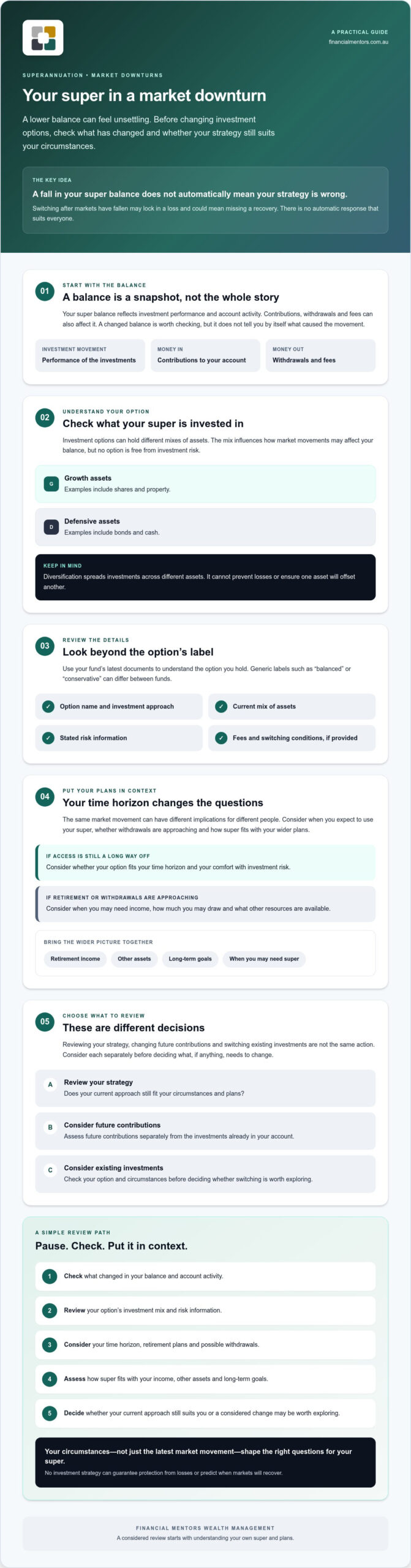
A practical checklist for reviewing super in a downturn
A steady review can help you move from concern to clearer questions. Start with the facts, then consider whether your super still fits your plans. Work through this checklist before making a change.
Five questions to ask before changing anything
- Have you confirmed your balance and investment option? Check your latest statement or online account. Make sure you’re looking at the correct account and option.
- What does your fund’s current information say? Review the option’s investment mix, stated risk information, fees and relevant fund rules. Check current documents rather than relying on a general label or an old statement.
- Does the option still reflect your long-term goals and comfort with financial risks? Consider whether its approach still fits what you’re working towards and the ups and downs you’re prepared to accept.
- Have your retirement timing, income needs or financial commitments changed? Revisit when you may need to access super, how much income you might need and what other resources could contribute.
- What could follow if you make a change? Check your fund’s current information for fees, transaction conditions and other effects. Clarify whether a change would apply to your existing balance, future contributions or both.
A useful super review connects your current investment option with your personal goals, time horizon and likely need to access your money. That connection matters more than reacting to a balance movement on its own.
When to seek tailored financial advice
Consider advice if a decision could affect your retirement income, involves several assets or follows a change in your financial position. An adviser can help assess your super alongside your broader financial planning needs, including retirement timing, other income and goals. If you’re planning your next steps for retirement, a retirement planning checklist can help you organise the questions you want to explore.
If you’re still unsure how to protect your super from a market downturn in a way that fits your circumstances, you can discuss your super and retirement plans with Financial Mentors Wealth Management.
Build a super strategy that fits your retirement plans
Preparing for market volatility doesn’t mean trying to avoid every fall. It means understanding how your super fits into your wider plans and reviewing your approach thoughtfully as your circumstances change. Your super may be one part of your future retirement income, alongside other assets and sources of income. Looking at these together can help you make decisions with your long-term goals in view.
There’s no single investment option that suits everyone, and no plan can guarantee returns or prevent losses. The aim is to make informed choices that reflect your own goals and circumstances, rather than reacting to every market movement.
What a personalised super review can consider
A review can bring several connected questions into focus. How far away is retirement? When might you need to access your super, and what income do you expect to need? Does your current investment option still match your time horizon and comfort with financial risks? How might your super work alongside other assets and your broader financial position?
The answers depend on your individual circumstances. If your retirement plans or goals have changed, the questions to consider may change too. Tailored retirement planning advice can help you assess these factors together and consider whether your current approach remains suitable. It can’t remove investment risk or promise a particular outcome, but it can help you understand how your choices relate to your plans.
Your next step if you are still unsure
Before seeking guidance, gather your latest super statement and fund information. Note your current investment option, any details you want clarified, your expected retirement timing and the questions you’d like answered. This preparation can make it easier to discuss how your super fits with your income needs and other goals.
If you’re still weighing how to protect your super from a market downturn, a conversation about your circumstances may help you consider the next step with care. Financial Mentors Wealth Management offers financial planning and retirement planning advice. You can Arrange an initial appointment to discuss advice that reflects your situation.
Make your next super decision with confidence
A market fall can’t be controlled, and no strategy can guarantee protection from investment losses. What you can do is check whether your investment option still fits your time horizon, retirement plans and wider financial position. This is a more considered way to approach how to protect your super from a market downturn than making a change based only on a falling balance.
If you’re still unsure, gather your fund details and write down the questions you’d like answered. Tailored retirement planning advice can help you consider your super alongside your expected retirement income, other assets and long-term goals.
When you’re ready to talk through your circumstances, arrange an initial appointment with Financial Mentors Wealth Management. A thoughtful next step can help you consider decisions that reflect the future you’re working towards.
Frequently Asked Questions
Can I protect my super from a market downturn?
You can review your super strategy, but no approach can guarantee your balance will avoid investment losses. To consider how to protect your super from a market downturn, check your investment option, time horizon and goals before making decisions. Avoid changing options based only on alarming headlines or fear. If a decision could affect your retirement plans, consider seeking financial advice tailored to your circumstances and broader financial position.
Should I move my super to cash when the market falls?
Not automatically. Moving to a lower-risk option may reduce exposure to some market movements, but it can also change your potential for future returns. Whether cash suits you depends on your circumstances, time horizon and plans for accessing super. Check your fund’s current information, including investment details, fees and any conditions that apply to a switch. If the decision is significant, consider advice before acting.
What happens to my super when share markets fall?
If your super option invests in assets whose values fall, your account balance may also go down. The effect depends on your option’s investment mix and other account activity, such as contributions, withdrawals and fees. A lower displayed balance doesn’t by itself show whether your strategy remains suitable. Check your fund information and consider your goals, time horizon and plans for accessing super before deciding whether a change is needed.
Can my super balance recover after a market downturn?
Investment values can rise or fall, but no one can reliably promise when a recovery will happen or how large it may be. Your super balance can also change due to your investment option and account activity. Rather than relying on a forecast, review whether your current strategy fits your goals and when you expect to use your super. If you’re unsure, advice based on your circumstances can help you assess your options.
Should I change my super investment option before retirement?
Retirement getting closer can be a reason to review your option, but it doesn’t automatically mean you should switch. Consider when you may need the money, your expected retirement income, your investment mix and your comfort with financial risks. Check your fund’s current information before making a change. If your decision involves several assets or affects your wider financial position, tailored advice can help you assess it in context.
How often should I review my super investment option?
Review your super when your circumstances, goals or retirement plans change, and check your fund’s information about managing your account. A periodic review can help you assess whether your option still fits your time horizon and needs. You don’t need to make a change every time markets move. The right review frequency depends on your situation, so seek advice if you’re unsure what to review or how to interpret the information.
Is it better to leave super alone during a market downturn?
There isn’t one right answer for every super member. Avoiding a rushed decision can give you time to consider your options, but leaving your strategy unchecked may not address changed circumstances or goals. Review your investment option, time horizon and likely access needs. If you can’t tell whether a change would suit your financial position and retirement plans, consider getting guidance tailored to your circumstances before acting.