

What if more investment choice only helps when it makes your financial plan easier to manage? If you’re exploring wrap account benefits australia, weigh the convenience and control against the fees and added complexity. A wrap isn’t automatically a better fit than a super fund or self-managed super. Its value depends on what you need from your investments.
A wrap account can bring different investments together in one place, provide consolidated reporting and offer a wider choice of investments. These features may make your portfolio easier to view and manage. But platform, investment and advice fees can add up. Before you decide, work out what you’ll pay and which features you expect to use.
This article explains how wrap accounts work, their practical benefits and limitations, and how to compare costs and features. You’ll also consider how a wrap could fit with retirement planning, wealth creation strategies and your long-term goals. The aim is to help you make a considered choice as part of a broader financial plan, rather than choose an account based on its investment menu alone.
Key Takeaways
- Understand how a wrap account differs from an investment itself, and why platform features and investment choices vary.
- Use consolidated information to support portfolio oversight, retirement planning discussions and periodic reviews.
- Compare platform, investment, advice and transaction costs to judge whether the wrap account benefits australia offers suit your needs.
- Start with your goals and financial position, then consider whether your investments are held inside or outside super.
- Include the account decision in your broader financial plan, rather than choosing a wrap for its features alone.
What is a wrap account in Australia, and what benefits can it offer?
A wrap account is an administrative platform that can bring selected investments and related information together under one account structure. It isn’t an investment itself, and opening one doesn’t determine what you invest in. Depending on the arrangement, a wrap may be linked to superannuation or used for investments outside super. Account structures, platform menus and available investments vary between providers.
The general idea is to bring investment administration and reporting together in one place. For an introduction to the concept, see What is a wrap account. Each platform has its own features and rules, so consider whether its options suit your circumstances and financial plan.
How does a wrap account work?
You choose investments from the options available through the platform. These may include listed securities, exchange-traded funds and managed funds. Listed securities are investments traded on a share market, such as company shares. An exchange-traded fund (ETF) trades on an exchange and holds a group of investments. A managed fund pools money from investors, which a professional manager invests according to the fund’s approach.
The platform may record holdings and transactions, provide account information and produce reports. Services differ, so don’t assume a wrap administers every investment in the same way. Review the account’s features and how investments are held before deciding.
Which wrap benefits matter in everyday use?
Consolidated administration can make it easier to view investments and transactions through one account, rather than gathering details from several sources. Depending on the platform, reports may help you track activity and prepare for a conversation about your portfolio. They can support oversight, but you still need to understand your investments and review your progress.
Investment choice may help if you have specific portfolio requirements, such as wanting access to selected listed securities alongside managed funds. But a longer menu isn’t automatically an advantage. The options matter only if they support your goals, timeframe and comfort with financial risks.
That’s the practical test behind wrap account benefits australia: do the administration, reporting and investment options solve a real need for you? A wrap can offer convenience and choice, but it can’t guarantee better returns or remove investment risk. Consider its role within your wider financial plan, not as a shortcut to investment results.
How can a wrap account support investment management and retirement planning?
A wrap account may help you keep track of investments and consider how they fit together over time. Organised information can make it easier to review your portfolio, discuss decisions with an adviser and check whether your approach still aligns with your goals. A wrap doesn’t make those decisions for you, and it won’t suit every investor.
Can a wrap make portfolio oversight easier?
If you hold several investments, one reporting view may help you follow holdings and transactions without piecing together as much information from separate sources. For example, if you hold a managed fund and listed shares, a wrap report may bring information about both together. That can give you a clearer starting point for discussing how they fit your plans.
A report is a tool, not a substitute for understanding what you own. Investments can behave differently and carry different risks. Check the details and consider the purpose of each holding, rather than relying on a combined total alone. If you work with an adviser, platform access may make it easier to discuss your portfolio. Adviser access itself doesn’t show that investment performance will be better.
A periodic review connects your holdings with changes in your circumstances, priorities or timeframe. Consolidated information may make the review more organised, but its value comes from using it to support considered decisions.
Where could a wrap fit into retirement planning?
Retirement planning involves questions about future income, the timing of withdrawals and the role of investments in meeting your long-term goals. A wrap may form part of your plan if its structure and investment options suit your needs. It’s one possible account arrangement, not a retirement strategy by itself.
Superannuation and investments held outside super can serve different purposes and are subject to different rules. Their place in your plan may depend on your circumstances, access needs and retirement timeframe. Don’t assume a wrap treats every investment in the same way, or that combining information means accounts have identical rules. If tax or superannuation treatment affects your decision, consider it as part of tailored financial advice.
The phrase wrap account benefits australia can point to convenience and access, but the more useful question is whether those features support your retirement plan. If you’re weighing a wrap against other ways to organise investments, financial planning can help put the choice in context. You can explore financial planning support to take a step towards advice shaped around your goals.
Are wrap account benefits worth the fees and added complexity?
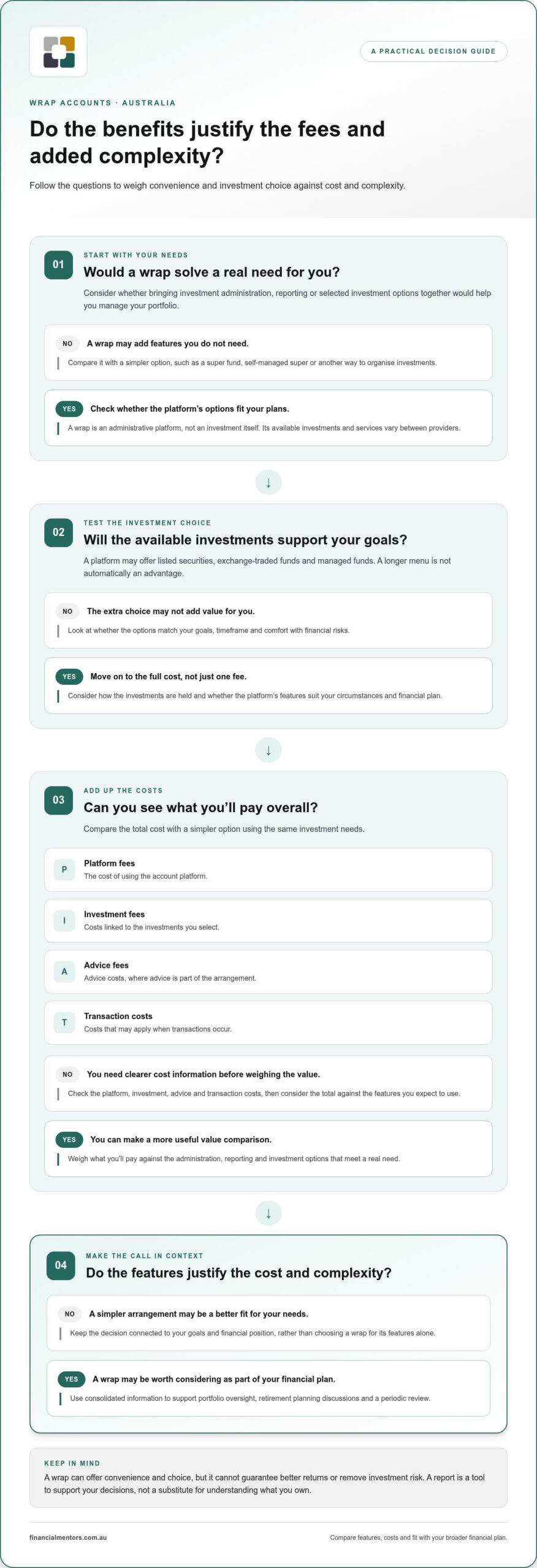
They may be, if the administration, reporting and investment options solve a real need for you. The answer depends on the total cost and the value you receive, not one headline fee. Compare a wrap with a simpler option using the same investment needs and services as your reference point. A wrap can make administration more convenient, but it doesn’t guarantee better investment performance or remove financial risks.
What costs and trade-offs should you understand?
Wrap costs can fall into several categories. A platform may charge for account administration, while investments can have their own fees. Advice and transactions may also involve costs. The structure and amount vary between platforms and investments, so there isn’t one fee figure that applies to everyone.
Use this table to organise your comparison. Check the platform’s current disclosure documents for applicable charges and how they’re calculated.
| Cost category | What to compare |
|---|---|
| Platform | Account administration charges and the services they cover. |
| Investment | Fees for each fund or investment option you select. |
| Advice | Any advice costs, what work they relate to and how they’re charged. |
| Transaction | Charges that may apply when investments are bought or sold. |
Compare the combined cost with the features you expect to use. A broad menu could suit specific portfolio needs, but it may also mean more choices to make and review. A simpler arrangement may be easier to manage if it already meets your goals and reporting preferences.
When might a simpler option be enough?
Consider how many investment choices you genuinely need, how you prefer to track your holdings and how involved you want to be in managing them. If a limited set of investments meets your plan, extra platform options may add little practical value. If you need particular choices or consolidated administration, those features may matter more.
Compare like with like. List the services, investments and reporting you need, then compare the total costs for each arrangement. Don’t assume a platform is worthwhile just because it offers more choice, or dismiss it based on one fee in isolation.
The potential wrap account benefits australia offers are best weighed against your financial plan and the costs you would actually incur. A platform is an administration structure, not an investment strategy. It can’t guarantee better outcomes, and investment values can rise or fall. A considered comparison can help you decide whether the added convenience is worth the cost and complexity for your circumstances.
How do you assess whether a wrap account suits your financial position?
Start with your goals and financial position, not the platform menu. Consider whether the investments you’re reviewing are held inside superannuation or outside it, as each setting has different purposes and rules. Then use this step-by-step check to judge whether a wrap’s features fit your needs.
A practical wrap account suitability check
- Set out your goals and timeframe. Note what you’re working towards, when you may need the money and your ongoing financial commitments. This gives you a clearer basis for considering the account.
- List what you need to manage. Record your current investments and the reporting, account access or investment options that would help you oversee them. Separate essential features from options that would be convenient but not necessary.
- Compare features and total costs. Review the account structure, services and investments available, then compare platform, investment, advice and transaction costs on a like-for-like basis. Consider whether each feature addresses a real need in your plan.
- Consider the advice you need. Decide how involved you want to be in investment decisions and whether you need support to include the account choice in your broader financial plan.
- Check the fit over time. Ask whether the arrangement can still support your goals as your circumstances and priorities change. A suitable choice today may need reassessing later.
This process can help you judge the wrap account benefits australia offers against your circumstances, rather than choosing on features alone. Consider the full picture, including your goals, costs, preferred level of involvement and whether your investments are held inside or outside super.
What should change your assessment over time?
Your plans can change. Starting a family, changing work arrangements or moving closer to retirement may affect how you use your investments and when you need access to them. These changes can also alter the balance between superannuation and investments held outside super. Revisit the account decision when your goals or financial commitments shift.
A periodic review gives you a chance to check whether the account still suits your goals, reporting preferences and costs. If you’re preparing for retirement, consider how the account structure fits with your wider retirement plans.
If you’d like to discuss how a wrap account could fit within your financial plan, arrange a financial planning conversation as a first step towards tailored advice.
How can financial advice help you make a considered wrap account decision?
A wrap account is one way to organise investments, not the starting point for a financial plan. Advice can help you decide whether its features support your goals by considering your superannuation, investments inside and outside super, tax position and retirement plans together. This wider view can help you avoid choosing an account simply because its menu looks appealing.
What can a financial plan clarify before you choose?
A written financial plan sets out strategies and recommendations linked to your circumstances and goals. It can help you clarify what you want your investments to do, when you may need access to them and how a wrap’s features could support that purpose. For example, consolidated reporting may be relevant if it addresses an administration need. If extra investment options don’t serve your plan, their presence alone may not justify the account.
Planning can also put investment choices in context with superannuation, retirement income needs and tax considerations. Tax treatment depends on your circumstances and the arrangements involved, so don’t make assumptions based on a platform feature alone. Tax return preparation can form part of the broader picture, while financial advice can connect decisions with your goals.
A plan should reflect your individual financial position. It can guide decisions, but it can’t guarantee investment outcomes or remove financial risks. The aim is to make a considered choice that stays connected to your priorities, with room to review it as life changes.
What happens at the initial meeting?
The initial meeting is step 01 in the Financial Mentors Wealth Management process. It’s a chance to talk through what you’re working towards and the questions you have before deciding whether a wrap fits. You might bring details of your current arrangements, investment concerns and any retirement plans you’re considering. You don’t need to have every answer prepared.
Financial Mentors Wealth Management has provided professional planning advice since 2000. The conversation can help clarify what matters to you and whether further tailored advice could connect your account choice with your broader plan. Take the time you need to make your decision.
If you’re weighing wrap account benefits australia against your personal goals, arrange your initial meeting to discuss your questions.
Make your next investment decision with confidence
A wrap account may bring administration, reporting and investment choice together, but those features are valuable only if they support your goals. Compare total fees with the services you’ll use, and consider how the account fits with your superannuation, investments outside super and retirement plans. A wrap is an account structure, not a guarantee of better returns or lower investment risk.
The right choice starts with your broader financial plan. If you’re weighing wrap account benefits australia against your circumstances, tailored advice can help you consider the account alongside your priorities and financial position.
Financial Mentors has provided professional planning advice since 2000. The initial meeting is step 01 of the process, offering a place to discuss your goals and questions. Advice is provided under the AFSL of Financial Mentors AFSL Pty Ltd. Arrange your initial meeting to take a considered step towards your financial future.
Frequently Asked Questions
What is a wrap account in Australia?
A wrap account is an investment platform that can bring selected investments, administration and reporting together. The account structure and available investments depend on the provider. A wrap isn’t an investment strategy by itself, and it doesn’t guarantee better returns. Before deciding, consider whether its features suit your financial position, goals and preferences. Also identify whether the investments would be held inside superannuation or outside it, as these arrangements can have different purposes and rules.
What are the main benefits of a wrap account?
Potential benefits include access to a range of investments through one platform, consolidated reporting and administrative convenience. Some platforms also support adviser access or investment management. The practical wrap account benefits australia investors may value depend on whether these features meet their needs and justify the fees. Compare the platform’s services and total costs with other arrangements that suit your circumstances. More choice or a single reporting view isn’t automatically valuable if it doesn’t support your financial plan.
Are wrap accounts only for superannuation?
No. Depending on the account and provider, a wrap platform may be used for superannuation or investments held outside super. These arrangements can have different purposes, rules and tax treatment. Before comparing options, note where your money is held and what you want it to do. This can help you assess the account in relation to your retirement or investment plans. If the distinction affects your choices, tailored financial advice can help you consider your circumstances.
Do wrap accounts guarantee better investment returns?
No. A wrap account provides an account or platform structure, not a guarantee of investment performance. Returns depend on the investments selected and market movements, and investment values can fall as well as rise. Assess a wrap for the administration, reporting and investment access it offers. Don’t assume the platform itself will improve returns. Consider how each investment fits your goals and financial risks, and review your choices as your circumstances change.
Are wrap accounts more expensive than ordinary super funds?
There’s no single comparison that applies to everyone. Costs vary across wrap platforms, super funds, investments and advice arrangements. Check administration, investment, transaction and advice fees, then compare the services on a like-for-like basis. Use current product documents for figures, and consider the features you’d actually use. A headline fee alone may not show the full cost or value. Your comparison should reflect your needs, account structure and the services included.
Can you choose your own investments in a wrap account?
Many wrap platforms offer a menu of investment options, but the choices available and how you access them depend on the account and provider. More choice isn’t automatically better. Consider whether the options support your goals and whether you want help making investment decisions. Also think about how you’ll track your investments and review them over time. A clear plan can help you focus on suitable options instead of choosing from a menu for its own sake.
When should you review a wrap account?
Review your wrap account when your goals, family circumstances, work or retirement plans change, and as part of a regular periodic review. Revisit the costs, services, investment choices and reporting to see whether they still suit your financial position. For example, a change in work or approaching retirement may affect your priorities and access needs. A review can help you decide whether the account remains useful within your broader financial plan.